
 E-Paper



To mark Independence day, Centre to honour tribal warriors who fought British, invading armies
“The idea is to highlight the stories of the tribals who participated in the freedom movement and fought for other rights,” an official said, requesting anonymity. “Everyone knows about Gandhi and Nehru, but these are the unsung heroes whose stories need to be told.”

 Prefer HTon Google


The central government will commemorate warriors such as Thalakkal Chanthu, Tirot Singh, and Sela and Nura among the 75 tribal women and men who fought against the British and other invaders to mark 75 years of India’s Independence, officials familiar with the matter said.
“The idea is to highlight the stories of the tribals who participated in the freedom movement and fought for other rights,” an official said, requesting anonymity. “Everyone knows about Gandhi and Nehru, but these are the unsung heroes whose stories need to be told.”
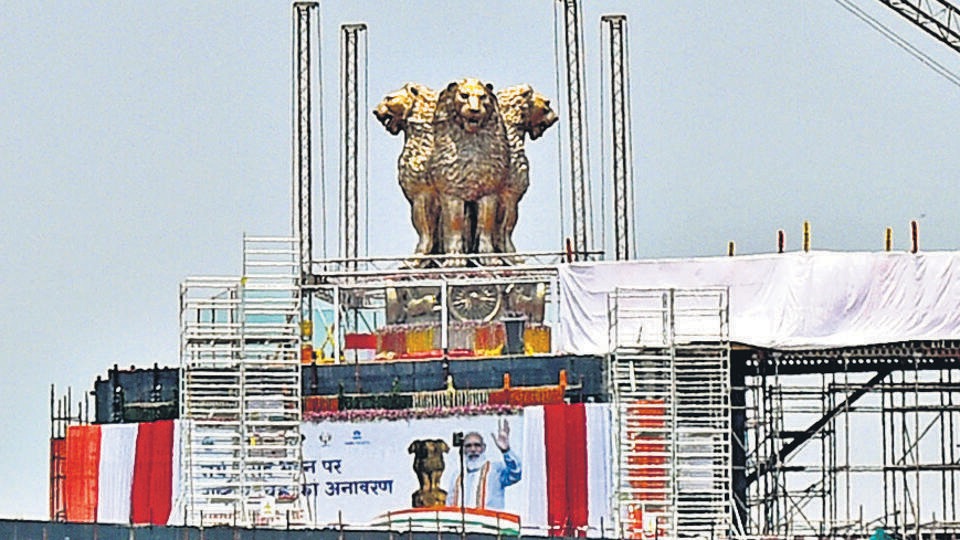
Images of some of the bravehearts may be displayed in the galleries of the new Parliament building, officials said. A decision, however, is yet to be taken, but a book commemorating the warriors is set to be released soon.
The list of tribal warriors include Sena and Nura from Arunachal Pradesh’s Monpa tribe. The two sisters were with much celebrated rifleman Jaswant Singh, who shot 300 enemy soldiers in 1972 India-China war.
The commemoration is also special since India has just appointed Draupadi Murmu, the nation’s first tribal President.
The leaders will include Singi Dai and Kaili Dai, who were martyred in the cause of freedom and tribal identity during the Rohtasgarh Resistance, according to Ulgulan ki Aurathen (Women of Revolution), a booklet published by researcher Vasavi Kiro of Chotanagpur in Jharkhand.
Another name to be included in the list is that of Thalakkal Chanthu, who was the chief of Kurichya soldiers of the Pazhassi Raja who fought the British in Kerala’s Wayanad.
Other tribal luminaries include Taintia Bhil, who is popularly known as the Robin Hood of India. Belonging to the Bhil tribe from Madhya Pradesh, he fought against the British between 1878 and 1889. The revolutionary was dreaded by the British, according to Tribal Contemporary Issues: Appraisal and Intervention, a book by Anup Beniwal and Ramaṇika Gupta.
Tirot Sing Syiem was a Khasi chief in Meghalaya in early 19th century. “He drew his lineage from the Syiemlieh clan and declared war and fought against British for attempts to take over control of the Khasi Hills,” the official said. “In the Anglo-Khasi War, the Khasis resorted to guerrilla activity, which dragged on for about four years. Tirot Sing was eventually captured by the British in January 1833 and deported to Dhaka.”
Birsa Munda, who led the Munda Rebellion of 1899 to free his people from British domination, will also feature in the list. “In 1894, he led the Mundas for redressal of grievances to Chaibasa and was arrested. He spent two years of rigorous imprisonment. He continued to serve his people, especially the needy and the sick, and was worshipped as Birsa Bhagvan,” according to the Azadi ka Amrit Mahaotsav website. “Birsa struggled against the British throughout his life. He was arrested on 3rd February, 1900, in Chakradharpur forest, after a fierce encounter and died in captivity.”
Laxman Naik from Odisha was another revolutionary who was part of the Koraput Revolt of 1942. He belonged to the Bhumia tribe. “The tribal people called him Gandhi of Malkangiri. The Bonda tribes of this region seized Matili police station under the leadership of Laxman Naik,” according to the Azadi ka Amrit Mahaotsav website. “The police opened fire, killing around seven people and injuring many. At the break of dawn on 29 March 1943, Laxman Naik gallantly marched towards the gallows of the Berhampur jail, where he was executed by the colonial rulers.”
On March 12, 2021, the central government began a 75-week countdown to the 75th anniversary of Independence from Sabarmati Ashram, which was launched by Prime Minister Narendra Modi. The campaign is based on five key themes — freedom struggle, Ideas@75, Resolve@75, Actions@75, and Achievements@75.


