
 E-Paper



Chhattisgarh: Rains in Bastar throw life out of gear, 150 villages affected
Low-lying areas are inundated and road links between villages and cities suffered blockage at several places due to incessant rains in Chhattisgarh’s Bastar region


Chhattisgarh’s Bastar region has been witnessing heavy rainfall for the last five days due to which over 150 villages are disconnected from towns or roads, officials said on Wednesday.
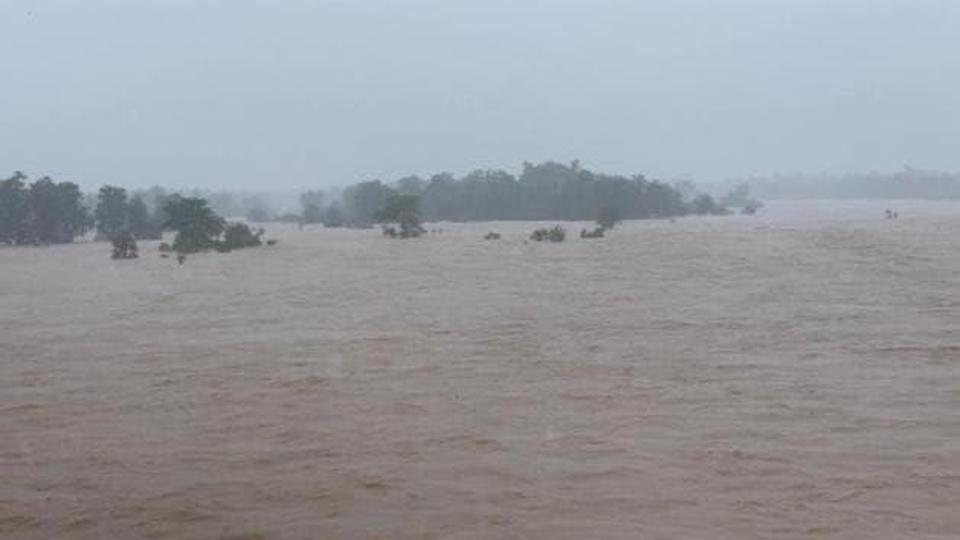
Low-lying areas are inundated and road links between villages and cities suffered blockage at several places due to incessant rains in Bastar region.
The worst affected districts are Bijapur, Sukma and Bastar. No human loss has been reported from the region till now but the rainfall has thrown life out of gear.
Officials claimed that the water level of Shabari and Godavari River has risen due to which National Highway-30, which connects Chhattisgarh to Telangana, has been blocked.
As per the figures provided by the Chhattisgarh government, in Bastar district over 12,000 people from 51 villages are suffering from incessant rains and the floods caused by it. Of the seven tehsils in Bastar district, around 6,400 people from Jagdalpur tehsil are the worst hit.
“We are continuously monitoring the situation. The water level of the rivers has risen but we have deployed the State Disaster Management Authority (SDRF) and state government employees in low-lying areas and are all prepared to shift people whenever needed,” said Bastar district collector, Chandan Kumar.
In Bijapur district, which received around five times more rains than Bastar, the total number of affected people is over 20,000 from around 85 villages. Of the total 6 tehsil in Bijapur, Usoor and Bhopalpatnam are among the worst hit with people.
“The water level of Godavari is around 53 feet which will be increasing in the next few days. The backwater of Godvari is a problem for us. We have identified the location of relief camps and I hope that shifting of villagers will start from Wednesday night. Some villages of South Sukma are disconnected because the small bridges are inundated. Overall, the situation is under control but continuous monitoring is going on,” said Sukma district collector, Harish S.
The government has opened 18 relief camps in Bastar district and 53 in Bijapur, the official statement of the government added.
“In the last couple of days due to heavy rainfall in Bastar Region, there is an impact on routine life in the region. Due to overflowing water in the rivers and streams vehicular movement in certain areas has been temporarily halted. Local administration and security personnel are prepared to handle the situation. The SDRF and homeguard teams have been deployed at many places to prevent untoward situations,” said Inspector general of police , Bastar range.
He further said that the anti naxal operations in the Maoist affected areas are being conducted irrespective of the rains.
“In spite of adverse conditions and challenging situations, our troopers are committed for security of the lives and properties of the native population,” the IG added.
Director, SDRF, Mayank Shrivastava said that the teams of SDRF have been deployed at important places in the districts and are prepared for any untoward situation.
-kW0H-U20214218012MgB-250x250%40HT-Web.jpg)


