
 E-Paper



Chhattisgarh to challenge Supreme Court judgment on SC/ST Act: CM Raman Singh
A Supreme Court order on March 20 said a public servant could be arrested under the SC/ST Act only after approval of the appointing authority, which Dalit groups believe diluted the stringency of the Act.


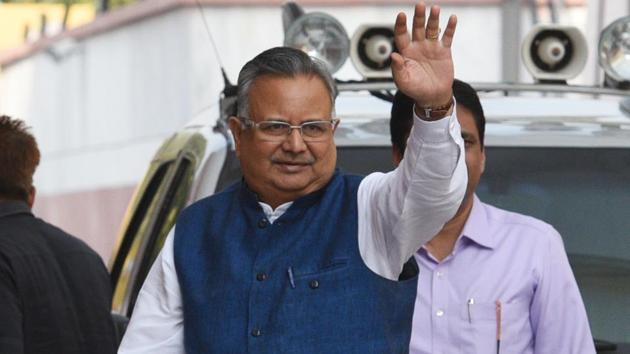
Chhattisgarh chief minister Raman Singh said on Tuesday that his government will file a review petition in the Supreme Court challenging its order modifying certain provisions of the Scheduled Castes and Scheduled Tribes (Prevention of Atrocities) Act.
The chief minister also revoked an order issued by the police headquarters directing all district police chiefs to strictly implement the Supreme Court order barring immediate arrests under the SC/ST Act without prior sanction, citing “rampant misuse”.
Raman said the order has been taken back by the government in the interest of the SC/ST communities.
The Chhattisgarh Police had issued the directive more than a week ago.
“Our state has been always sensitive towards SCs and STs and hence the order has been taken back. We will appeal against decision of Supreme Court just like the Centre,” he told reporters.
The Chhattisgarh police headquarters had issued a circular on April 6 asking the superintendents of police to implement the Supreme Court’s order strictly.
On Monday, the state Congress attacked the Chhattisgarh government, accusing the BJP of deceit and bias towards SC and ST communities.
“This clearly shows the BJP’s double speak and deceit towards the SC/ST community in the state,” said Congress spokesperson PL Punia on Monday.
The apex court in its March 20 order had said that an accused cannot be mandatorily arrested under the Act without initial probe. Dalit organisations and various civil society groups see it as “dilution” and accuse the Narendra Modi government of conniving in the case.
“This directive shows that the chief minister has no control over his own police officers and secondly, the CM himself is not sensitive towards SC and ST communities of the state. Taking back the orders of the police headquarters is just a damage control because the CM knows that he is going to be defeated in the elections this time. Both the communities living in the state are angry with the government because of its continuous anti-adivasi and anti-Dalit policies,” Chhattisgarh Congress spokesperson RP Singh said shortly after Singh revoked the orders.
On April 2, the Centre had filed a review petition in the Supreme Court against its order. On the same day, the Bharat bandh called by Dalit outfits was marked by widespread protests, including incidents of violence in several parts of northern India, in which nine people were killed and property damaged.
Ahead of the Bharat bandh, a delegation of Dalit MPs met Prime Minister Narendra Modi who assured them that the NDA government would “continue its welfare initiatives” for SC and ST communities.
-kW0H-U20214218012MgB-250x250%40HT-Web.jpg)


