
 E-Paper



China calls move unlawful, India says it’s internal matter
In Beijing, China said India’s move violated Chinese sovereignty but will also not change the situation on the ground as part of the area in the former state remains under Chinese control.

 Prefer HTon Google


China on Thursday lashed out at India for changing the status of Jammu and Kashmir and Ladakh, calling the reorganisation of the former state into two separate union territories (UT) “unlawful and void”.
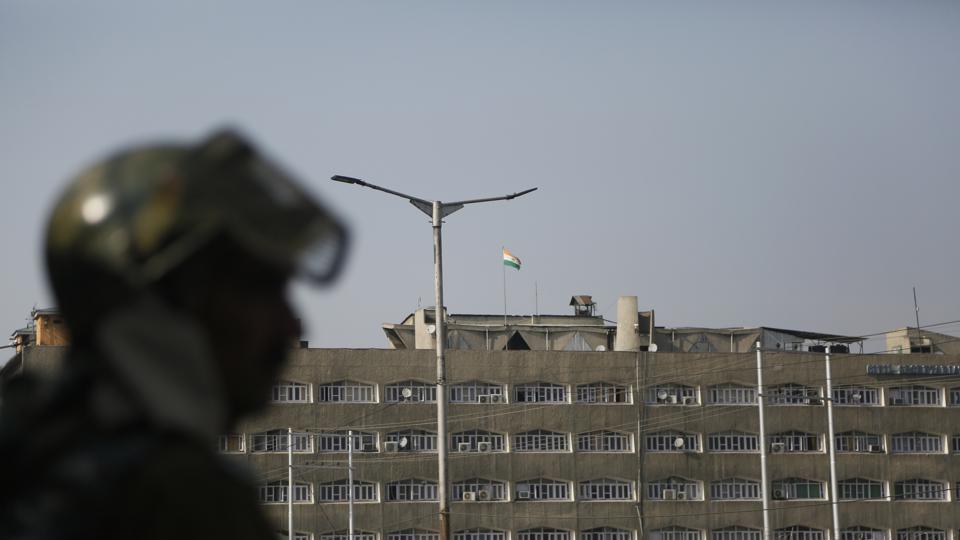
India’s response was swift: “The matter of reorganization of the erstwhile State of Jammu & Kashmir into the Union Territories of Jammu & Kashmir and Ladakh is entirely an internal affair of India. We do not expect other countries, including China, to comment on matters which are internal to India, just as India refrains from commenting on internal issues of other countries. The Union Territories of Jammu & Kashmir and Ladakh are integral part of India. We expect other countries to respect India’s sovereignty and territorial integrity,” a statement read out by a spokesperson for India’s ministry of external affairs in Delhi said.
China continues to be in occupation of a large tract of area in the Union Territories of Jammu & Kashmir and Ladakh. It has also illegally acquired Indian territories from Pakistan-occupied-Kashmir (PoK) under the so-called China-Pakistan Boundary Agreement of 1963, the statement went on to add.
In Beijing, China said India’s move violated Chinese sovereignty but will also not change the situation on the ground as part of the area in the former state remains under Chinese control.
Jammu and Kashmir ceased to be a state and became two UTs – Jammu and Kashmir and Ladakh – at midnight on Wednesday, nearly three months after the Indian Parliament revoked the special status enjoyed by the former state under Article 370 of the Constitution.
The Chinese foreign ministry was asked to respond to the law coming into effect at the regular ministry briefing on Thursday.
“The Indian government officially announced the establishment of so-called J&K UT and Ladakh UT which included some of China’s territory into its administrative jurisdiction,” foreign ministry spokesperson, Geng Shuang said.
“China deplores and firmly opposes that (move). India unilaterally changes its domestic laws and administrative divisions challenging China’s sovereignty. This is unlawful and void and this is not effective in any way and will not change the fact that the area is under Chinese actual control,” Geng added.
“China urges the Indian side to earnestly respect Chinese territorial sovereignty, abide by our treaties and uphold peace and tranquility in the border areas and create favourable conditions for the proper settlement of boundary question,” he said.
Geng was referring to the disputed territory of Aksai Chin, which China controls but New Delhi claims as part of the new UT of Ladakh.
China had reacted similarly on August 6, a day after New Delhi had announced the decision to revoke Article 370, calling the move “unacceptable”.
India had then rejected Beijing’s criticism, saying the proposal to form new UTs including that of Ladakh was an “internal matter”.
New Delhi had also pointed out the two sides had agreed to maintain peace along their disputed border until a mutually acceptable solution is found to the issue.
External affairs minister S Jaishankar visited Beijing soon after and explained India’s position, saying that the change in the administrative status of the region did not impact the Line of Actual Control (LAC) – the de facto border with China.
On Thursday, Geng also brought up Kashmir, saying it is a “…dispute left from history and it should be properly and peacefully resolved based on the UN charter, the relevant UNSC (UN Security Council) resolutions and other bilateral treaties and relevant side should resolve dispute through dialogue and consultations and uphold regional peace and stability.”
On a separate question about “trust deficit” between India and China compared to close ties between China and Pakistan, Geng said New Delhi and Beijing were working at various levels for “greater” mutual understanding and trust.
Geng also made the distinction between India and Pakistan clear: “China and Pakistan are all-weather strategic partners and our cooperation is very close”.
Referring to the second informal summit between PM Narendra Modi and President Xi Jinping in Chennai earlier this month, he said: “I believe both sides have released statements and press releases and both sides exchanged views on the global, regional, long term and strategy issues in a friendly atmosphere and agreed to develop closer partnerships”.
“They also discussed cooperation in various areas in the next stage. I believe this includes cooperation in people-to-people exchanges. Cooperation between China and India grew fast in the past years. And we have mechanisms for people-to-people exchange. In many areas we have fruitful outcomes,” Geng added.
“I believe this contributes to our mutual understanding and trust and we will work with the Indian side under the people-to-people exchange mechanisms to work for greater mutual understanding and trust between our peoples,” Geng said.
To another question, Geng said China will support Pakistan in its dealings with the Financial Action Task Force (FATF), an inter-governmental body formed to fight money laundering and terror financing.
“It’s (the FATF’s) aim is not to sanction or punish any country. Not long ago the plenary session of the FATF decided to keep the grading of Pakistan. This shows that the FATF members recognise Pakistan’s progress in improving its anti-terrorist financing system and they are an encouragement for Pakistan,” Geng said.
“This is also in accordance with the purposes and goals of FATF. China supports Pakistan improving its domestic anti-terrorist financing system and we will work with all parties of FATF to provide constructive support and assistance to Pakistan,” he said.
The spokesperson added that FATF was an important platform for anti-money laundering and fighting terrorist financing activities. “The aim of FATF is to better help all countries fight the illegal activities of money laundering and terrorist financing or the abuse of the international financial system.”
On Thursday, the statement from India’s ministry of external affairs said: “India has consistently conveyed its concerns to both China and Pakistan on the projects in so-called China-Pakistan Economic Corridor which is in the territory that has been illegally occupied by Pakistan since 1947.”


