E-Paper



China’s foray into South Asia, Indian Ocean not in India’s interest: General Bipin Rawat
Chief of Defence Staff General Bipin Rawat said in Guwahati on Saturday that the uncertainty of the Taliban leadership in Afghanistan has plummeted the nation into political instability and turmoil making it a playground for future great Asian power rivalry.

 Prefer HTon Google


China’s foray into South Asia and Indian Ocean is not in India’s national’s interest, chief of defence staff General Bipin Rawat said in Guwahati on Saturday.
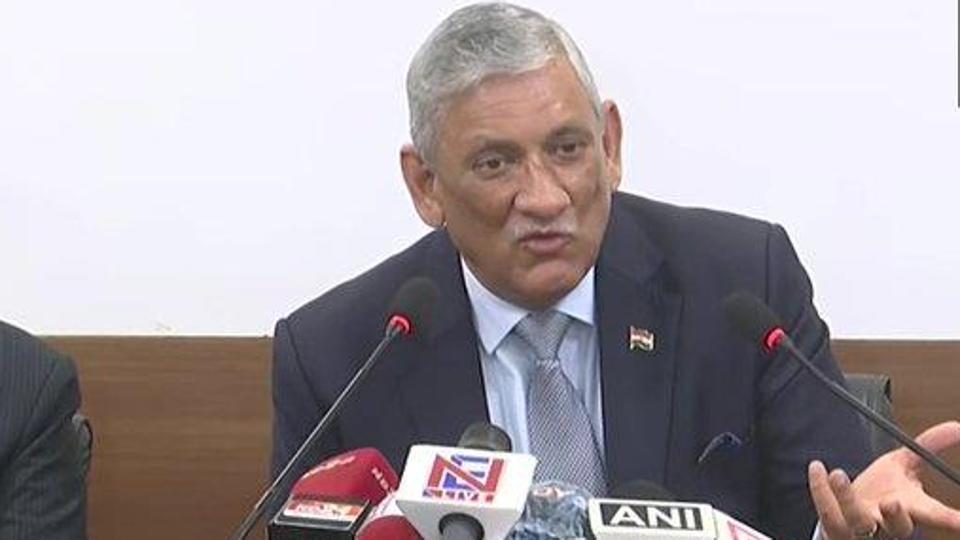
“China is making big inroads in South Asia and the Indian Ocean region through the Belt and Road Initiative projects. Of late we are witnessing a geo-strategic competition and huge investments by China in the region,” Rawat said while delivering the keynote address of the 1st Ravi Kant Singh memorial lecture.
He mentioned that Bangladesh and Myanmar have been the largest recipients of Chinese military aid in the recent past along with significant investments in Nepal, Sri Lanka and Maldives to gain strategic foothold.
“China’s foray into Bangladesh and Myanmar is not in India’s national interest and these are pearls in the string of pearls that is attempting to engulf India. There exists an omnipresent danger of regional strategic instability, threatening India’s territorial integrity and strategic cohesion,” said Rawat.
The CDS mentioned that Pakistan’s continued sponsoring of cross-border terrorism by state/ISI and non-state sponsored acts against India are a major stumbling block to our peace process and called out China for its partnership with the western neighbour.
“China’s partnership with Pakistan through provision of military hardware, supporting Pakistan at various forums in the geo-political arena and the insensitivity towards India’s territorial claims while pursuing the China-Pakistan economic corridor or CPC through Pakistan-occupied Jammu & Kashmir can be best described as an anti-India nexus,” he said.
Rawat said that the uncertainty of the Taliban leadership in Afghanistan has plummeted the nation into political instability and turmoil making it a playground for future great Asian power rivalry.
Later addressing reporters, the CDS blamed Pakistan of indulging in a proxy war with India and said they will do anything to disturb peace and tranquillity in Jammu & Kashmir.
“The adversary will always try and do something. But if we start falling into the trap of the adversary, it will not be good for us. We should not fall prey to their propaganda and we should be shunning these activities,” said Rawat.
He said that China was using money power and economics to gain popularity in India’s neighbourhood, but we have to continue with mission SAGAR (Security and Growth for All) and assure neighbours that we are their permanent friends and we want to engage with them on equal terms.
“We need to be able to convince them that we will be your friends in the long term. In the short term, they may get monetary advantage from China. But at what cost?” questioned Rawat.