
 E-Paper



'Doesn't mean some deal…': CJI on judges meeting heads of governments
Stressing that the judiciary is completely independent, he explained that there is an intersection between the works of the judiciary and the government.

 Prefer HTon Google


Chief Justice of India DY Chandrachud has clarified that whenever the chief justices of high courts and the Supreme Court meet the heads of governments in states and at the Centre, they never discuss pending cases. He said the meetings are often linked to administrative matters and don't mean that there were some "deals cracked".
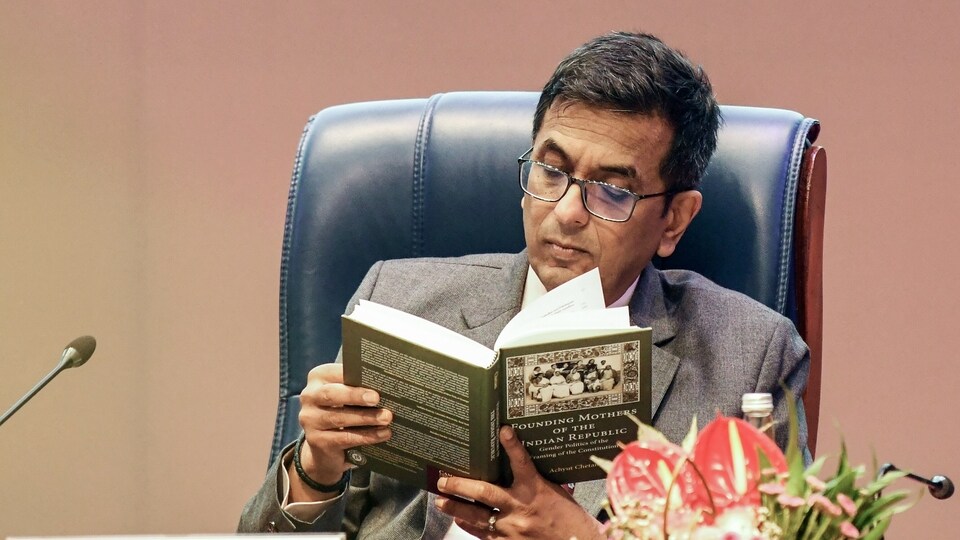
Justice DY Chandrachud, who would retire as CJI on November 10, explained that such meetings are necessary because the state governments pass the budget for the judiciary.
"We do meet but that doesn't mean that there is some deal cracked. We have to be in dialogue with the Chief Minister (CM) of the State because they will have to provide budgets for the Judiciary. And this budget is not for the judges. If we do not meet and only rely on letters, our work won't be done. But when we meet, trust me, there's a great deal of maturity in the political system and in those meetings, never in my experience, would a CM speak about a pending case," he was quoted as saying by Live Law.
Stressing that the judiciary is completely independent, he explained that there is an intersection between the works of the judiciary and the government on the administrative side.
Also read: PM Narendra Modi's visit to CJI Chandrachud's residence draws Opposition's reaction: ‘Our concern is…’
"The administrative relationship between the Supreme Court and the Government of the day is distinct from the judicial work done by the apex court. It is a tradition that the CM or the Chief Justice will meet each other on festivals or bereavement. But surely we must have the maturity to understand it has no bearing at all on our judicial work. We must understand that one will not 'adjust' anything in a meeting viewed by the public. We must accept that there has to be a continuing dialogue, not in terms of the work that we do as judges, not at all. Because, the work that we do as judges, we are completely independent. But in so many ways, there is an intersection between the work of the judiciary and government on the administrative side," he added.
Last month, the opposition questioned Chief Justice DY Chandrachud after Prime Minister Narendra Modi joined him and his wife at their residence for a puja.
Raising concerns over the visit, Shiv Sena (UBT) leader Sanjay Raut had said such interactions between constitutional authorities and political leaders could undermine trust in the judiciary.
“The Prime Minister visited the Chief Justice's residence and they performed aarti together. Our concern is that when the custodians of the Constitution meet with political leaders in this manner, it raises doubts. Our case in Maharashtra, which involves the current government, is being heard before the Chief Justice and the Prime Minister is part of it. We are concerned about whether we will get justice. The Chief Justice should consider recusing himself from this case,” he had said.
Justice Sanjiv Khanna will be the next Chief Justice of India. He will take oath on November 11.


