
 E-Paper



Country in state of turmoil: Afghan embassy asks SC to defer hearing by 6 weeks
Afghanistan’s embassy told the Supreme Court that it was not able to get instructions from Kabul due to the regime change in the country


NEW DELHI: Afghanistan’s embassy on Thursday asked the Supreme Court to put off hearing a pending case in view of the regime change in Kabul and the mission’s inability to get instructions from the new regime under the Taliban.
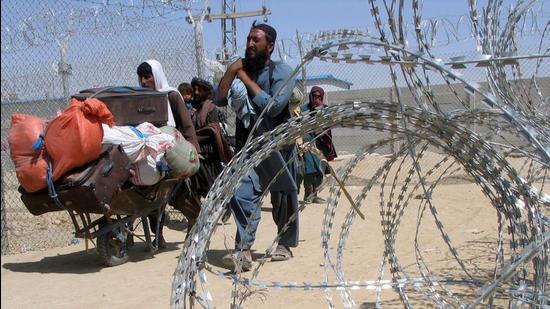
Lawyer Ejaz Maqbool, counsel for the Embassy of Islamic Republic of Afghanistan, sought six weeks. “There is a regime change in Afghanistan and the entire country is in a state of turmoil and I am not able to get further instructions from the Ambassador and from the embassy located in New Delhi. I will be requesting for an adjournment of six weeks,”Maqbool said in his request for an adjournment.
His request was granted by a bench of Justices Vineet Saran and Dinesh Maheshwari but the court wondered if six weeks was a reasonable prayer to make at this juncture. “Do you think the situation will be resolved in six weeks.”
Maqbool said: “We all pray that the situation improves soon….For now, let the matter be listed after six weeks.”
Maqbool later said this is the only petition filed by the embassy pending in the Supreme Court.
The case relate to a dispute with a Delhi-based firm initially contracted for the renovation of the mission in Delhi. The embassy engaged a different firm after 40% of the contracted work was completed on the grounds that the first firm had been unable to meet the laid-down quality standards and missed the 240 day deadline agreed.
The firm subsequently initiated arbitration to get its payments. The matter reached the Supreme Court which allowed the firm to appoint a sole arbitrator, who ruled in the favour of the Delhi firm. For execution of the arbitrator’s award of November 2018, the firm went up against the embassy in the Delhi High Court where the question raised was whether an arbitration award can be enforced against a foreign country and if the consent of the central government was required to enforce it under the Code of Civil Procedure.
On June 18 this year, the Delhi High Court held that prior consent of central government will not be necessary and ruled that “a foreign state cannot claim a sovereign immunity against enforcement of an arbitral award arising out of a commercial transaction.”
The embassy approached the Supreme Court on August 10 against this ruling. The high court order required the embassy to deposit a sum of over ₹1.72 crore within four weeks with the high court registry. It was also required to file its affidavit of assets as on the date of the cause of action, date of the award and the date of the High Court judgment. The embassy claimed it was never agreed to the arbitration being done in Delhi since the seat of arbitration was Kabul, Afghanistan and thus no enforcement of the Arbitral Award was applicable to it.


