
 E-Paper



Covid-19: What you need to know today
While the Pfizer vaccine awaits regulatory clearance in India, it is likely that most Indians will not receive it.

 Prefer HTon Google


The US Food and Drug Administration’s endorsement of the Moderna vaccine’s safety and efficacy on Tuesday — a regulatory clearance is expected as early as Friday — came with a bonus: details, hitherto unknown, that indicated the vaccine’s ability to prevent or, at the least, reduce the transmission of Covid-19. As this columnist has previously written, what most of the Phase 3 clinical trials of vaccines against Covid-19 sought to measure as an outcome was effectiveness in preventing infection. The vaccines developed by Moderna, Pfizer/BioNTech, Astra Zeneca/Oxford, and the Gamaleya Institute, have all proved to be effective, albeit to varying degrees, though all do exceed the bar of 50% set by the US regulator.
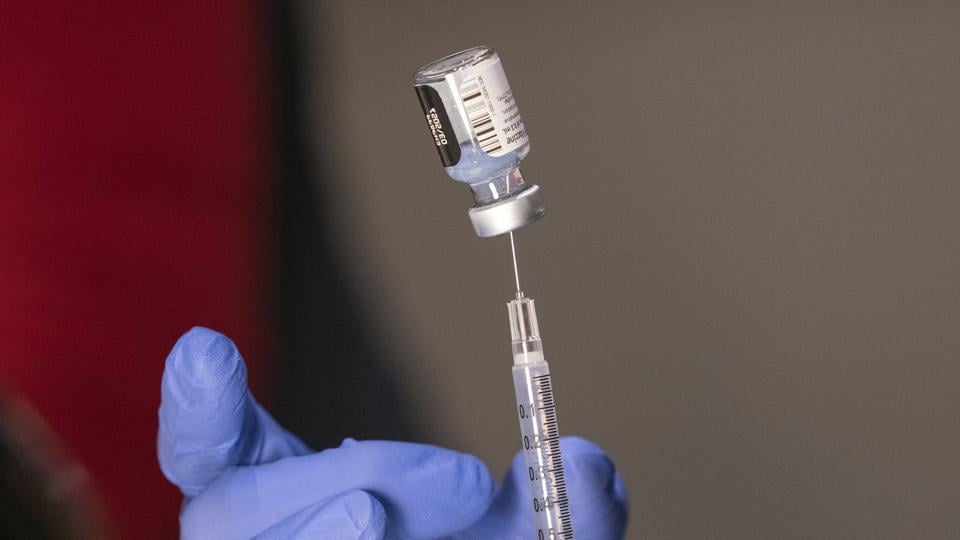
Based on the trial data published in the public domain, only AstraZeneca seemed to have tested for the vaccine’s impact on transmission — it found that the vaccine did reduce transmission — although this nugget was almost immediately forgotten in the criticism that was justifiably and understandably targeted at the vaccine developers for data based on what was clearly a mash-up of Phase 3 clinical trials. It’s probably the reason the vaccine won’t be approved in the US on the basis of these trials; an approval in the UK, one of the places where Phase 3 trials were conducted, is expected in days.
Also Read: Bharat Biotech’s Covaxin safe, says Phase 1 trial data
Now, FDA’s in-depth report on the Moderna vaccine candidate publicises data that was absent in the company’s initial data released in mid-November. According to this report, the company presented data that showed that the first shot of its two-dose vaccine actually managed to reduce asymptomatic infections — something that could, if established through further research, mean that it reduces transmission of the viral disease.
Vaccines that don’t just prevent infections but also reduce or stop transmission could effectively crush the pandemic — and mean a faster return to normal. For instance, it could mean vaccinated people no longer have to wear masks because they cannot be transmitters.

Similar data for the Pfizer/BioNTech vaccine, which is currently being administered in both the US and the UK, isn’t available, although the company is believed to be working on this.
While the Pfizer vaccine awaits regulatory clearance in India, it is likely that most Indians will not receive it. A vaccine dashboard maintained by Unicef puts the number of vaccine doses for which India has struck agreements with companies at 200 million — which is probably more accurate than the 1.6 billion number doing the rounds. Of this, 100 million doses (of Covishield, the two-dose AstraZeneca/Oxford vaccine) are through an agreement between Gavi, The Vaccine Alliance and Serum Institute of India (SII), which is making the drugs locally, and another 100 million, through an agreement between Gamaleya and Hetero Drugs. The Indian government isn’t party to either deal, although there would seem to be an unstated understanding that the government will, pending the vaccine’s approval in India, acquire most of the output of SII that hasn’t been spoken for already.
India is also likely betting on Covaxin, the vaccine being developed by Bharat Biotech in partnership with the Indian Council for Medical Research. Phase 3 trials for Covaxin (also a two-dose vaccine) are currently underway, and interim results are expected around the end of the year. Bharat Biotech has sought emergency-use approval on the basis of data from its Phase 1/2 trials (this is as yet unpublished), but India’s drug regulator has rightly asked the company to come back with data from its Phase 3 trials. Again, while no formal deal exists (or has been publicised), the understanding would appear to be that, pending approval, the government will acquire much of Bharat Biotech’s output.
SII is conducting its own Phase 3 trials of Covishield in India, and when that data is released it will be interesting to see if there is any indication that the vaccine prevents transmission, as suggested by the interim analysis of its Phase 3 trial data that was released last month.


