
 E-Paper



Covid-19: What you need to know today
India has prioritised agricultural and industrial activities, political activities (replete with large-scale public meetings and rallies), and recreational activities.


In the first 29 days of November, India recorded 1,248,778 (approximately 1.25 million) Covid-19 cases and 15,020 deaths. Both numbers are low enough to be comparable to those in July – when the country saw 1,109,138 (approximately 1.1 million) cases and 19,140 deaths. In fact, even the June deaths (12,081) are comparable to the November number, and they came on the back of far fewer cases (only 394,867). With the caveat that deaths in a particular month do not always correspond to cases that month – the norm, globally, has been to assume a two-week lag, but even this is an approximation because sometimes people succumb to the disease in days, and sometimes hang on for months – this is a good indication of how progressive case fatality rates have declined in India, much like they have in other parts of the world. India’s stated objective, articulated by the health ministry, is to reduce this number (a proportion of those who die from Covid to those infected) to below 1%. Since June, when it was 3.06%, the monthly case fatality rate has declined – to 1.73% in July, 1.45% in August, 1.26% in September, 1.25% in October (September and October were the months when India saw the peak of the first wave of the coronavirus disease), and 1.2% in November.
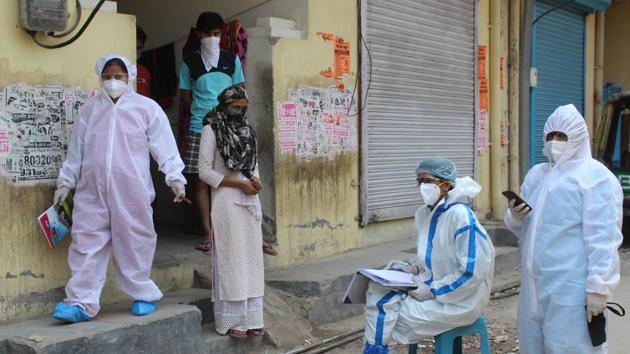
With the trajectory of the pandemic remaining flat (for now), it is likely that December – at least the first half of the month – will see a further fall in the case fatality rate. The number of active cases, as on November 29, was under 450,000. The corresponding figure, at the end of October (on October 31) was around 570,000, and it was around 940,000 on September 30. In two months, India has halved the number of active cases, something that has also been reflected in the easing of some of the strain on hospitals – other than in Delhi, where a sudden surge in cases during the third wave (which the Capital seems to have put behind it) saw a shortage of critical care or intensive care unit (ICU) beds. As I’ve previously written, if India manages to go through this week without showing an appreciable increase in cases on account of the festivities and celebrations two weeks ago, it can expect the coronavirus disease trajectory to settle into a long plateau as the second wave begins.
That means the central government as well as state governments can start considering the resumption of more activities and easing some of the restrictions that remain. It is important that governments prioritise what is important. India has prioritised agricultural and industrial activities, political activities (replete with large-scale public meetings and rallies), and recreational activities. It is time it looked seriously at education in terms of ensuring that admissions to colleges for the 2020 academic year are complete (they still aren’t in some states); resuming school education; and planning for admissions to colleges in the 2021 academic year. The 2020 academic year has already been disrupted significantly, and if the Centre and states do not act soon, 2021 could see some disruption too.
Many states have started discussing a large-scale reopening of schools (currently, some states have reopened schools for high-school students). Some want to do this in January, others as early as December. This is understandable, but there is need for an overarching plan, and protocols on how schools and colleges (and the cities and districts where they are located) will deal with the localised outbreaks that will likely follow a reopening. Unfortunately, India does not seem to have a plan yet, and this is an area on which it comes off very poorly in a global comparison. In many other countries, schools were the last to shut during lockdowns, and the first to reopen – and even many of these countries have been criticised for prioritising industrial, economic, and recreational activities over education.


