
 E-Paper



Covid-19: What you need to know today
It is unlikely that the revision, up by 1,290 to a total of 3,869 deaths in Wuhan, will stop questions about the accuracy of China’s numbers. In fact, it will likely raise even more questions.

 Prefer HTon Google


In an admission that must have surely prompted millions of I-told-you-so moments across the world, China on Friday, through its state media, raised the death toll in Wuhan, the city where the Sars-CoV-2 virus that causes Covid-19 first emerged, by around 50%.
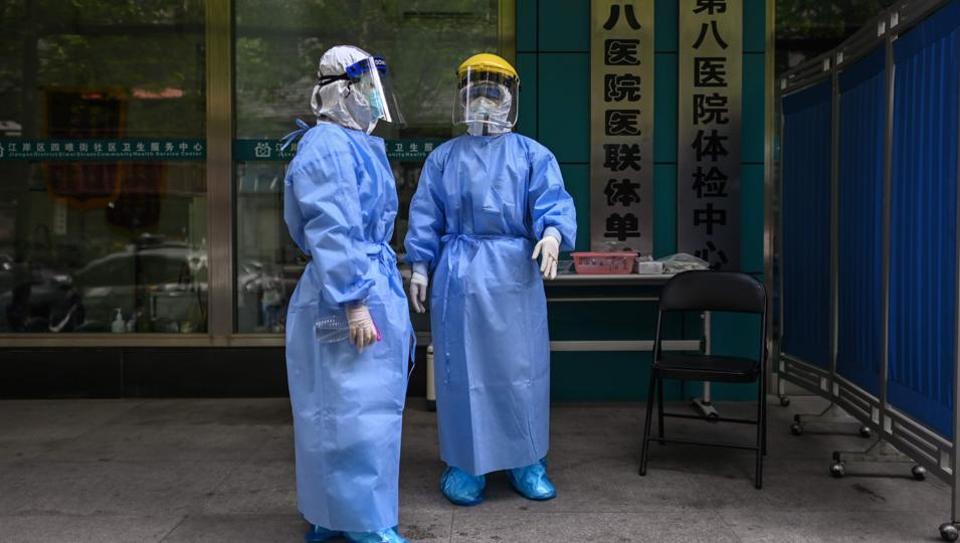
It is unlikely that the revision, up by 1,290 to a total of 3,869 deaths in Wuhan, will stop questions about the accuracy of China’s numbers. In fact, it will likely raise even more questions.
Another set of China numbers also caused a flutter on Friday. Economic data released showed that China’s economy shrank by 6.8% in the first three months of the year as compared to a year ago, highlighting just how badly the pandemic and the lockdowns declared by countries around the world to contain it — the only option in the absence of a vaccine or a proven cure — hurt economies. This is the first time in decades that the Chinese economy has shrunk.
For years, the Chinese economy was the driver of global growth. This year, according to the International Monetary Fund, the global economy will shrink by 3% (IMF has also said the Indian economy will expand by 1.9%). Admitting the death toll in Wuhan was higher than previously reported, and reporting a decline in the economy are both uncharacteristic of the Chinese. Indeed, to find the last time the Chinese admitted their economy shrank, one would have to travel all the way back to the mid-1970s.
The 1.9% number came up during Reserve Bank of India governor Shaktikanta Das’s comments on Friday as he unveiled the second tranche of monetary and credit measures to help businesses cope with the economic impact of Covid-19. The measures involved targeted liquidity at small businesses (and small finance companies), and agriculture, and enough respite for banks from having to declare accounts as non performing assets on the basis of norms that no longer make sense during this time (see pages 1 and 9). While RBI’s actions on the liquidity, credit, and financial stability fronts are welcome, the Indian economy desperately needs the government to announce a broader relief and stimulus package.
If the pandemic subsides in the second half of this year, global economic growth next year will be 5.8%, IMF said in its outlook named The Great Lockdown.
The chances of that happening seem unlikely. The pandemic could well subside, but in the absence of a vaccine, the world is unlikely to open up. On Friday, Australian Prime Minister Scott Morrison said that at least some restrictions in his country could continue for a year.
He also spoke of a smartphone app similar to India’s Aarogya Setu, which the government will use to detect whether people may have come in contact with an infected person. Aarogya Setu isn’t mandatory, nor is the Australian app, which is expected to be launched in a few weeks, but the success of such apps, defined by their ability to contact-trace, is a direct function of the number of people who download it. Singapore also has a similar app called TraceTogether.
Apps such as this could become important as governments seek to find a way for life and work to go on — even as the threat from the virus remains.
On Monday, India will begin one such experiment, with a planned opening up of certain parts of the country for some business activities. Some states in the US hope to do this by the first week of May. India’s 40-day lockdown will come to an end on May 3. If the curve of infections has flattened by then, and if the infection rate is down to manageable levels, India can then return to a new normal existence — with social distancing, masks, and an app to keep it safe.


