
 E-Paper



Data from caste survey should be made public, says Supreme Court
Data from caste surveys should be made public to let people mount legal challenges to the decisions taken by the governments based on such data, the court said

 Prefer HTon Google


New Delhi: Data from caste surveys should be made public to let people mount legal challenges to the decisions taken by the governments based on such data, the Supreme Court observed on Tuesday.
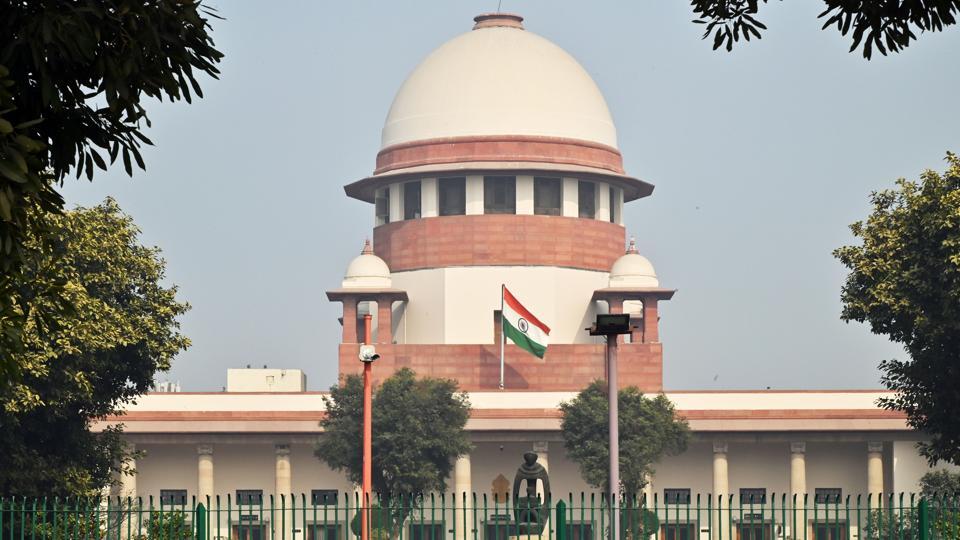
It also sought to know from the Bihar government the extent to which it put out the data of its 2023 caste survey since this became the basis for hiking the caste-based quota from 50 to 65% in employment and education in the state.
Apart from the impending legal issues, the survey in Bihar has deepened political battle lines around caste ahead of the 2024 Lok Sabha elections and the 2025 assembly elections in Bihar as the national Opposition aims to dent the ruling Bharatiya Janata Party’s wider Hindu consolidation by alluding to the interests of different communities in a complicated caste matrix.
“What we are concerned about is that the breakdown of data is normally not made available to the public and that creates problems since data become the basis of inferences,” said a bench of justices Sanjiv Khanna and Dipankar Datta as it heard a bunch of petitions challenging the August 1 judgment of the Patna high court that allowed the state government to carry out the caste survey.
According to the bench, it is important for the authorities to put out the data of the caste survey in the public domain because selective disclosure may not be enough for the people to pursue the appropriate legal recourse available to them.
“We would want to know as to what extent it is available to the public. Selective disclosure may have its own problems...Break-up of data should normally be made available so that people are able to challenge the decisions, based on inferences from that data,” the bench observed.
Appearing for the Bihar government, senior counsel Shyam Divan responded that “huge data” is already available in the public domain and that it may not be proper to release everything. Divan added that data was being studied.
To this, the bench said: “We understand everything cannot be put out because of different concerns. At the same time, anyone challenging an inference has to have that particular data.”
Senior counsel Raju Ramachandran, representing one of the petitioners in the case, said that he would adduce the caste survey report on the next date of hearing for a perusal of the bench. Ramachandran also pressed for an urgent hearing, contending that the Bihar government has increased the reservation based on the findings of the survey and that separate legal challenges will have to be laid before the Patna high court against this decision.
The bench, however, remained disinclined to fast-track the matter and fixed the next hearing in the week commencing on January 29. “Once the high court judgment has given its stamp of approval to the census, we would not like to...,” it said.
During the last hearing of the case on October 6, the Supreme Court declined to restrain the Bihar government from acting on or releasing more data based on the politically sensitive caste survey, observing that most policy decisions proceed on data and that a government, in an interim measure, cannot be stopped from taking decisions. On that day, the bench further pointed out that one of the moot issues in the matter relates to the breakdown of data and as to how much of it could finally be made public by the state government.
By a judgment in August, the Patna high court affirmed the state’s June 6, 2022, notification announcing the survey. The judgment called the state’s action “perfectly valid, initiated with due competence, with the legitimate aim of providing development with justice”. It said that the survey has passed the test of proportionality, and thus, is not in breach of the rights of privacy of the individual.
Challenging this judgment, the petitioners before the top court, which included Nalanda resident Akhilesh Kumar and the NGO Ek Soch Ek Prayas, attacked the survey being violative of the right to privacy as personal details about religion, caste and income were collected by the state in the absence of any mechanism to protect the data.
Bihar’s caste survey results made public on October 3 showed that extremely backward communities — which comprise 112 castes — constituted 36.01% of the state’s population, and backward castes — formed by 30 communities — made up another 27.12%. Together, OBCs — the umbrella group consisting of backward castes and EBCs in the state — were 63.13%.
Following the caste survey, the state assembly passed two bills, proposing a hike in the quota for Scheduled Castes (SCs) from 16 to 20%, Scheduled Tribes (STs) from 1 to 2%, extremely backward castes (EBCs) from 18 to 25% and other backward classes (OBCs) from 15 to 18% - expanding the caste-based reservations from 50 to 65%. With this, the total quantum of reservations in jobs and educational institutions in Bihar stood at 75%, after taking into account the 10% already existing quota for EWS.
The Supreme Court, in the 1992 Indra Sawhney (famously known as Mandal Commission) case, had fixed a ceiling of 50% on quota. The legal paradigm that has, for three decades now held the ceiling as inviolable, was endorsed by a five-judge bench in 2021 as it quashed a 2018 Maharashtra law for reservation to Marathas in jobs and educational institutions.
Tamil Nadu, presently, has a law providing for 69% reservation for identified classes. Although a challenge to this law remains pending before the top court, it has been saved so far on the grounds that the law received a presidential assent in 1993 and was also put in the Ninth Schedule of the Constitution, which ensured a limited scope of judicial review.



