
 E-Paper



DGCA orders RAT reinspection on Air India’s Boeing 787s after PCM replacement
DGCA directs Air India to reinspect RAT stowage on Boeing 787s after incidents. Further investigation and reports from Boeing requested.

 Prefer HTon Google


New Delhi: Aviation safety regulator Directorate General of Civil Aviation (DGCA) has directed Air India to reinspect the Ram Air Turbine (RAT) stowage on all Boeing 787 aircraft where the Power Conditioning Module (PCM) was recently replaced, officials aware of the matter said.
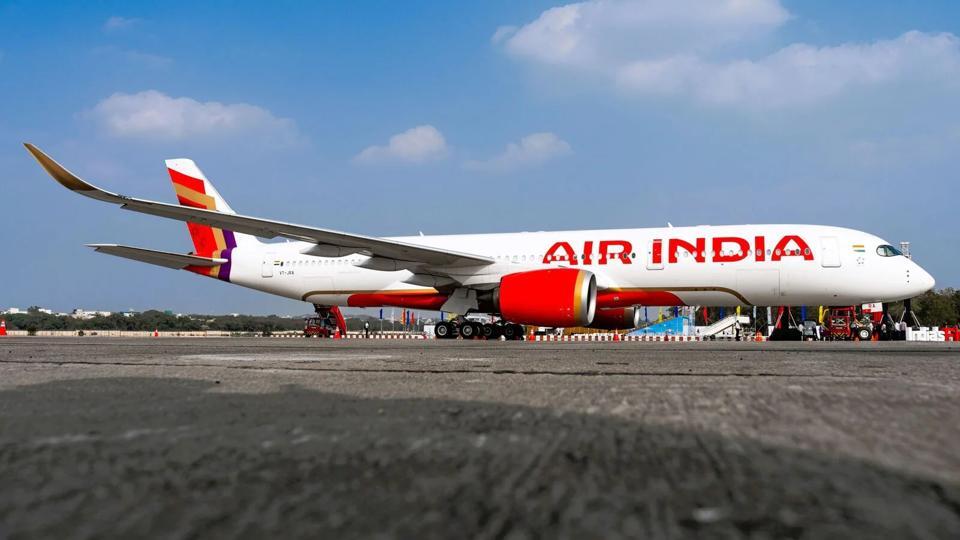
The directive comes after two recent technical incidents involving the airline’s Dreamliner flee. “Air India has been advised to reinspect the RAT for stowage for all the aircraft whose PCM module was replaced in the recent past,” a senior DGCA official said.
The Power Conditioning Module (PCM) is an essential part of a B787 aircraft’s electrical power system.
The official added that further investigation into the Amritsar–Birmingham flight, where the RAT automatically deployed, is in progress.
The DGCA has also sought a “comprehensive report” from Boeing on the preventive measures to be implemented in connection with the uncommanded RAT deployment incident.
The directive follows two consecutive incidents involving Air India’s Dreamliner fleet and a letter from the Federation of Indian Pilots (FIP) to civil aviation minister Ram Mohan Naidu, requesting the government to ground the airline’s entire Boeing 787 fleet and conduct a special safety audit.
According to officials, on October 4, the RAT deployed on Air India’s Amritsar–Birmingham flight (AI-117) just before landing. A few days later, on October 9, flight AI-154 from Vienna to Delhi—also a Boeing 787—was diverted to Dubai due to a “technical issue.”
Later, the FIP in its letter to the minister stated that, as per its information, the B787 aircraft was diverted during a “sudden failure of autopilot system, triggering a series of technical malfunctions.”
Air India denied “any assertion that there was an electrical failure” in the Boeing 787 aircraft that was diverted to Dubai on October 9.
The RAT is an emergency power source that deploys automatically in the event of a dual engine failure or total electrical or hydraulic loss.
The DGCA has also directed the airline to “review the work package of ‘D’ Check for the actions required in view of change of PCM module, for any discrepancy.”
“During landing at 400 ft, RAT unlock message came and it got deployed. The pilot did not report any related abnormality and the aircraft landed safely,” the DGCA official said.
Following this, Boeing’s recommended maintenance actions were carried out, “and no discrepancy was observed,” the official added. The aircraft was subsequently released for service and returned to Delhi on October 5, he said.
“Boeing has been requested to provide a comprehensive report outlining the preventive measures to be implemented in respect of the uncommanded RAT deployment incident,” another DGCA official said.
The regulator has also asked the US aircraft maker to share detailed information on similar incidents globally involving the Boeing 787 series, as mentioned in the company’s Fleet Team Digest.
“Boeing has also been asked to provide any service difficulty report received from aircraft operators worldwide after changing the PCM module,” the official added.


