
 E-Paper





Follow the latest breaking news, major developments and agenda-setting stories from India and around the world with the newsdesk at Hindustan Times. Operating round the clock, the desk brings together experienced editors, reporters and correspondents to deliver fast, accurate and contextual reporting across subjects that influence public policy, governance, business, society and international affairs. The HT News Desk covers politics, elections, government policies, the economy, business and markets, science and technology, the environment, law and order, infrastructure, education, climate issues and geopolitics, while closely tracking developments across states, institutions and global capitals. The team also leads coverage of major breaking news events, policy announcements, court proceedings, natural disasters, public emergencies and significant international developments. Reports published by the newsdesk are based on information gathered from reporters on the ground, official statements, government agencies, court records, regulatory filings, recognised institutions and other authoritative sources. Stories undergo editorial scrutiny and verification processes to ensure accuracy, fairness and relevance, and are updated as events evolve and additional information becomes available. Whether covering a key political decision in New Delhi, an economic policy shift affecting millions, a landmark court ruling or a major global event, the HT News Desk aims to provide readers with reliable, fact-based journalism that delivers not only the latest developments but also the context and analysis needed to understand their wider implications.
Diesel cheaper by 63 paise as global oil prices fall
Petrol rates have been cut by 22 paise a litre, bringing down its retail price to Rs 81.86 in Delhi


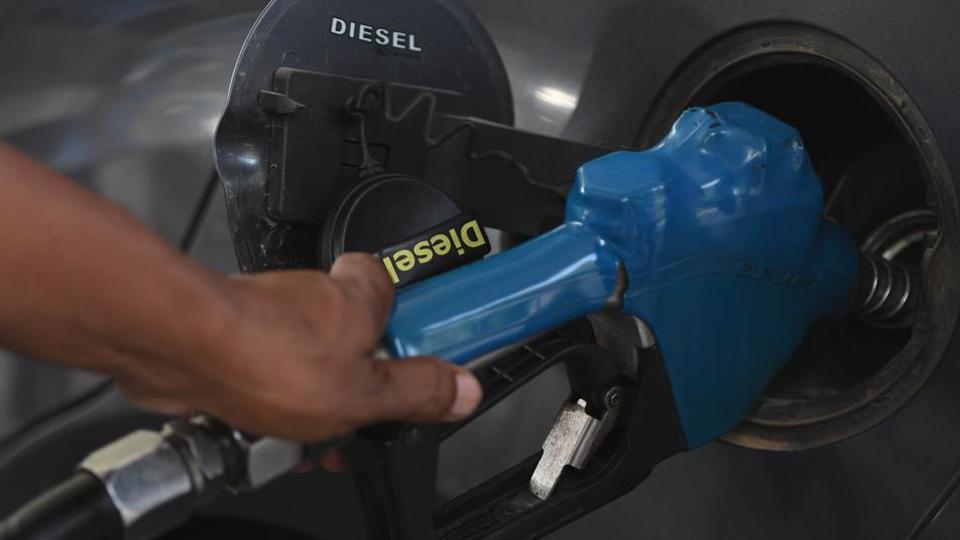
Oil companies have reduced diesel prices by 63 paise per litre (8.33%) since September 2, bringing down its rate to Rs 72.93 on Saturday in Delhi as international crude oil prices softened over 10% during the period because of a rise in the global stockpile and weak demand. Petrol rates have been cut by 22 paise a litre that brought down its retail price to Rs 81.86 in Delhi on Saturday.
The difference in quantum of decline in pump prices of petrol and diesel is mainly because their rates are aligned with respective international benchmarks that often do not move synchronously, two executives working for different state-run oil marketing companies (OMCs) said, requesting anonymity.
Also Read: Oil climbs as US stock market strengthens, but heads for weekly loss
State-run fuel retailers revise pump prices of auto fuels daily based on fluctuations in their international benchmark rates. India’s fuel retail market is dominated by three state-run OMCs – Indian Oil Corporation (IOC), Bharat Petroleum Corporation Ltd (BPCL) and Hindustan Petroleum Corporation Ltd (HPCL). They have almost 90% market share.
Benchmark Brent crude fell $39.83 a barrel on Friday because of weak demand. It slipped below $40 a barrel for the first time since June 15. Reuters reported on Saturday that the US stock markets ended lower for a second week following several economic indicators that suggest a long and difficult recovery from the Covid-19 pandemic.
One of the executives cited above said the falling international oil prices also helped state-run OMCs in reducing retail prices of subsidised kerosene sold through the public distribution system (PDS).
The retail selling price of PDS kerosene was reduced by Rs 0.69 per litre in Kolkata. There was a corresponding reduction in prices in other cities effectively from September 1, the executive said.
Also Read: Oil prices edge up off three-month lows, but demand concerns persist
“This decrease is due to a drop in product prices in the international market and the strengthening of the rupee-dollar exchange rate,” he said. With this revision, the retail price of PDS kerosene was reduced from Rs 28.66 per litre in August to Rs 27.97 in September in Kolkata, he added.
Public sector oil companies revise kerosene rates every month.
The rupee-dollar exchange rate has a significant bearing on domestic fuel rates as India imports more than 80% of crude oil it processes and pays in dollars. Every dollar per barrel drop in crude prices reduces India’s import bill by Rs 10,700 crore on an annual basis.
According to the oil ministry’s data keeper, Petroleum Planning and Analysis Cell, the exchange rate fell to Rs 73.35 a dollar on September 11 compared to Rs 74.77 on August 3.


