
 E-Paper



Direct and indirect losses of disasters need to be accounted for: PM Modi
While 2021 maybe a year of recovery from the pandemic, Modi urged people not to forget the lessons learnt and understand the climate crisis does not have a vaccine yet


Disasters cause direct and indirect losses and both should be accounted for holistically, Prime Minister Narendra Modi has said while calling upon governments to invest in resilient infrastructure.
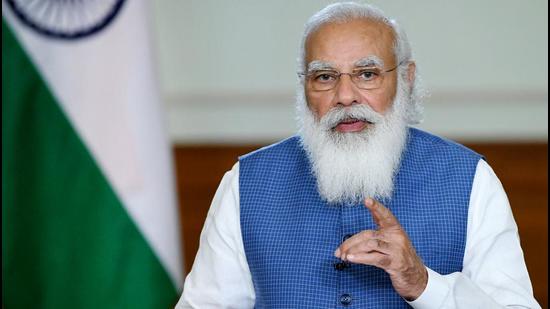
“When a bridge is lost, a telecom tower falls, power systems fail, or when a school is damaged, the loss is not just the direct damage. We should look at losses holistically. Indirect losses due to disruptions to small businesses and interrupted schooling of children may be several times higher,” Modi said at the inaugural session of the International Conference on Disaster Resilient Infrastructure co-hosted by India and the United Kingdom on Wednesday.
“We need the right accounting perspective for a holistic evaluation of the situation. If we make our infrastructure resilient, we will reduce both direct and indirect losses and protect the livelihoods of millions.”
Modi said the third edition of the conference was being hosted at an unprecedented time when the world is experiencing a once-in-a-hundred-year disaster. “The Covid-19 pandemic has taught us that in an interdependent and interconnected world, no country--rich or poor, in the east or west, north or south--is immune to the effect of global disasters,” he said, quoting Indian scholar Nagarjuna’s verse on the interconnectedness of all beings.
Also Read | Stop 2nd surge to prevent pan-Indian outbreak: Modi
While 2021 maybe a year of recovery from the pandemic, Modi urged people not to forget the lessons learnt and understand the climate crisis does not have a vaccine yet.
“It will take sustained and concerted efforts to mitigate climate change. We also need to adapt to changes that are already being observed and are affecting communities around the world…countries that are making large investments in infrastructure, such as India, must ensure that this is an investment in resilience, and not in risk,” he said. “But as the events of recent weeks have shown, this is not a developing country problem alone. Just last month, the winter storm Uri, knocked out around one-third of electricity generating capacity in Texas, United States. Almost three million people were left without power. Such events can happen.”
Modi launched the Coalition of Disaster Resilient Infrastructure (ICDRI) in 2019 at the UN Climate Action Summit 2019 in New York. The coalition has 22 members.
Modi said the effect of disaster in one part of the world can quickly spread across the world. “Cooperation is a must for ensuring the resilience of the global system. Infrastructure is developed for the long-term. If we make it resilient, we will prevent disasters not only for ourselves but many future generations,” Modi said. He stressed the need to harness the full potential of geospatial technologies, space-based capabilities, data science, artificial intelligence, material sciences, and combine it with local knowledge to pursue resilience.
Modi referred to climate change and said concerns of the most vulnerable nations and communities must be put first. “In this regard, the Small Island Developing Nations that are already experiencing the impacts of worsening disasters must have easy access to all the technology, knowledge and assistance that they consider necessary,” said. He said CDRI must take stock of the performance of some of the key infrastructure sectors particularly health infrastructure and the digital infrastructure that played a central role during the pandemic.
UK Prime Minister Boris Johnson called for the need to be ready for whatever challenges may be coming next “...we must not only do everything in our power to strive for global net-zero and ambitious 2030 emissions reductions targets, but we must also adapt to its damaging effects – and build more resilience to disasters. Our roads, our bridges, power lines, schools, hospitals – all the infrastructure we rely on to keep our economies moving and our communities safe – they must be made ready.”


