
 E-Paper



Emissions control, industrial changes: China's step-by-step guide for India on tackling air pollution
Beijing, which was also grappling with deteriorating air quality, has managed to drastically reduce pollutants.

 Prefer HTon Google


With concerns regarding the deteriorating Air Quality Index (AQI) in Delhi growing, the Chinese embassy on Wednesday shared a step-by-step guide with India on how the country handles its pollution levels.
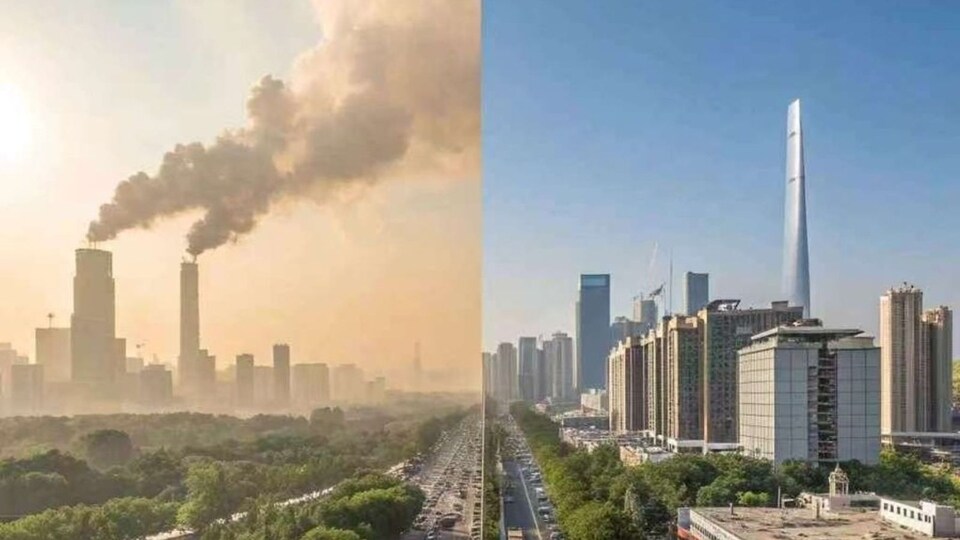
The AQI in Delhi last week breached the 400-mark, according to the Central Pollution Control Board (CPCB bulletin, following which preventive measures under GRAP Stage 4 were imposed in the capital.
Meanwhile Beijing, which was also grappling with deteriorating air quality, has managed to drastically reduce pollutants. According to the World Economic Forum, the PM2.5 pollution in the Chinese capital fell by 64 per cent between 2013 and 2023. The country also succeeded in reducing harmful nitrogen by 54 per cent in Beijing in a time duration of ten years, the WEF said.
In light of this, the spokesperson for the Chinese embassy in India, Yu Jing, provided some steps which could be useful to curb pollutants in New Delhi. While drawing a comparison between the Indian and Chinese capitals, Jing said, “Both China and India know the struggle with air pollution amid rapid urbanization. While the challenge remains complex, China’s sustained efforts over the past decade have delivered noticeable improvements.”
Also Read | Supreme Court ends protection to BS3 and below end-of-life vehicles in Delhi-NCR
Jing further attached images showing the air quality in Delhi at 447 on Monday, and the AQI reading in Beijing which stood at 68.
Addressing vehicular emissions
The Chinese embassy spokesperson said the first step in tackling air pollution was ‘vehicle emissions control’.
Jing suggested adopting regulations like the China 6NI, which are ultra-strict vehicle emission standards. These were implemented as part of Beijing's ‘clean air strategy’. The embassy spokesperson further said that retired and old high-emission vehicles could be phased out, and odd-even or weekday driving rules could be brought in.
Delhi has in the past followed the odd-even formula to combat pollution, wherein odd number plates can be driven on odd dates and vice versa for even number plates.
Jing also highlighted the benefits of a strong metro or bus network and suggested accelerating “the shift to electric mobility.” Jing said the efforts were possible due to emission cuts undertaken by the Beijing–Tianjin–Hebei region.
Undertaking industrial restructuring
In addition to curbing vehicular emissions, Jing suggested bringing in changes to the industrial sector, saying that more than 3,000 heavy industries can be shut down or removed. “Relocating Shougang, one of China’s largest steelmakers, alone cut inhalable particles by -20%,” the embassy spokesperson said.
Jing also proposed transforming vacated or abandoned factories into parks, commercial zones, or cultural and tech hubs. “The former Shougang site became 2022 Winter Olympics venue,” Jing said in a post on X.
“Relieve non-capital functions by relocating wholesale markets, logistics hubs and some educational & medical institutions,” the spokesperson for the Chinese embassy added.


