
 E-Paper



‘Era after Apollo shaped understanding of cosmos’
The Apollo 11 Lunar mission instilled the passion for space and astronomy in a lot of people. It also paved the way for ambitious expeditions in space.


I was eight years old when Apollo 11 was launched and I remember watching Neil Armstrong step on the Moon, the first time humanity had set foot on another world. The Moon landings may have been designed for political purposes in the Cold War era, but they were to set the US firmly on the path of technological advancement. Incidentally, Apollo 11 instilled a lifelong love for space in me and pushed me into science and astronomy. Even at the time, science was not the primary driver for the Lunar missions and it is telling that the only scientist to walk on the Moon was Harrison Schmitt, a geologist.
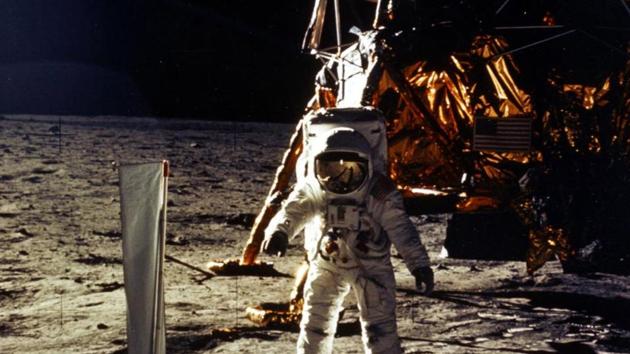
The era after Apollo was a golden age for space astronomy with fundamental results that have reshaped our understanding of the cosmos, but with little interest in the Moon, which has always been a backwater of astronomical research.
It is only recently that humanity is returning to the Moon, at least with robotic launches.
The excitement perhaps began with the Google X-Prize, an overly ambitious attempt to get private companies to go to the Moon, but has continued with the new American intention of going to Mars via the Moon, the notably successful Chinese Yutu rover and now with the Chandrayaan missions. These are all ambitious attempts to establish a space presence and to pave the way for further exploration of the Solar System
There are a number of exciting scientific instruments on Chandrayaan 2 which will land deep in the Southern hemisphere of the Moon, to find evidence of subsurface water.
It certainly appears as though there is increased competition and therefore interest in exploring the Moon fully, eventually with a view to establishing a permanent Lunar base. This might be the start of a new astronomical era, with giant telescopes on the Moon where there is little interference from human activities.
(Jayant Murthy is a senior professor in the Indian Institute of Astrophysics)


