
 E-Paper



Eye on Donald Trump, India joins 9 nations to oppose foreign military infra in Afghanistan
Last month, US President Donald Trump caused a stir in regional security circles by demanding the Taliban hand over Bagram airbase to the US

 Prefer HTon Google


NEW DELHI: A group of 10 nations, including India, China and Russia, on Tuesday opposed efforts by countries to “deploy their military infrastructure in Afghanistan” against the backdrop of calls by US President Donald Trump for the Taliban regime to hand over the strategic Bagram airbase.
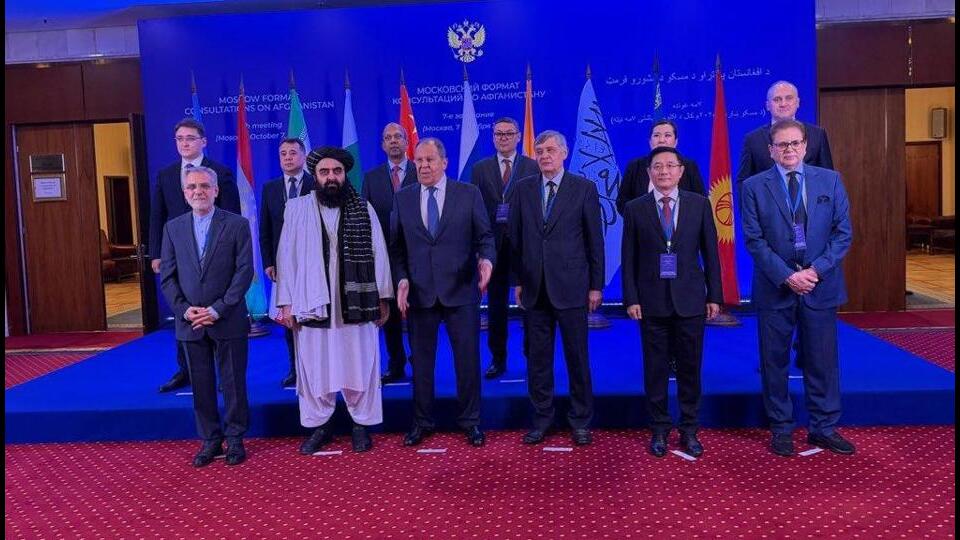
The countries, participating in the “Moscow Format” talks hosted by Russia, said in a joint statement that deploying foreign military infrastructure in Afghanistan will “not serve the interests of regional peace and stability”. Afghanistan should be backed to eliminate terrorism so that Afghan soil does not pose a threat to the security of neighbouring countries, they said.
Also Read: PM Modi speaks to Russia’s Putin, congratulates him on his 73rd birthday
For the first time, Taliban foreign minister Amir Khan Muttaqi participated in the Moscow Format talks as an official delegate. Since the mechanism was established in 2017, Taliban representatives have joined the consultations as guests or observers. India was represented by its envoy to Moscow, Vinay Kumar.
The joint statement said members of the Moscow Format described as “unacceptable the attempts by countries to deploy their military infrastructure in Afghanistan and neighbouring states, since this does not serve the interests of regional peace and stability”.
Last month, Trump caused a stir in regional security circles by demanding the Taliban hand over Bagram airbase to the US, five years after he concluded an agreement with the group that resulted in the US withdrawal from Afghanistan. Trump even said on social media that “bad things are going to happen” if the airbase isn’t handed over.
The Taliban regime, which came to power after the collapse of the Ashraf Ghani government in August 2021, has ruled out handing over Bagram airbase under any circumstances. The group said in a statement that “Afghanistan’s independence and territorial integrity are of the utmost importance”, and the Doha Agreement, concluded by Trump, states the US will not interfere in Afghanistan’s internal affairs.
Speaking at the opening of the Moscow Format consultations, Russian foreign minister Sergey Lavrov warned that the military presence of extra-regional actors in Afghanistan can trigger instability. Afghanistan should be integrated into regional political and economic processes without interference by foreign forces, Lavrov said.
The joint statement issued after the Moscow Format meeting called for strengthening counter-terror cooperation and emphasised the need to support Afghanistan to “undertake comprehensive measures aimed at the elimination of terrorism and its eradication within a short timeframe so that Afghan soil is not used as a threat to the security of the neighboring countries and beyond”.
The statement said terrorism remains a serious threat to the security of Afghanistan, the region and the world.
The representatives of Afghanistan, India, Iran, Kazakhstan, China, Kyrgyzstan, Pakistan, Russia, Tajikistan and Uzbekistan extended “unwavering support” for making Afghanistan an independent, united and peaceful state. They also backed economic and trade exchanges and investment cooperation with Afghanistan, and expressed interest in developing regional economic projects with Afghan participation.
They supported the integration of Afghanistan into regional connectivity initiatives and reiterated their commitment to humanitarian support for the Afghan people.
The Indian delegation led by ambassador Vinay Kumar backed an independent, peaceful and stable Afghanistan and socioeconomic development and prosperity of Afghan people, the Indian embassy in Moscow said on social media. Kumar reiterated India’s position that a secure, peaceful and stable Afghanistan will serve the interests of the Afghan people and be “fundamental to regional resilience and global security”.
In July, Russia became the first country to recognise the Taliban regime in Afghanistan after removing the group from its list of terrorist organisations and accepting its ambassador to Moscow. India, like the rest of the global community, has refrained from recognising the Taliban but has stepped up its engagement with the group’s leadership.
Muttaqi is set to travel to New Delhi during October 9-11 – the first visit by a Taliban minister to India – and is expected to hold talks with external affairs minister S Jaishankar.



