
 E-Paper



Future of Asia linked to development of India-China ties: Jaishankar
While Asia is expected to continue rising, how divided the continent will be depends on the management of its fissures and the adherence to laws, norms and rules, Jaishankar said

 Prefer HTon Google


The future of Asia is linked to the development of India-China relations and the “state of the border will determine the state of the relationship”, external affairs minister S Jaishankar said on Monday against the backdrop of the military standoff between the two countries.
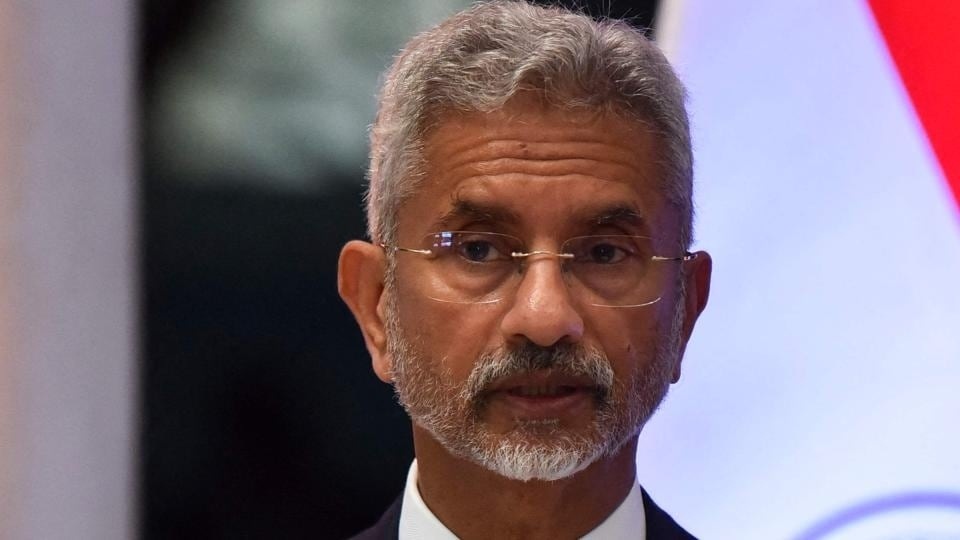
While Asia is expected to continue rising, how divided the continent will be depends on the management of its fissures and the adherence to laws, norms and rules, Jaishankar said in his address at an event marking the launch of the Asia Society Policy Institute in New Delhi.
“Much of the future of Asia depends on how relations between India and China develop in the foreseeable future. For ties to return to a positive trajectory and remain sustainable, they must be based on the three mutuals: mutual sensitivity, mutual respect and mutual interest,” he said.
“Their current status is, of course, well known to all of you. I can only reiterate that the state of the border will determine the state of the relationship,” he said in a reference to the standoff in the Ladakh sector of the Line of Actual Control (LAC) that began in May 2020.
Jaishankar said the concept of an “Asian century” requires effective management of the contradictions of the continent, and a multi-polar Asia is necessary for the Asian Century and a multi-polar world.
“It is said that the prerequisite for an Asian Century is an India and China coming together. Conversely, their inability to do so will undermine it,” he pointed out.
“We can reasonably expect Asia to continue rising because the economic and demographic trends point in that direction. How divided it would be depends on how well or badly its fissures are managed. And this, in turn, would demand adherence to laws, norms and rules,” he said in remarks that were an apparent reference to China’s behaviour across the region.
“For a start, sovereignty and territorial integrity will have to be respected. Initiatives that impact the region must be consultative, not unilateral. Connectivity, in particular, should be transparent, viable and market-based,” Jaishankar said.
At the same time, development agendas need to be broad-based and reflect global consensus, “rather than just individual national objectives”, while contributinns to the well-being of the global commons and providing global goods can “make a big difference”.
“And not least, agreements and judgements must be scrupulously adhered to, not regarded as matters of convenience,” he said.
Jaishankar’s remarks amounted to a pushback against China’s narrative in recent weeks that the situation on the LAC is currently stable and there has been a positive momentum in bilateral relations. The external affairs minister has repeatedly said that India-China ties cannot be normalised without peace and tranquillity in the border areas.
He also said Asia’s prospects and challenges are very dependent on developments in the Indo-Pacific. Again, without naming China, he said the concept of the Indo-Pacific reflects the divisions within Asia, as some quarters have a “vested interest in keeping the region less cohesive and interactive”.
“That the global commons and the international community are better served by collaborative endeavours like the Quad apparently leaves them cold,” he added.
At the same time, the shocks of the Covid-19 pandemic, the Ukraine conflict and climate change are impacting the evolution of the Asian economy, and make a powerful case for more engines of growth and resilient and reliable supply chains, Jaishankar said.
...


