
 E-Paper



Progress on crucial G20 finance issues: Nirmala
The G20 finance track has made progress on issues of debt distress, multilateral development banks reform and global understanding on crypto regulation.

 Prefer HTon Google


The G20 finance track has made progress on issues of debt distress, with China “positively engaged” in the process; the reform of multilateral development banks (MDBs) with “broad-based unanimity” on “proportionate” spending on poverty, prosperity and climate goals; and the need to have a global understanding on crypto regulation based on the recognition that their flows can affect macro-economic stability, finance minister Nirmala Sitharaman has said.
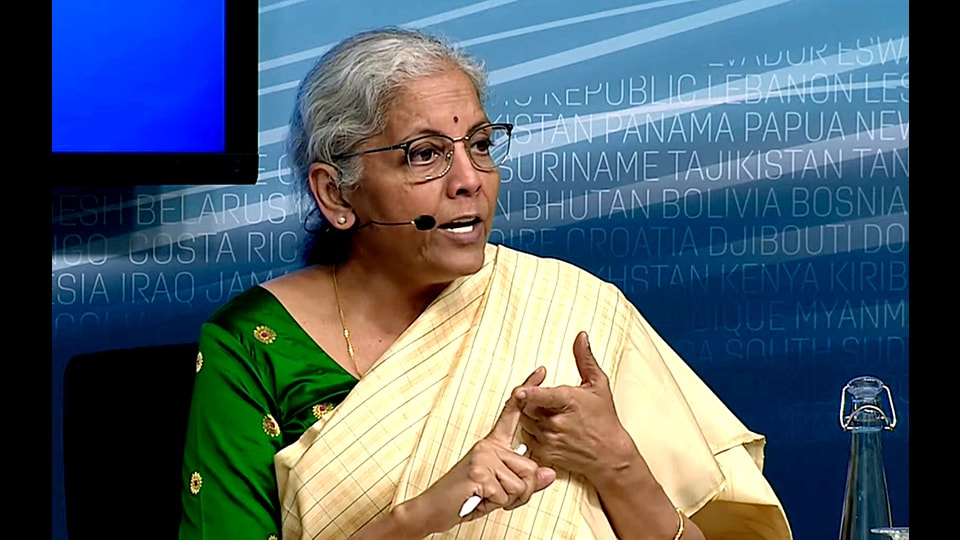
The group has also taken forward discussions on the flow and quantum of climate finance, the urgency of creating a fair, sustainable and modern international taxation system, and role of digital public infrastructure in deepening financial inclusion, the minister added.
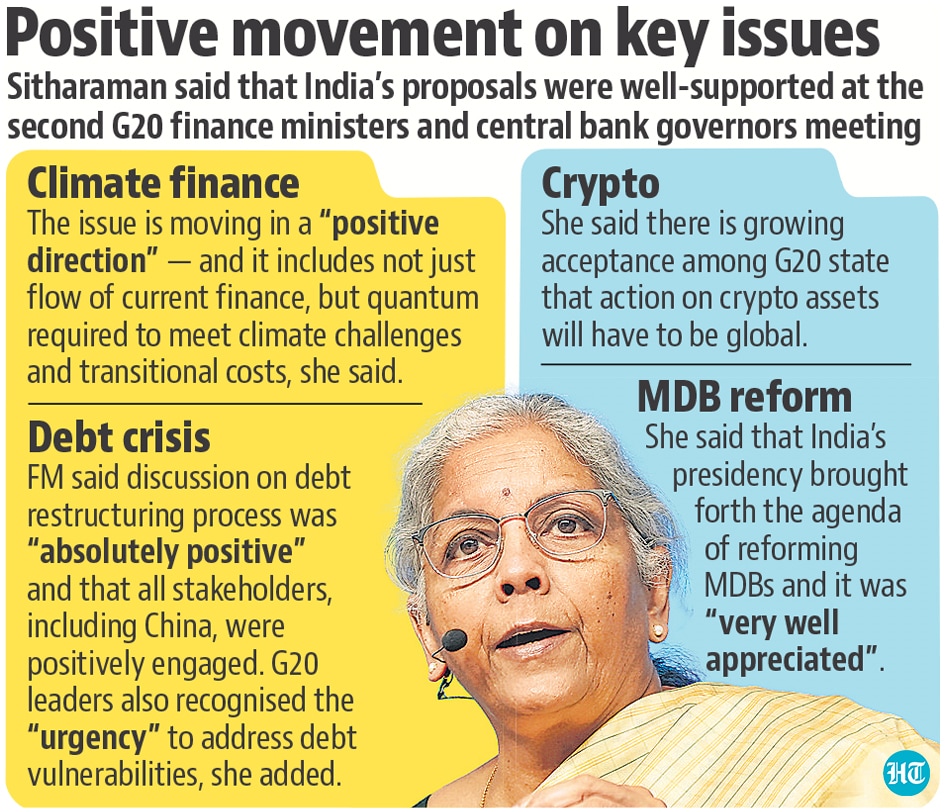
Addressing a press conference on the outcomes of the second G20 finance ministers and central bank governors (FMCBG) meeting under the Indian presidency, held in Washington DC on Wednesday and Thursday, Sitharaman said: “The discussions were very intense in the sense that there were a lot of substantive inputs coming from members. We were very happy to see that many, in fact most, of India’s proposals are well-supported and there is active engagement.”
The meeting had 350 delegates from member countries, 13 invitee countries and international and regional organisations.
The minister clarified that this was an ongoing process, and the issues under discussion with renewed momentum were “possible takeaways”.
She also played down the absence of a consensus-based joint communique or a chair summary. “In this meeting, we were very clear we are not talking about a communique or chair summary,” she said and referred to the chair summary that India released after the first FMCBG meeting in Bengaluru.
The first meeting failed to produce a communique due to differences between West and Japan on one hand, and Russia and China on the other, on the war in Ukraine.
A person familiar with the thinking behind the decision not to push for a communique said that while the war in Ukraine and its impact on global economy was discussed, the aim in the current meeting was to track the progress that has been made in the past few months on issues that are already a part of the agenda. This was done with the objective of creating enough ground for consensus for the third FMCBG meeting in July in Gandhinagar and subsequently the leaders-level summit in September.
The G20 meet held three separate sessions — on the global economy and international finance architecture; sustainable finance, financial sector and financial inclusion; and international taxation. Separately, India also co-chaired, along with the World Bank and International Monetary Fund, the global sovereign debt roundtable on Wednesday.
MDB reform
Sitharaman said that India’s presidency had brought forth the agenda of reforming MDBs and this had been “very well appreciated”. The ministers and governors accepted the constitution of an expert group on the issue, co-chaired by former American treasury secretary Lawrence Summers and veteran Indian policymaker NK Singh, which began its work this week in Washington.
Responding to a question from HT on the possible trade-offs involved between climate finance and development finance, the minister said that the Indian presidency has been very clear that this was not about trade-offs but an issue of “how best to balance”.
Sitharaman said that funding for developmental activities are required not just for low-income countries, but also for underdeveloped areas in middle-income countries. “Particularly post the pandemic, development funding is becoming more focused on areas and communities badly affected by the pandemic itself”. The balancing requires looking at the “core two issues” of the Bank — eradicating extreme poverty and bringing prosperity, not sequentially but together.
But, in addition, Sitharaman said, “The sustainable and other goals related to climate, climate finance and energy transition, will have to be the third pillar. The India presidency has highlighted that while staying consistent with the goals of the World Bank, and not just balancing them, we need to bring in this element which is now in three or four different headings — climate action, then looking at sustainable goals and so on. We are saying it should now become equally important part of the core activities.”
This focus has to be “proportionately for all three” and will require “out of the box” thinking on funding, including leveraging existing balance sheets and look at more resource mobilisation. At a time when there is speculation about a divide between advanced western economies and low income countries on the priority to be placed on development and climate finance, Sitharaman said there is “broad based unanimity” on this issue and no contradictory voice on the issue.
Sitharaman said that the issue of climate finance was also moving in a “positive direction” — and this included not just the current flow, but the quantum that is required to meet climate challenges and transitional costs for technology.
Debt
The G20 ministers and governors recognised the “urgency” to address debt vulnerabilities, including strengthening multilateral coordination on the growing debt distress among low-income countries and middle-income countries. She referred to the global sovereign debt roundtable as having created an avenue for all sides to discuss the issue.
A joint statement by IMF, World Bank and the Indian presidency on the debt roundtable said that stakeholders had agreed to improve information-sharing; discussed the role of MDBs in providing net positive flows of concessional finances; and decided to hold a workshop on how to assess and enforce “comparability of treatment” — which aims to ensure the balanced treatment of the debtor country’s debt by all external creditors.
Responding to HT’s question on debt restructuring process and China’s role in particular — given Beijing’s role as the biggest bilateral creditor and the widely-held perception that it is impeding restructuring efforts — at the sovereign debt roundtable, Sitharaman said, “There has been absolutely positive discussion… All stakeholders in debt distress related matters were there. You mentioned China but I thought in the meeting all were positively engaged.”
When the minister was asked once again about the positive language she saw China use in the deliberations, Sitharaman said that Sri Lanka, Zambia, Ethiopia and Ghana were around the table and there was a discussion around how there should be a resolution for these countries on time. “Zambia mentioned that they had applied almost a year or year and a half ago and they were waiting a resolution even now. It is a very time consuming process…we found that almost all of them said it has to be addressed earliest. Even China agreed that it should be speedily dispensed with. That is a great step forward.”
A person familiar with the deliberations said that China wanted to be “in the room” as the discussions on debt restructuring proceeded. “Our sense was that they don’t want to be the only one seen as obstructionist. But let us see whether this translates into substantive movement.”
Later in the day, India, Japan and France came together at a high level event to launch the debt restructuring negotiation process for Sri Lanka, with Sitharaman expressing support to Colombo.
Crypto
The FM also spoke about how, on India’s request, both the Fund and Financial Stability Board (FSB) had come up with their papers on crypto assets and the next step was synthesising the papers.
“There is a greater acceptance among G20 members that any action on crypto assets will have to be global. It is one of the biggest advantage that the G20 and its members agree that it is not going to be possible for an independent stand-alone country dealing with crypto assets and it has to have a globally coordinated understanding on how to go about regulating crypto-assets.” She said that at the end of the process, a road map will be prepared and this can then be taken forward on specific actions on regulation.
Sitharaman said there is a consciousness that crypto assets, especially those not backed by central banks and not backed by the sovereign, can cause macroeconomic instability. “Countries are now recognising that this is not just a crypto asset regulatory issue but IMF dealing with it has also brought in this dimension that there can be issues of macroeconomic stability itself”. The FM also referred to how crypto assets brings up issues of money trail and possible linkages to terror and drug related financing, and that discussions also highlighted the fact that implications of crypto assets can affect both developed and emerging economies markets.


