E-Paper



Golden-haired tube-nosed bat species discovered in Mizoram; India’s bat tally rises to 136
The Harpiola isodon, with a forearm length of 32–36 mm, is characterised by its striking golden-tipped hairs on the body and distinctive tube-like protruding nostrils

 Prefer HTon Google


Guwahati: A new species of golden-haired tube-nosed bat — Harpiola isodon — was found at two locations in Mizoram, taking the number of bat species in the country to 136.
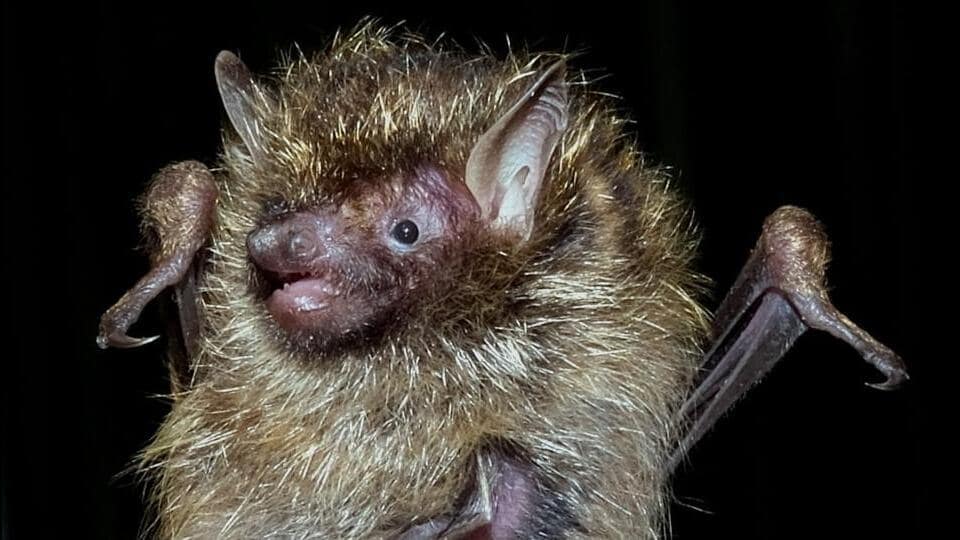
“Based on morphometric and genetic analyses of a recently captured specimen from Mizoram state in India, we report the sighting of Harpiola isodon from India and extend its eastward range by over 1,000 km,” an article in the latest edition of the zoological journal Zootaxa, published on Wednesday, said.
The Harpiola isodon, with a forearm length of 32–36 mm, is characterised by its striking golden-tipped hairs on the body and distinctive tube-like protruding nostrils. It was found at Hmuifang village of Aizawl district by bat researcher Uttam Saikia of the Shillong branch of the Zoological Survey of India in March this year while undertaking a systematic assessment of Mizoram’s bats.
Also Read: New gecko species discovered in Assam, named after state forest department
He teamed up with his collaborators — Gabor Csorba from the Hungarian Natural History Museum, Manuel Ruedi from the Natural History Museum of Geneva, and Rohit Chakravarty of the Nature Conservation Foundation — for a detailed comparative study of the specimen.
Based on a comparative study of specimens kept in several museums abroad and DNA analysis of the Mizoram specimen, the team was able to confirm the bat species as Harpiola isodon.
The scientists also examined another old specimen from Sairep village in Lunglei district of Mizoram, in the collection of the Zoological Survey of India in Kolkata, and concluded that it belongs to the Harpiola isodon species too.
Also Read: New freshwater fish species discovered in Manipur’s Taretlok river
The golden-haired tube-nosed bat was first discovered in the mountains of Taiwan in 2006, and since then it has reportedly been found in a few localities in southern China and Vietnam. An inhabitant of mountain forests, this species is likely present in suitable habitats of the intervening region — that is, Laos, Cambodia, Thailand, and Myanmar. Its discovery in northeastern India extends the westward range of the species by over 1,000 km.
“This finding underscores the need for further studies in the northeastern region of India, a region encompassing two global biodiversity hotspots,” director of the Zoological Survey of India Dhriti Banerjee said.