E-Paper



Govt ‘fully responsible’ for burdening this court: Supreme Court
“Government is fully responsible for burdening this court. It takes everything to this court irrespective of the merits of the matter. And we have to then examine everything whether or not it has any merit,” said the bench.

 Prefer HTon Google


The government is “fully responsible” for burdening this court, a bench of Supreme Court judges said on Friday while hearing an intervention sought in connection with cases on seniority and promotion.
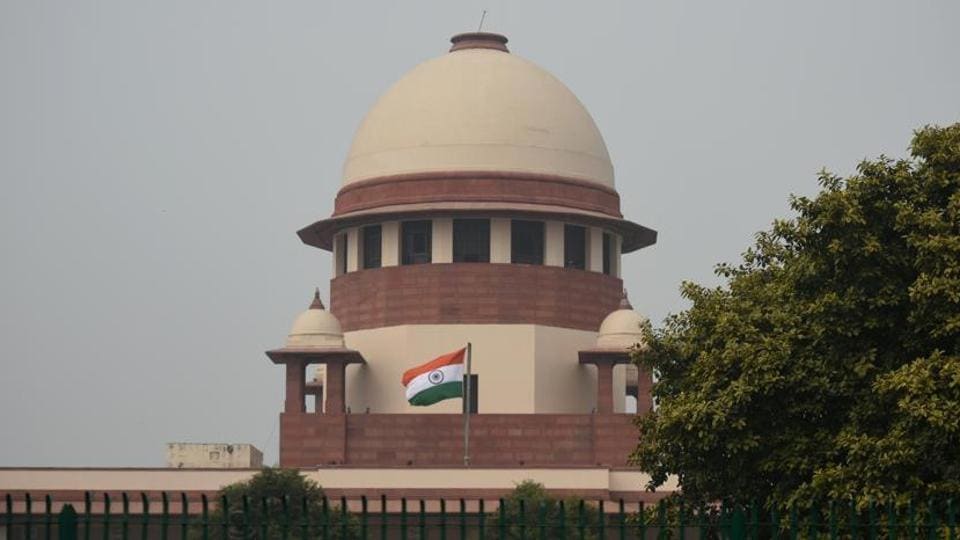
The top court bench, headed by justice Sanjay K Kaul, expressed displeasure at multiple petitions filed in appeal against job-related benefits to serving or retired government employees.
The Union of India was in appeal before the Supreme Court in two such cases where it was aggrieved by the orders by the high courts. In both these matters, the central administrative tribunal (CAT) had ruled in favour of the employees.
In the first matter, the government’s case was argued by additional solicitor general Madhvi Divan for the ministry of defence.
This was an appeal against a ruling from the Kerala high court, which affirmed benefits of pay upgradation and seniority in favour of an ex-serviceman, who was now working in a civil post in the navy.
As soon as the matter was taken up, the bench, which also included justices Dinesh Maheshwari and Hrishikesh Roy, put forth its disinclination to entertain the matter.
“How many such cases will the government bring before the court? Such a matter, we think, is coming for the third time before us. Will it ever end?” it questioned Divan.
As Divan sought to mollify the bench by underscoring the repercussion of the high court order of November 2019 in several other cases, the court told the law officer that this explanation was not good enough.
“Government is fully responsible for burdening this court. It takes everything to this court irrespective of the merits of the matter. And we have to then examine everything whether or not it has any merit,” said the bench.
The judges then asked Divan: “Here is an officer, who has served you for more than 10 years in the army. Now, he is serving you in another wing, the navy. But you drag him till this court on certain benefits. Why would you do this?”
A short while later, another appeal by the government came up, represented by additional solicitor general Jayant Sud.This case pertained to granting benefit of seniority to a customs officer, as had been directed by the Punjab and Haryana high court.
Before Sud could even begin, the bench was piqued: “What is this now? Mr Sud, there must be an end to the litigation too. It just cannot go on and on.”