
 E-Paper



Govt raises fertiliser subsidy by ₹14,775 crore as global rates soar
On May 17, HT had reported that the Centre was considering an increase in fertiliser subsidy following a May 13 meeting of Union fertilizer minister Sadananda Gowda, home minister Amit Shah, finance minister Nirmala Sithraman and agriculture minister Narendra Singh Tomar.


The Union government on Wednesday raised the subsidy on fertilisers ahead of the kharif or summer sown season by ₹14,775 crore to cushion prices following a sharp increase in international rates that have prompted domestic fertiliser firms to raise prices.
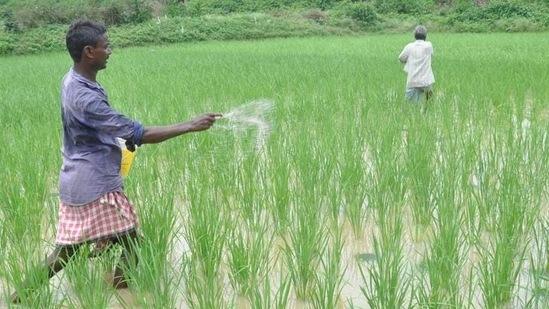
Prices of some farm chemicals have risen sharply on account of costlier imports amid estimates that a normal monsoon would increase demand this year.
The Union government hiked the subsidy on di-ammonium Phosphate (DAP), a key crop nutrient, by nearly 140%, from ₹500 a bag to ₹1200.
“Thus, despite the rise in international market prices of DAP, it has been decided to continue selling it at the older price of Rs.1200 and the central government has decided to bear all the burden of price hike,” an official statement said.
On May 17, HT had reported that the Centre was considering an increase in fertiliser subsidy following a May 13 meeting of Union fertilizer minister Sadananda Gowda, home minister Amit Shah, finance minister Nirmala Sithraman and agriculture minister Narendra Singh Tomar.
International prices of raw materials for some key crop nutrients, such as di-ammonium Phosphate (DAP) and 22 grades of phosphatic and pottassic (P&K) category of fertilisers, have seen a jump of up to 70%.
Millions of farmers depend on crop nutrients during the June-to September monsoon season to raise a variety of summer crops, including paddy, pulses, gram, onions and coarse cereals etc. The 2021-22 budget estimate for fertiliser subsidy is ₹80,000 crore.
The consumption of fertilisers is also expected to be higher this year. “We expect a nearly 10% increase in fertiliser demand,” an official of the agriculture ministry said, requesting not to be named.
Fertiliser demand could be around 35 million tonne during the upcoming summer-sown season, up from 32 million tonne last year.
A key reason for an anticipated higher demand has been the forecast of a normal 2021 monsoon, the third straight year of optimal rains. The India Meteorological Department on April 16 forecast that rainfall during the June-to-September monsoon season to be 98%. Rainfall between 94-106% is considered “normal”.
The government pays its subsidy to fertiliser companies, who sell it at a discount to farmers through a system called nutrient-based subsidy regime. The fertilizer subsidy is paid to manufacturers based on sales data generated through point of sale (PoS) devices by retail sellers.
“The increase in international prices and, simultaneously, higher anticipated demand during the kharif season would have put pressure on farmers as well manufacturers. It could have led to a demand-supply mismatch. The subsidy will ensure adequate availability of DAP, whose consumption is generally more during kharif,” said Abhishek Agrawal of Comtrade, a commodities trading firm.


