
Sign in

H-1B visas, Indians’ security to top foreign secretary’s agenda in US

Foreign secretary Subrahmanyam Jaishankar will take up India’s concerns over possible curtailing of H-1B visas and workers’ safety following the Kansas hate crime during his four-day US visit from February 28 to March 3.

Updated on: Mar 23, 2017, 15:36:14 IST
Hindustan Times, New Delhi | By
Share
Share via
  • facebook
  • twitter
  • linkedin
  • whatsapp
Copy link
  • copy link

Foreign secretary Subrahmanyam Jaishankar will take up India’s concerns over possible curtailing of H-1B visas and workers’ safety following the Kansas hate crime during his four-day US visit from February 28 to March 3.
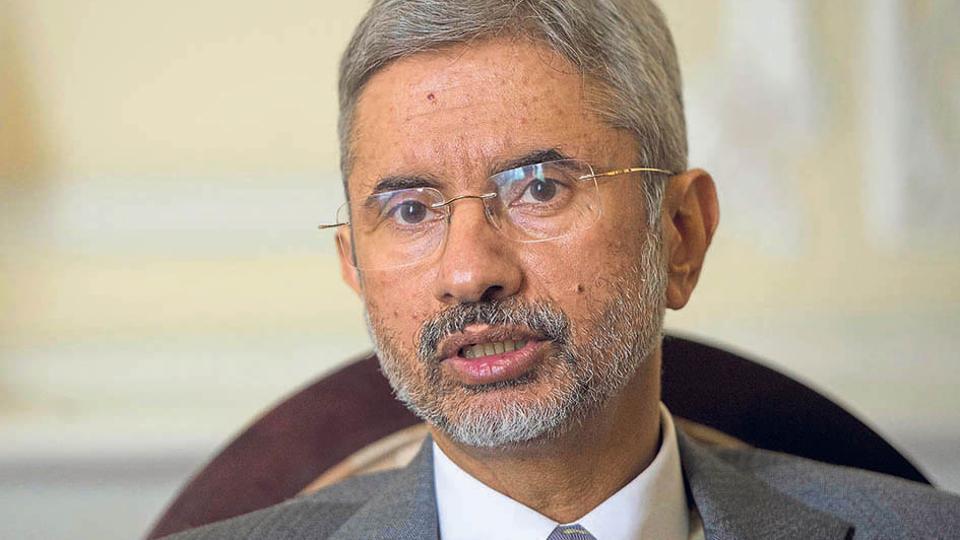
Foreign secretary S Jaishankar at the Indian embassy in Washington in 2014. Jaishankar said that India would see a decision to restrict certain temporary visas for skilled workers as a sign that the US economy is becoming less open for business. (AFP File Photo)

South Block officials told Hindustan Times that Jaishankar will interact with acting deputy secretary of state Tom Shannon and other top officials in Washington. The foreign secretary returned from his official trips to Sri Lanka, China and Bangladesh last week with a short stopover in Singapore.

While Jaishankar will seek assurances from the Trump administration over the security of Indians working in the US, one of the main purposes of the visit is to effectively convey New Delhi’s concerns over possible curtailing of H-1B visas issued to skilled Indian workers. The US issues 65,000 H-1B visas to Indians every year for those employed in science, technology, engineering and maths (STEM) areas.

It is understood that Jaishankar will point out to his counterparts that Indians working in high-technology companies are no cheap labour and are paid as much as their American counterparts. Many Indians working in the US are employed by American tech giants such as Google, Facebook, Tesla, Boeing and a few by US-based Indian companies. The top diplomat will convey that these American firms are competitive due to Indian tech power in STEM areas.

According to a Brookings report, there will be a shortfall of 2.4 million jobs in STEM areas in 2018 alone and this gap will widen if H-1B visas to Indian techies are cut.

South Block officials point out to a report by software industry body Nasscom that says Indian techies in the US support nearly 400,000 jobs and pay $20 billion in taxes annually. Prime Minister Narendra Modi conveyed India’s concerns over H1-B visas to visiting Congressmen last week.

Jaishankar will also exchange notes with his US counterparts on China, Pakistan as well as stability in Afghanistan. The first meeting of the India-China strategic Dialogue last week was tough with China not yielding on support to India’s entry to the Nuclear Suppliers Group and designation of Jaish-e-Mohammed chief Masood Azhar as a global terrorist by the UN.

The possibility of Modi visiting Washington this year could also be discussed with the Trump administration. Modi and Trump are expected to meet at July’s G20 summit in Germany.

  • Shishir Gupta
    ABOUT THE AUTHOR
    Shishir Gupta

    Shishir Gupta is Executive Editor at Hindustan Times and one of India's top journalists covering national security, strategic affairs, foreign policy and geopolitics. Over the past three decades, he has extensively reported on India's military, diplomatic and security landscape, covering every major conflict and national security challenge, from the 1999 Kargil War and the 2020 East Ladakh standoff to Operation Sindoor in 2025. He has also covered major terror attacks, including the IC-814 hijacking, the 26/11 Mumbai attacks and the 2025 Pahalgam terror strike, along with numerous Pakistan-backed terrorist incidents in the Kashmir Valley and across India. He has reported on national and state elections for more than three decades. A recognised authority on strategic affairs, Gupta has covered India's nuclear programme since the Pokhran-II (Shakti series) tests in May 1998 and has written extensively on global nuclear issues, Indian diplomacy and the country's expanding global outreach. He has also reported widely on international conflicts and terrorism, with a special focus on the Indian subcontinent. Gupta has interviewed Prime Minister Narendra Modi more than four times, including Modi's first interview with the print media after becoming Prime Minister in May 2014. His other interviews include three with the Dalai Lama, as well as conversations with Benjamin Netanyahu, Amit Shah, Yogi Adityanath, S. Jaishankar, Nirmala Sitharaman and Piyush Goyal. He is the author of Indian Mujahideen: The Enemy Within (Hachette, 2011) and Himalayan Face-off: Chinese Assertion and Indian Riposte (Hachette, 2014). He was awarded the Chevening-Wolfson Joint Scholarship at Wolfson College, University of Cambridge, UK, in 1998 and participated in the International Visitor Leadership Program (IVLP) of the US State Department in 2006. He received the Ben Gurion Prize from Israel in 2011 and the K. Subrahmanyam Prize for Strategic Studies in 2015 from the Manohar Parrikar Institute for Defence Studies and Analyses (MP-IDSA). Since 2024, he has hosted Point Blank, Hindustan Times' weekly YouTube show on global geopolitics.Read More

Get the latest India News, breaking headlines and real-time updates from across the country. Stay informed about politics, government policies, crime, weather and major national developments.