E-Paper



Harsh summer likely this year, La Nina may develop by September: Experts
The transition to ENSO-neutral conditions is anticipated by April-June, with most models indicating a transition to La Nina by July-September.

 Prefer HTon Google


New Delhi: India is likely to experience a short-lived spring followed by a harsh summer this year, meteorologists said, predicting that the El Nino conditions will gradually transition to neutral conditions by June, making way for the onset of La Nina by September.
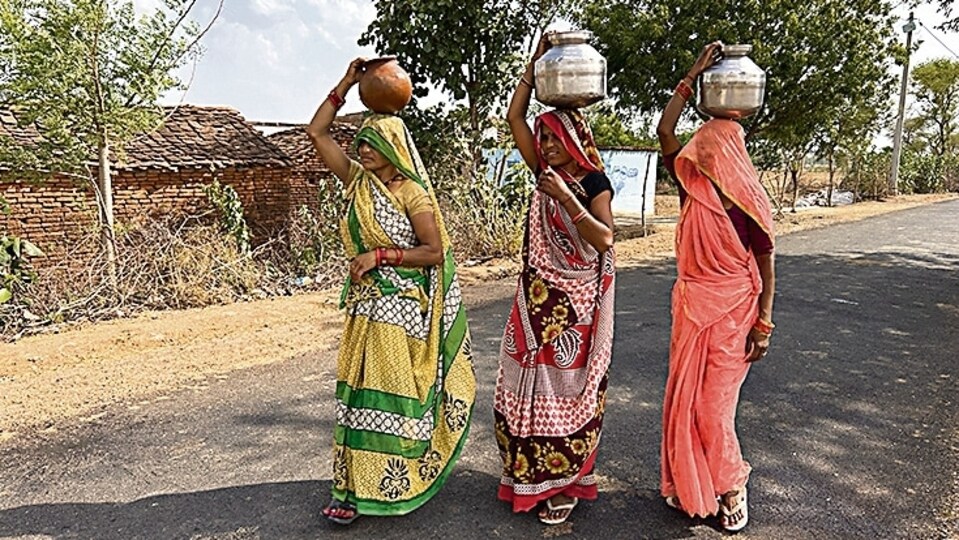
A transition to ENSO-neutral is anticipated by April-June (73% chance), the India Meteorological Department said on January 31. After a brief period of ENSO-neutral conditions, most models indicate a transition to La Nina around July-September 2024, it said.
While oceanic and atmospheric conditions continue to be consistent with the ongoing El Nino event, the atmospheric indicators are weakening at a faster pace than estimated, private weather forecaster Skymet Weather said on Saturday.
“The probabilistic ENSO forecast depicts a somewhat abnormal pattern. The forecast, with strong El Nino at the beginning of the year, collapses by mid-month (May/Jun) and abruptly rises indicating La Nina build-up by the end of the year. A similar pattern was observed in the year 2016, after the cessation of the strong El Nino event of 2015,” Skymet said.
But, before El Nino conditions start becoming neutral, its impact on the Indian spring and summer is expected to be very harsh. On the upside, the monsoon is expected to be normal, and even better than last year.
“We can expect summer to be much harsher this year. Heat waves will be more frequent and intense. ENSO neutral conditions are expected only in June. Spring will be very short lived. It is true that some models are indicating La Nina evolving around September. That will help monsoon and that is why we are saying it is expected to be a normal monsoon this year,” Mahesh Palawat, vice president, climate and meteorology, Skymet Weather, said.
“Models suggest a harsh pre-monsoon season with above normal temperatures and more frequent heat waves. Monsoon could be better than last year. It is very early forecast,” said M Rajeevan, former secretary, ministry of earth sciences and climate scientist.
The forecast is consistent with the US’s National Oceanic and Atmospheric Administration (NOAA)’s forecast, which projected a more than 60% probability of La Nina conditions developing in the August-September-October period.
The El Nino phenomenon refers to a warm phase of ENSO, which has a major influence on weather and climate patterns.
In India, an El Nino is associated with harsher summer and weaker monsoon. La Nina, meanwhile, is associated with strong monsoon and above average rains and colder winters.
La Nina has a cooling influence in India and brings about unusual spring and summer dominated by extreme record-breaking heat spells.
While abnormal, the transition has happened in the past as well, experts said.
“A transition from El Nino to La Nina is possible. It has happened in the past. But we do not have a clear signal as yet on that. We can get very clear forecast by March. What our forecast is definitely showing is that by summer ENSO neutral conditions will set in,” said DS Pai, senior scientist, IMD.
Experts cautioned that further study of the atmospheric conditions for needed for better forecasts.
“Dilution of El Nino conditions to neutral first and immediately building to possible La Nina during the same year will be an interesting feature. A simple corollary, in the Indian context, will be better prospects for the southwest monsoon. But, the Pacific conditions alone cannot be considered decisive. Other global parameters impacting the health of the monsoon will have to be factored in, at the appropriate time,” Skymet said.
The La Nina that ended last year was relatively weak but unusually prolonged. It began in 2020 and returned for its third consecutive northern hemisphere winter in 2023 making it a rare “triple-dip” event.
Another reason for expecting a significantly warm spring and summer is extremely low snow cover in higher altitudes.
Since the last week of January, western disturbances — storms originating in the Mediterranean region that bring rain to India — have helped bring rain and snow to north-western India, HT reported on Sunday.
This has helped reduce the deficit in snow and rain this year, but those deficits are still large, an HT analysis shows. Where the snowfall has, however, helped is in reducing temperatures in India’s mountains in the north.