
 E-Paper



House to review protocol over video call meetings
The rethink has been necessitated by the coronavirus disease (Covid-19) outbreak, which has led to the grounding of inter-city transport and the need for people to avoid gatherings as far as they can.


The Lok Sabha and Rajya Sabha will review rules and procedures to consider whether standing committee meetings can be held over video conference, a practice that has not taken place till now in order to maintain the secrecy of the proceedings.
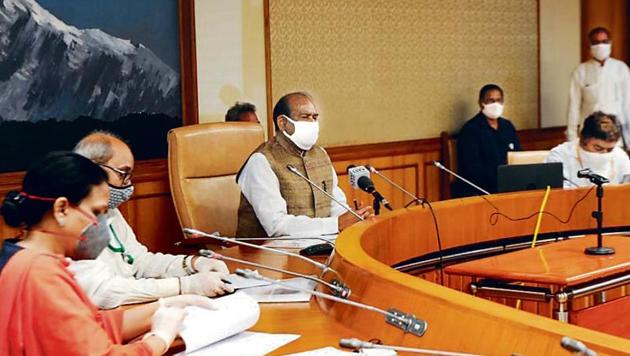
The rethink has been necessitated by the coronavirus disease (Covid-19) outbreak, which has led to the grounding of inter-city transport and the need for people to avoid gatherings as far as they can.
Senior officials have been directed to recommend necessary amendments in the rules and procedures and to suggest how a digital alternative can be put in place for meetings of the panels, according to a senior functionary aware of the plans.
On Tuesday, Lok Sabha Speaker Om Birla held his first virtual meeting when he spoke with his counterparts from state assemblies to discuss the Covid-19 situation. They decided to set up control rooms in each assembly and Parliament for better coordination and help.
Parliament rules emphasize in-camera sitting of committees to maintain secrecy, especially when officials or experts are called for deposition or report is being finalised. Every meeting also starts with members taking an oath of secrecy not to reveal anything about the proceedings outside.
Rule 266 of the Lok Sabha, for instance, says: “The sittings of a Committee shall be held in private” and the next rule says, “The sittings of a Committee shall be held within the precincts of the Parliament House, and if it becomes necessary to change the place of sitting outside the Parliament House, the matter shall be referred to the Speaker whose decision shall be final.”
A video medium for this raises concerns over whether a trail of this can be kept, and possible breaches. One video conference tool was recently in the spotlight for possible security vulnerabilities, prompting the Union home ministry’s Cyber Coordination Centre to issue an advisory for people to take precautions since the service “was not safe”.
“We are absolutely clear that even if the Speaker allows online meetings, it can’t happen over private, unsafe platforms such as Zoom. The NIC’s meeting portal, which is now extensively used by Prime Minister and the entire government machinery to hold meetings, can provide the only possible way for such meetings,” said the official cited above.
An official in the Speaker’s office said that after recommendations are collated, leaders of various political parties and the government would be consulted — indicating that it might take some time for the committees to go online.
Many lawmakers have pitched for online meetings in the view of this unusual situation. Lok Sabha’s IT panel head Shashi Tharoor sought Speaker’s permission to hold a meeting virtually, Congress leader Manish Tewari wrote to finance standing committee chairman Jayant Sinha for a video conference on the economic situation in India, and another Congress leader Jairam Ramesh suggested Rajya Sabha chairman hold a session virtually in the wake of the Covid pandemic.
The British Parliament, which had heavily influenced Indian Parliamentary system, is debating whether to hold its first session over video.
At least one committee chairman has recently contacted all his panel members through emails and circulated a draft copy of a report for their approval so that the panel can submit its report to the Lok Sabha Speaker through the official email even when the lawmakers are unable to meet physically.
In his video conference with assembly Speakers, Birla urged them to use digital technology as far as possible for meetings on legislative matters, movement of files and documents. He also urged them to ensure social distancing and other health safety norms in their respective assembly houses.


