
 E-Paper



Coronavirus in Kerala: How a young IAS officer helped Pathanamthitta fight Covid-19
PB Nooh, who serves as the district collector of Pathanamthitta, raised an alarm with the state government after thousands of devotees congregated at Sabarimala to attend the monthly prayers that began March 13.


Pathanamthitta, a hilly district in central Travancore region in Kerala and home to the Sabarimala shrine was among the first sites in the country where coronavirus spread after a family that had returned from Italy tested positive for Covid-19 in early March.
However, the district now has only 13 of the 286 positive cases in the state. By comparison, Kasargod has 121. According to chief minister Pinarayi Vijayan, while Kasargod remains in the hotspot list of the union health ministry, Pathanamthitta has been removed from it.
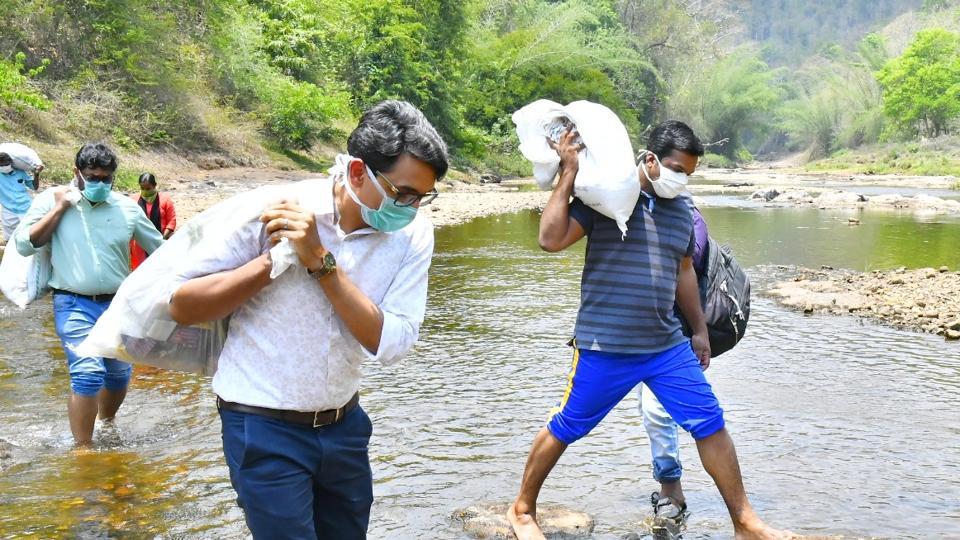
One of the main persons responsible for this containment is a 2012 batch Indian Administrative Services (IAS) officer, PB Nooh, who serves as the district collector of Pathanamthitta. He raised an alarm with the state government after thousands of devotees congregated at Sabarimala to attend the monthly prayers that began March 13.
This wasn’t received well by devotees and he faced much abuse on social media.
“When Sabarimala temple was opened for monthly pooja in March, despite the Travancore Devaswom Board’s warning, at least 13,000 pilgrims came in four days. Milling pilgrims was not a good sign. In fact it was a recipe for tragedy. So I sent an SOS to the government to announce the closure of the temple,” Nooh told the Hindustan Times.
On March 20, the state government disallowed pilgrims’ entry to the Sabarimala shrine following Nooh’s report suggesting restriction of entry in light of rising Covid-19 cases. The shrine will not reopen on March 28 as previously planned.
The state saw a steady rise in the number of positive infections starting March 18, according to data provided by the state government: from 28 confirmed Covid-19 to the current 286.
On March 10, the Travancore Devaswom Board president N Vasu had asked the public to not attend the monthly prayers at the temple; the state cabinet too called upon people to not hold large public gatherings, including weddings or festivals.
This was barely days after local cases of Covid-19 began emerging from the state, and nearly a month after three imported cases — students who had contracted the virus at Wuhan and returned to the state — were detected.
Pathanamthitta was the first district in the state to use flow charts to help trace the contacts of infected persons. The idea was to track where all the family, which had returned from Italy on February 29 and tested positive for Covid-19 on March 6, had travelled to and whom all they had met.
On March 11, the administration released a flowchart titled Patient Flowchart Covid-19: P1 Cluster. It showed where all the family, comprising a middle-aged couple and their 24 year old son, had travelled to after landing at Kochi airport. By then, many relatives and friends of the family had tested positive too, prompting the administration to release the flowchart to the public.
The family had visited a church, a post office, a jewellery shop and a hypermarket: many members of the public were at risk. The administration wanted to reach out to everyone whom the family had come in contact with — in all, 1300 were placed under observation.
“Making the flow chart was a cumbersome process. Police, health workers, NGOs and political leaders all helped us in the process. This also raised the awareness level of the people,” Nooh said. All three members of the family and eight of their contacts, including a 95-year-old great grandfather, have recovered from Covid-19 and have been discharged from the hospital.
Pathanamthitta was first to introduce a geofencing application to locate quarantine violators. This application is now being used across all the districts’ control rooms to monitor the spread of coronavirus. Once installed on a person’s phone, it alerts authorities if they step out of their house, and even tags the location they are at.
“It is teamwork and many of us have spent sleepless nights. We have received full support from the government. We literally chased contacts and enforced norms ruthlessly. In such a situation we can’t go soft and now this has started showing some results,” said Nooh, who is the seventh of eight children of a couple that owned a small grocery shop in Perumbavoor in Ernakulam. One of Nooh’s older brothers, PB Salim, is an IAS officer from the West Bengal cadre.


