
 E-Paper



‘How can CJI in a democracy …’: VP Jagdeep Dhankhar questions judiciary's powers
The Vice President said that the Chief Justice of India shouldn't be involved in any executive appointment in a democracy like India.

 Prefer HTon Google


Vice President Jagdeep Dhankhar on Friday questioned the involvement of the Chief Justice of India (CJI) in executive appointments in a democracy such as India.
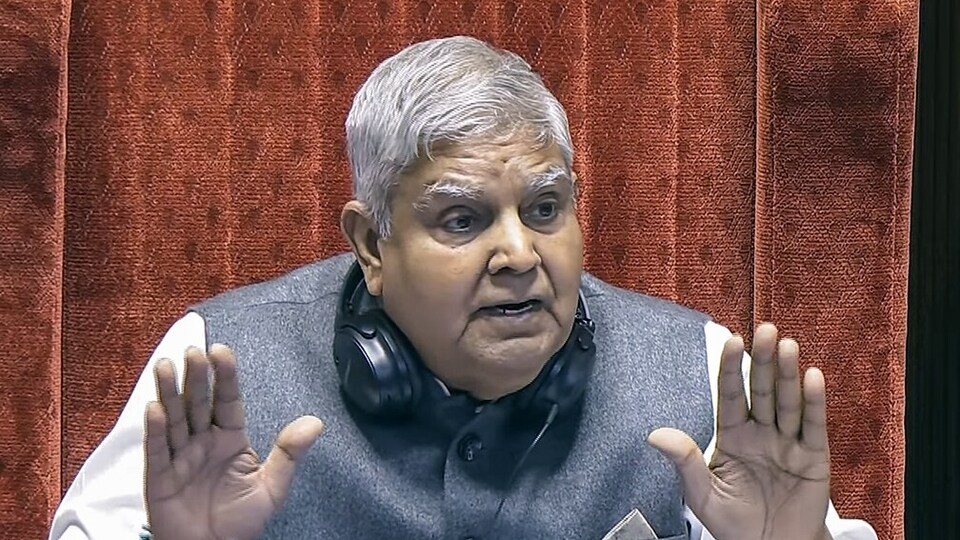
Jagdeep Dhankhar said that it was time to revisit such norms and that all democratic institutions should function within their own jurisdiction.
Also Read: RS Chair vows action amid Constitution illustrations row
VP Dhankhar, while addressing the National Judicial Academy in Bhopal, stated that the involvement of the judiciary in executive matters presented a “constitutional paradox” and needed to be resolved so that each institution could operate within their own domains.
"To stir your minds, how can in a country like ours or in any democracy, by statutory prescription, Chief Justice of India participate in the selection of the CBI director?" news agency PTI quoted Dhankhar as saying at the gathering.
Also Read: Only a matter of time before entire country adopts UCC: Dhankhar
“Can there be any legal rationale for it? I can appreciate that the statutory prescription took shape because the Executive of the day has yielded to a judicial verdict. But time has come to revisit. This surely does not merge with democracy,” he added.
Selection of CEC
The Vice President's statement comes right before a meeting is to be held to select the next Chief Election Commissioner, after the current CEC Rajiv Kumar retires on February 18.
This would be the first selection of the CEC after the Chief Election Commissioner And Other Election Commissioners (Appointment, Conditions of Service And Term of Office) Act, 2023, was passed.
The law excludes the CJI from participating in a panel selecting the Chief Election Commissioner. Previously, the Supreme Court had ordered the prime minister, leader of opposition in parliament and the CJI to form the selection panel.
Critics have argued that the new law provides opportunity for excessive interference by the executive pillar of the state and will threaten the independence of the panel.
Currently the selection committee comprises PM Narendra Modi, law minister Arjun Ram Meghwal, and leader of the opposition in the Lok Sabha Rahul Gandhi. The three will deliberate on the appointment, starting from February 17, a day before the Supreme Court hears petitions against the new law.


