
 E-Paper



How EC is dealing with grievances during state assembly polls
Of all the states, Kerala, which received 161,579 complaints, has managed to resolve most at the state level. There have been over 19,582 complaints with regard to West Bengal, of which 15,763 have been found valid


From exchange of money and other freebies to tampering of electronic voting machines (EVMs) and the use of foul language, the Election Commission (EC) has dealt with representations from several political parties and citizens to ensure free and fair polls in the states of Kerala, Assam, Tamil Nadu and the Union Territory of Puducherry that concluded on April 6, and in West Bengal, where five phases of polling remain.
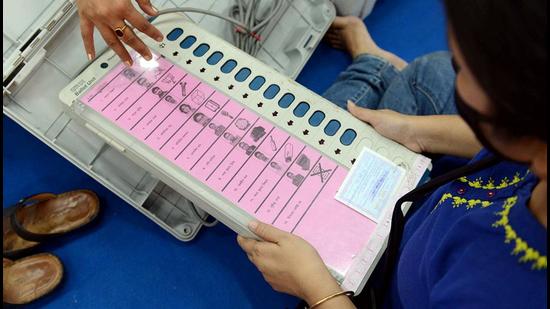
The results of the state polls will be declared on May 2.
Of all the states, Kerala, which received 161,579 complaints, has managed to resolve most at the state level, with the intervention of the Commission not being required, while the Union Territory of Puducherry, which saw 1,341 complaints, also settled them at the chief electoral officer (CEO) level. EC received 5,879 complaints from Tamil Nadu, of which only 27 are pending redressal. The number of complaints in Assam was 1,374, but at least two of them were escalated to the Commission. There have been over 19,582 complaints with regard to West Bengal, of which 15,763 have been found valid and 99 cases are pending.
According to an EC official familiar with the matter, these polls have witnessed fewer complaints than those held in 2016. “The number of complaints has been fewer this time,” said the official. “Take Bengal for instance, the number of cases of political violence have been lesser than the ones that took place in 2016.” HT on March 3 reported that the Commission decided to hold an eight-phase election in West Bengal on the basis of a report made by central agencies regarding political violence in West Bengal.
Kerala
Of the 161,549 complaints, the state managed to resolve 158,258 valid complaints, with only 78 still pending. These include campaigning during the ban, property defacement, religious or communal messages and transportation of voters on polling day. Posters placed without permission made a bulk of the cases in Kerala.
A second EC official said that the large number of cases in Kerala was also due to individual grievances being more promptly expressed.
Also Read | EC sends notice to Mamata Banerjee over ‘central forces’ remark
A third EC official, familiar with Kerala, said that as few as 20 major complaints were received in the state and most of these were resolved at the state level and did not need to be escalated to the Commission in New Delhi. “Traditionally, the people of Kerala are more law-abiding,” the official said. “The Commission ensured that the official machinery was impartial and neutral. An atmosphere was created wherein it was ensured that all the laws of the land were obeyed.”
The official added the few complaints received were regarding foul language used against a candidate or personal insults. Very few complaints regarding the use of money or muscle power were received. “Money is not that big an issue in Kerala,” the official said. “The seizures were also higher than last time, leading to a sense of fear and reducing the number of cases.”
He added that complaints related to violence were practically non-existent. “There have also been no complaints related to EVM-tampering. The only slightly major complaint received was regarding duplication of entries in the voters list and that was swiftly resolved.”
The poll management in Kerala has drawn a contrasting response from the state’s ruling and Opposition parties.
“Booth capturing and bogus voting was rampant in some of the party villages in north Kerala. Besides this, we made a fresh compliant to the EC on postal votes. We have information that many postal votes were cast by officials who have allegiance to Left service unions,” said state Opposition leader Ramesh Chennithala of the Congress.
But the ruling Left has rejected his contention. “The Opposition leader makes wild allegations twice a day, one in the morning and another in the evening. The latest [complaint] is also part of this. The Congress is worried over its impending defeat, so it is natural for him to make such charges,” said Communist Party of India (Marxist), or CPI(M), acting secretary A Vijayaraghvan.
Tamil Nadu
In Tamil Nadu, EC has received 5,879 complaints, of which only 27 are pending to be addressed. There were more miscellaneous complaints in Tamil Nadu, followed by grievances over the alleged distribution of money and gifts/coupons.
Also Read | Bengal: EC sends notice to BJP’s Suvendu Adhikari for ‘hate speech’ in Nandigram
In the most prominent complaint, the Commission took action against Dravida Munnetra Kazhagam leader A Raja and removed him as a star campaigner and barred him from campaigning for 48 hours for making derogatory comments against Tamil Nadu chief minister Edappadi Palaniswami. Raja made a controversial remark about Palaniswami’s mother during an election rally on Saturday and was served a show-cause notice by the poll body on Tuesday. EC said that it is of the view that the “contents of the speech made by you are not only derogatory, but also obscene and lower the dignity of motherhood of women, which seems to be a serious violation of the provisions of Model Code of Conduct”.
The Opposition has alleged that the EC did not act against violations by the ruling dispensation.
“Money distribution was organised in Tamil Nadu polls by the ruling party and EC turned just spectator,” Congress MP Manickam Tagore said. “EC has lost more credibility than it gained.”
Bharatiya Janata Party (BJP)’s CT Ravi, who is the party in-charge of Tamil Nadu, dismissed the allegations. “The Election Commission has done an excellent job of conducting a free and fair election in Tamil Nadu. It identified 105 expenditure sensitive constituencies and deployed 118 expenditure observers to monitor expenditure by candidates as well as parties. The EC ensured that nearly 60 officers and 3 IGs were transferred. This proves its impartiality.” He added, “The Congress will always find mistakes with others. Earlier it had problems with the judiciary and EVMs. Today it is blaming the Election Commission by making baseless allegations.”
Assam
In Assam, of the 1,374 complaints, 411 were dropped, while 961 were found valid. These include complaints regarding liquor distribution, money distribution, paid news, display of firearms, intimidation and religious or communal speeches or messages. Two complaints are yet to be addressed.
In the most prominent case, Bharatiya Janata Party (BJP) leader Himanta Biswa Sarma was reprimanded for a violation of the model code of conduct based on a complaint lodged by Congress on March 30 in which it alleged that Sarma had “openly threatened” to send Bodoland People’s Front Hagrama Mohilary to jail by misusing National Investigation Agency (NIA). “If Hagrama does extremism with Batha, he will go to jail. This is a straight talk. (We) already have lot of evidence. This case is being given to NIA,” read the transcript of Sarma speech as mentioned in the EC notice. While Sarma was initially barred from campaigning for 48 hours, EC reduced the period to 24 hours following an apology from the leader.
Following the controversy, wherein an EVM machine was found in the car of a BJP candidate in Assam, the Commission intervened and transferred six officials involved in the matter. The officials had taken a “lift” in a car that belonged to a BJP candidate after the second phase of the polls. The Commission also ordered a repoll in the constituency following the incident.
This has, however, trigger a call for more careful and rigorous measures by the EC.
“Considering several unwanted incidents already reported with respect to the EVMs and the discrepancy associated with them in several places of the state, it has now become ver essential to ensure protection of the EVMs from rigging by any means, after conclusion of all the three phases of election in the state to protect the interest of democracy,” state Congress president Ripun Bora wrote in a letter to chief electoral officer, Assam, Nitin Khade, on Wednesday.
“As strongrooms are already under CCTV camera surveillance with access to the concerned election officers to ensure protection, it would also afford satisfaction to the contesting candidates if the access/link of the surveillance is provided to them and the same will definitely ensure holding of the present assembly election in the state in a fair and impartial manner,” the letter added.
The BJP, however, has dismissed the Congress’ call as the party’s typical tactic in the face of an imminent defeat.
“We have full faith in the EC and its conduct of the polls. The Congress’s worry stems from the fact that they are losing. They always blame EVMs when they lose, but are happy with the machines when they win,” BJP Assam spokesperson Rupam Goswami said.
Puducherry
There were 1,341 complaints received with regard to Puducherry, of which 58% were resolved, while 42% were found to be untrue, a official familiar with Puducherry polls said. None of these complaints needed the intervention of the Commission in Delhi either. Of the 1,341 complaints, 474 were regarding distribution of cash to voters.
Hindustan Times on April 4 reported that all 30 of the elected constituencies in Puducherry had been earmarked as expenditure sensitive by the Commission.
Expenditure-sensitive constituencies are identified by the Commission to ensure that no unfair trade of cash, liquor, drugs or other items takes places in exchange for votes by political parties. In terms of sheer numbers, Tamil Nadu was the worst this election followed by Assam, West Bengal, Puducherry and Kerala.
Other kinds of complaints received by Puducherry included canvassing beyond permitted times, distribution of freebies, posters and banners without permission, violation of model code of conduct and supply of liquor. “We received a number of complaints, but all were swiftly resolved,” the official familiar with Puducherry mentioned above said.
West Bengal
In West Bengal, arguably the most fiercely contested of the five states, complaints, which came in from February 26 to April 8, ranged from displaying posters without permission to display of firearms and intimidation. The Commission also conducted seizures of bombs in the state.
A case similar to Assam also occurred with VVPATs and an EVM being found at the home of a Trinamool Congress (TMC) candidate, along with the official responsible for the same ahead of the third phase of polling held on April 6. The official who had “slept over” at the candidate’s house was suspended, along with a sub-inspector, for their negligence.
There have been a number of other cases in Bengal, with the TMC and Mamata Banerjee alleging violence, dereliction of duty by police forces and EVM malfunctioning. EC found the allegations to be “factually incorrect, whiteout empirical evidence and devoid of substance”. In a letter dated April 3 sent to chief minister, EC secretary general Umesh Sinha offered a detailed rebuttal of all the allegations made by Banerjee and TMC. “It is self-evident from the perusal of all the reports that the allegations mentioned in your hand-written note are factually incorrect, without any empirical evidence whatsoever and devoid of substance,” the Commission said in its rejoinder.
TMC leader Derek O’Brien also appealed to EC to find Prime Minister Narendra Modi in violation of the model code of conduct for misuse of his power and position, for his politically charged speech in Bangladesh. While the Commission is yet to formally reply to his complaint, an official familiar with the matter told Hindustan Times that it is “unlikely to be found in contravention of the MCC”.
EC, on Wednesday, also issued a notice to incumbent West Bengal chief minister Mamata Banerjee for violating the model code for her alleged appeal to minority voters to not allow their votes to be split among different political parties. The Commission has given her 48 hours to explain her stand. She was served a second notice on Thursday for her remarks against the central armed police forces. The EC said her statements may create a “wedge of distrust” between the state police and central forces.
On Thursday, the Commission also pulled up BJP leader Suvendu Adhikari for his communally charged remarks with reference to Banerjee as “begum”.
TMC MP Derek O’Brien said that the EC had acted in an “extremely compromised” manner during the elections. After the EC served the notice to Adhikari, TMC Lok Sabha member Saugata Roy said, “The EC has done the right thing for the first time. Why didn’t he face this action before the polls in Nandigram?”
HT reached out to BJP’s Amit Malaviya but did not receive a response immediately.
Evaluating the mechanism of complaints and actions
Through the elections, the EC’s role has come under a scanner. While the BJP believes that the commission has been fair, Opposition leaders have alleged partisanship
BJP leader and Union minister Mukhtar Abbas Naqvi said that the Commission took immediate action whenever it was confronted with a complaint. “Look at Assam, the Commission immediately stepped in and took action against the officials. In West Bengal, when Mamta Banerjee violated the RP Act, the Commission again prompt in issuing her a notice.”
Naqvi added that social media and access to complaint portals posed a significant new challenge for the EC. “At the same time, their accessibility has also increased. They have managed to effectively ensure free and fair polls.”
Congress secretary, media in-charge, Pranav Jha, however, said that the party was disappointed in the way the Commission had dealt with the representations. “We presumed the Election Commission of India to be an independent body,” Jha said “But to our dismay the Commission is unable to enforce its own guidelines. It was shocking to see that in Assam, after first phase polling, it couldn’t stop the BJP from advertising that it won all the seats in the first phase. Worse is that it appeared as news. Same thing was repeated in Tamil Nadu by AIADMK [All India Anna Dravida Munnetra Kazhagam], an ally of BJP. Icing on the cake was reversal of Himanta Biswa Sharma’s ban from campaigning for 48 hours, on April 3, to less than 24 hours.”
Jha added that it seemed EC had one set of rules for opposition leaders like A Raja , Mamata Banerjee and others, and quite another for those belonging to BJP. “I am not even mentioning BJP leaders’ divisive speeches or PM’s campaigning while people are polling in neighbouring areas. It’s indeed dangerous for India’s Parliamentary democracy,” he said.
Former chief election commissioner VS Sampath said that in the last six-seven years, access to internet and filing complaints has become easier. “Earlier they had file by post to CEO or district officer and only when CEO felt that the complaint was serious, a show-cause notice would be noticed by EC.”
Jagdeep Chhokar of the Association of Democratic Reforms said that anecdotally, one can say that the frequency and intensity of complaints about electoral malpractices appear to have been on the increase in the last few years. “However, some seemingly obvious violations of the model code of conduct do not seem to attract anyone’s attention,” he said. “The onus for this rests entirely with the Election Commission of India, which has to become more vigilant, more active and more transparent. The EC should not only be fair but should also appear to be fair.”
(With inputs from Ramesh Babu, Tanmay Chatterjee and Utpal Parashar)


