
 E-Paper



How Indian scientists are responding to the Covid-19 challenge
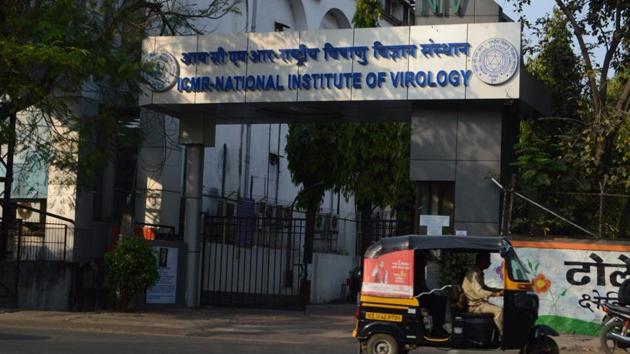
Along with the ICMR and Pune’s National Institute of Virology, research organisations in India taking Covid-19 challenge head on include the IISc, National Institute of Immunologu and the Translational Health Science Technology Institute.


Premier research organisations are taking the Covid-19 challenge head on, with the Indian Institute of Science, the National Institute of Immunology, and the Translational Health Science Technology Institute, among others, working on vaccine development and therapeutics.
The National Institute of Immunology in Delhi will sequence the virus to see whether the virus infecting travellers from different parts of the world is the same or has undergone changes. “The virus changes. By the time you may develop a vaccine it could have changed form. It’s important for us to understand how its changing. First is to see if people who have travelled from Italy, Germany, China, US etc are infected with the same strain. That can happen through ribonucleic acid (RNA) sequencing. We saw such mutations during the H1N1 outbreak,” said Amulya K Panda, director, National Institute of Immunology (NII). NII is also studying what protein the virus is made up of, which will be crucial to vaccine development.
The team will also analyse blood samples (once they have access) of some of the 46 people who have recovered to analyse antibodies that protected them. “Remember that every third vaccine used globally is developed in India. We will be able to deliver. But it’s a matter of time and safety. We will definitely get the virus but if our facilities are not well-contained, we will end up spreading the infection. It is lethal stuff. We have a BSL 3 [Biosafety level 3] laboratory where these tests can be conducted,” he added. Biosafety level 3 laboratories are high containment labs aimed at tackling biosafety issues while studying infectious diseases. Panda, however, said it was very difficult to give a clear timeline for the development of these antidotes. “We have to wait for things to cool down and see what’s possible when.” Till a vaccine and therapeutics emerge, massive scale social distancing is the only option to control the spread of the infection, he added.
The Indian Council of Medical Research- National Institute of Virology have already isolated the strains of SARS-CoV-2 from three infected persons who had travelled from Wuhan and found it to be very similar the virus isolated in Wuhan.
The Translational Health Science and Technology Institute (THSTI) is working on a diagnostic kit which has a timeline of only a few months. Potential therapeutics, which may take more than a year, include repurposing of existing drugs, studying new chemical compounds, designing new compounds based on the structure of the virus and using monoclonal antibodies from infected patients to treat new patients.
“The development of a vaccine may take whole of next year depending on access to samples. The work on developing a diagnostic kit is also on hold now because THSTI will need an import license to get the virus which can happen after the lockdown is lifted,” said Gagandeep Kang, director of THSTI.
The office of K Vijayraghavan, Principal Scientific Adviser to the Government of India, issued a memorandum on March 21 which said that national research laboratories are permitted to carry out clinical testing for Covid 19. They are also permitted to access samples from any government approved clinical testing site subject to ethical approval for such research. Labs with BSL3 and BSL3 + facilities are also permitted to culture the virus. Hospitals have been asked to share samples with such labs. Kang said over the phone that her organisation will be attempting to tie up with a hospital in Delhi NCR to use samples for research.
At Indian Institute of Science (IISc) in Bengaluru, a group of more than 30 researchers have come together to prepare research proposals to investigate the aspects of molecular epidemiology (study of causative, protective, genetic susceptibility or predisposing factors) and host-pathogen interactions (how the virus sustains in humans). These proposals will be submitted in the coming week to the funding agencies for funding to begin research activities on Covid-19, said Umesh Varshney, Professor, Department of Microbiology and Cell Biology and Chair, Division of Biological Sciences at IISc. To begin with, IISc will need a host of approvals from the government which it has already applied for. IISc is also starting work on vaccine development and to begin Covid 19 testing using ICMR approved reagents. “We are very much concerned about the Covid-19 pandemic…we are happy to extend our expertise to the approved labs for Covid-19 testing,” said Varshney over email.
The International Centre for Genetic Engineering & Biotechnology (ICGEB), Delhi, will collaborate with the ICGEB, Trieste (Italy), where substantial progress has been made on diagnostics and therapy, Dinakar M Salunke, Director of ICGEB said.
Experts from the National Centre for Biological Sciences were not reachable for a comment but the institute’s website states that it is contributing to national efforts on Covid-19 with immediate and medium-term solutions like disease surveillance, modelling, use of genomics and bioinformatics to understand the evolution of the virus and map disease susceptibility.
Snapshot:
• Research organisations do not have access to the virus yet. They have applied for approvals
• More than 20 research institutes are working on developing a vaccine for Covid-19, according to the department of biotechnology (DBT)
• DBT and Biotechnology Industry Research Assistance Council (BIRAC) have announced a Covid-19 research consortium for vaccines, diagnostics and repurposing of existing drugs
• DBT has also put out draft guidelines on storing and sharing biological data for research purposes
• The guidelines recommend making large banks of biological data accessible in a “reasonable” period of time to facilitate research
• The guidelines will allow for easy sharing of biological data with public research facilities, private labs and international collaborations


