
 E-Paper



Haryana, Madhya Pradesh may face legal challenges over quota in jobs
On Thursday, Haryana deputy chief minister Dushyant Chautala said his government would bring a bill in the upcoming assembly session proposing reserving 75% of private sector jobs for locals.

 Prefer HTon Google


Decisions by the Haryana and Madhya Pradesh governments this week to push ahead for reservations in jobs for local residents has put the spotlight on the legal implications of the move with some experts saying such quotas may face a legal challenge.
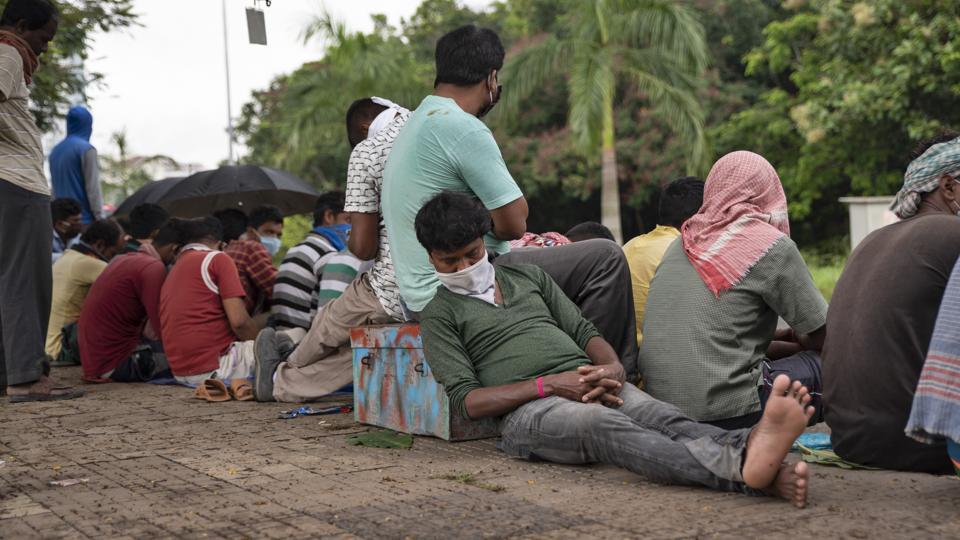
On Thursday, Haryana deputy chief minister Dushyant Chautala said his government would bring a bill in the upcoming assembly session proposing reserving 75% of private sector jobs for locals. His announcement came a day after governor Satyadeo Narain Arya sought presidential approval for the state cabinet’s ordinance on the same issue.
Arya decision was based Haryana’s law secretary’s view that the proposed law could be seen as violation of two articles of the Constitution --- Article 14 that allows equality before law and Article 16(1)(g) that allows freedom to practice any profession or trade. Haryana’s advocate general M B Mahajan said the proposed rule reserving jobs for locals did not violate any central law. “It also does not come in conflict with Article 14 of the Constitution, either,” Mahajan said.
On Monday, Madhya Pradesh chief minister Shivraj Singh Chouhan announced that all government jobs in the state would be reserved for students of the state, who have cleared class X and XII examinations from a school in the state. He said the regulations in this regard would be issued soon.
Maharashtra (up to 80%), Andhra Pradesh (75%), and Karnataka (75%) already reserve private jobs for locals. Madhya Pradesh also provides 70% quota for locals in private jobs -- a decision taken during the previous Kamal Nath regime.
Senior Supreme Court lawyer Ashok Arora said reservation for locals can be provided if the state can provide quantifiable reasons for the same to ensure equality. “The state governments will have to provide ‘reasonable’ ground for reserving jobs for locals which is quantifiable. And, this can be achieved only through a proper scientific study,” he said.
In various judgments, the SC has said reservation can be given only after a detailed study providing evidence of socio-economic and educational backwardness. In the past, the SC struck down reservation in government jobs for castes such as Jats in Haryana and Marathas in Maharashtra in the absence of a detailed study.
“The ground for giving reservation has to be socio-economic backwardness. Place of birth and residence cannot be a ground. This has been clearly stated by Supreme Court in at least 10 various judgments, if not more, since 1954. Providing reservation in any other form could be seen as contrary to the Constitutional norms,” said senior Supreme Court lawyer and Congress leader Vivek Tankha.
Showing economic backwardness of local residents may not be easy. As per the Ministry of Statistics and Programme Implementation (MOSPI) of report of January 2020, Haryana’s per capita income was Rs 2,26,644 in 2018-19, sixth highest in the country after Goa, Delhi, Sikkim, Chandigarh and Puducherry. Maharashtra is ranked seventh, Andhra Pradesh 16th and Karnataka 17th in the per capita income index released by MOSPI.
The Andhra Pradesh Employment of Local Candidates in Industries/Factories Act, 2020, that stipulates reservation for locals in private sector jobs, is under challenge in the state high court on the grounds that it violates Article 16(2) and (3) of the Constitution that prohibit discrimination in employment on the ground of place of residence.
Neighbouring Telangana too has approved a policy giving tax concessions to industries that reserve jobs for locals in the state. “The cabinet felt that the locals should have more opportunities in the industries being set up in the state,” said an official statement.
Written and spoken knowledge of Marathi in Maharashtra, Tamil in Tamil Nadu, Kannada in Karnataka and Bengali in West Bengal is mandatory to be eligible for a government job.
“It is a dangerous trend,” said Supreme Court lawyer Sanjay Hegde. “When job market is turning international, some states are trying to make it purely local for political reasons. It will hurt talent and development. There is sufficient ground to challenge these regulations in the Supreme Court.”


