
 E-Paper



‘AI brings many benefits, but also significant risks,’ warns Princeton’s Arvind Narayanan at HTLS 2024
Speaking at the Hindustan Times Leadership Summit, Professor Arvind Narayanan discussed growing influence of AI, and its potential pitfalls.

 Prefer HTon Google


As artificial intelligence continues to advance at a rapid pace, its benefits and risks are becoming more apparent, according to Arvind Narayanan, Professor of Computer Science at Princeton University. Speaking at the Hindustan Times Leadership Summit, Professor Narayanan discussed the growing influence of AI, its potential pitfalls, and the necessary steps for responsible use and regulation.
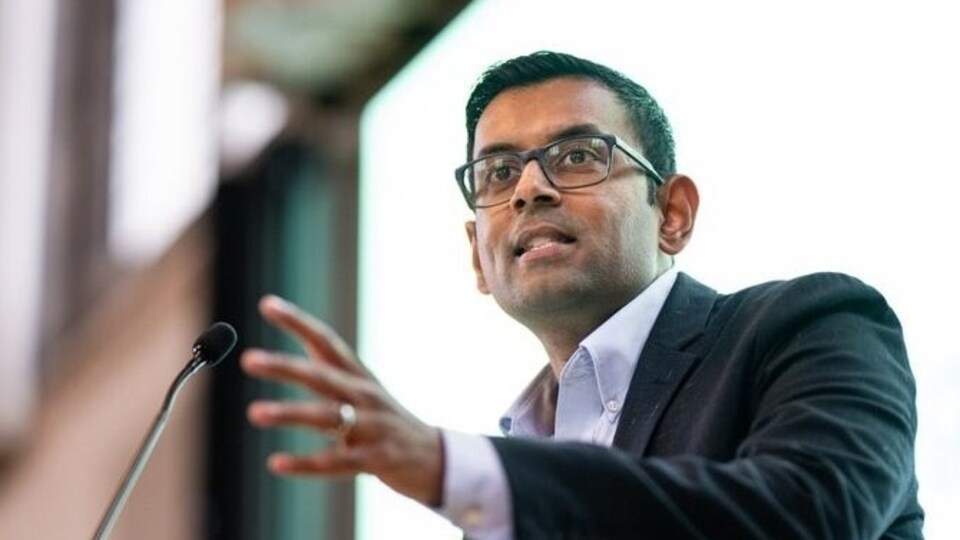
Professor Narayanan acknowledged the transformative potential of AI, especially with its increasing accessibility.
"AI has many benefits, but it also has risks. AI being widely available to consumers is not necessarily a bad thing. In fact, for the first time in recent years, anyone can now access really powerful AI systems, which were previously only available to companies and governments," he said.
Also Read: ‘Congress misled people... we will easily win Maharashtra polls’: Nitin Gadkari
This democratisation of AI, he believes, offers unprecedented opportunities for individuals and small enterprises. However, he also highlighted that this widespread availability can be a double-edged sword, bringing new challenges, including misuse and ethical concerns.
"It's not a matter of saying everybody should use these tools responsibly. There will always be bad actors and we need regulation to address them," he said.
Generative AI
AI systems, especially generative models, have made significant strides in recent years. However, they still face serious challenges, including issues related to bias and “hallucinations” — when AI systems produce incorrect or fabricated information.
Narayanan spoke about generative AI being trained primarily on Western text and images, leading to limitations in tasks like Indian language processing. He noted improvements in reducing hallucinations through web-retrieval and summarization.
"In the last couple of years, a lot of progress has been made on the issue of bias. For instance, one type of bias occurs when generative AI is primarily trained on text and images from the Western world. As a result, it may not perform well in tasks like speaking Indian languages or accurately representing the culture of many countries," he said.


