
 E-Paper



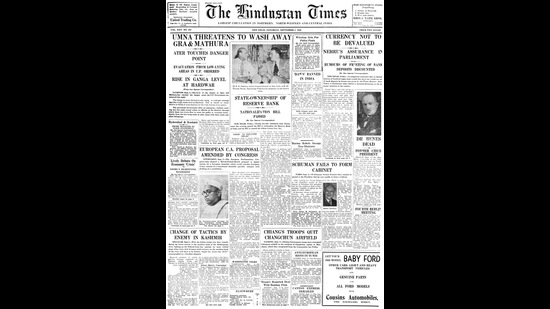
HT THIS DAY: September 4, 1948 — State-ownership of Reserve Bank; Nationalization Bill passed
The Bill was passed amid applause, with a few amendments, some of them have been sponsored by the Finance Minister himself


New Delhi- Sitting beyond scheduled time, Parliament this evening passed the Bill to nationalize the Reserve Bank of India and the Bill to amend the Indian Cotton Cess Act.
The clause most hotly disputed in the Reserve Bank Bill was the one relating to compensation. Prof. K T Shah moved an amendment suggesting that the Government should pay to shareholders only Rs. 114 for each 100-rupee share instead of Rs. 118/10 as provided for in the Bill.
The shareholders, he declared, had done nothing to earn the bonus which was proposed to be given to them. Neither they nor the Directors had raised their little finger during the period when Indian gold was being drained away by foreigners.
Those opposed to the amendment based their arguments on two factors. One was that the Government having promised this rate of compensation, it would be impolitic and even harmful to go back on it. The other consideration was that the shareholders were mainly people of small means and should not be grudged what they had begun to expect.
The Finance Minister, Mr Neogy, explained that shareholders had been receiving 4 per cent as dividend instead of 5. Moreover, the figure as provided for in the Bill had been arrived at after careful consideration, and the Government would not therefore accept the amendment. The amendment was defeated.
The Bill was passed amidst applause, with a few amendments, some of them have been sponsored by the Finance Minister himself.
Consideration of the Cotton Cess Bill was unexpectedly prolonged mainly because of a 20-minute speech by a back bencher, Mr Satish Chandra, who criticized both the membership and working of the Cess Committee. His complaint was that the Committee did not represent the interests of either the industry or the growers. Mr Sidhwa said that the Committee should conduct research to grow finer varieties of cotton.
The Agriculture Minister, Mr Jairamdas Daulatram, promised to give favourable consideration to all the suggestions. He said that if any member in the Committee did not represent the real interests of the growers of the trade, he would be removed.


