E-Paper



IMD plans to generate data to check impact of adverse climate events
The India Meteorological Department has launched the National Framework for Climate Services, which will generate climate data to help mitigate the adverse effects of extreme weather on agriculture, health, power, and water services. The framework aims to improve coordination between the IMD and user sectors and address the impact of climate change on various sectors. Last year was the second warmest on record for India, and climate disasters such as heatwaves, floods, and extreme rainfall events have become more frequent in recent years. The framework will help government departments better prepare for and manage these events.

 Prefer HTon Google


The India Meteorological Department (IMD) will generate climate data to help minimise adverse effects on agriculture, health, power and water services under the newly launched National Framework for Climate Services (NFCS), people familiar with the matter said on Thursday.
Climate information is already being generated by the IMD’s Pune office and utilised by government departments. But, the national framework is expected to be play a key role in the management of annual outbreaks of vector-borne diseases, the health impact of extreme heat, how developing cyclones can affect power grids, etc. It will also help address the impact of extreme weather on certain crops such as the one on wheat yields during the 2022 spring heatwave.
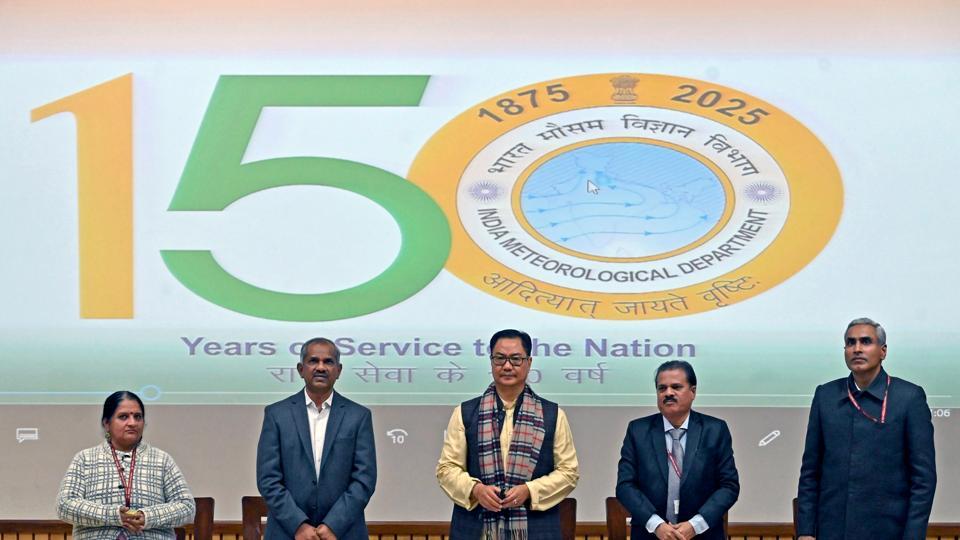
The framework was launched by the IMD this week on the occasion of its 150th anniversary.
Last year was the second warmest on record since 1901 for India, after 2016. The annual mean land surface air temperature averaged across the country during 2023 was 0.65 degrees Celsius above the long-term average for the 1981-2010 period. In recent years, India has recorded several climate disasters including consecutive years of spring heat spells in 2022 and 2023, urban flooding in Tamil Nadu last December, multiple extreme rainfall events during the monsoon, among others.
Mandated by the World Meteorological Organisation, which already has a global framework for similar climate services, the national framework headed by the IMD has three objectives: to set up a formal mechanism that may facilitate mutually agreed responsibilities for five priority areas, to enable timely and targeted exchange of climate information; to improve coordination between the IMD and user sectors; to achieve a better understanding of the roles and responsibilities of different agencies in climate-sensitive decision contexts and enable India to lead by example in the global arena.
“The climate of India has a high degree of variability at various spatial and timescales. The frequency as well as intensity of severe weather events in the country has increased in recent decades, largely attributable to climate change. According to the sixth assessment report of the Intergovernmental Panel on Climate Change (IPCC) as well as the report of the Ministry of Earth Sciences (MoES), Government of India, on the assessment of climate change over the Indian region, heat waves, droughts, floods and other extreme weather, climate and hydrological events will be the new normal across India which will exacerbate the societal and environmental risks in the country,” a concept note on the NFCS said.
“Though considerable exchange of information among the various agencies is already happening, due to some gap areas or communication limitations, the available information is not being effectively used by all the agencies concerned in a mutually consistent and complementary manner,” the note said.
“Climate information is different from day-to-day weather information. For example, suppose a cyclone is forecast to hit the Andhra Pradesh coast, we can provide climate information on how many times cyclones of certain intensity have hit the region and where landfall has happened in the past. This can help with planning for disaster risk reduction. Monsoon seasonal forecast is actually also climate information and very different from day-to-day weather information. Forecasts of rainfall and heat can possibly help the health sector plan for management of vector-borne diseases. On the other hand, wind speed forecasts for different regions can help the wind power sector. These are some of the examples how the NFCS is likely to work,” said DS Pai, senior scientist at the IMD.
“Climate services are already functional in some form and climate-related information is being issued to different ministries. So, we are not starting with zero but the new arrangement has a structured pattern which will make data flow possible. It also has an element of accountability and responsibility of all members. Being an interministerial framework, every department and ministry will have accountability,” said KS Hosalikar, head of climate research and services at the IMD.
On whether the framework will involve issuing early forecasts for extreme heat or glacial lake outburst floods, Hosalikar said, “Those are covered in early warning and weather information. But now we know that climate and weather impact are intertwined. You are seeing echoes of climate change. So, if these sectors know vulnerable areas and what kind of impact is expected, they will be far better prepared to handle an extreme weather event. A lot of focus is on agriculture because for India that is the mainstay and impact on agriculture will have wide-ranging effects,” added Hosalikar.
“We are a satisfied client of IMD but we want to be a delighted client,” Kamal Kishore, Head of Department, National Disaster Management Authority said on Monday at IMD’s inaugural event of 150 year anniversary. He also presented 5 asks that will help address the disaster situation in the country. He acknowledged that IMD has been giving accurate landfall points and impact forecasts for cyclones on a granular level, Cyclone Biparjoy being one example. But concerns remain for heat wave. “We are observing geography of heatwave is changing, areas not prone to heatwaves are experiencing heat waves now. The seasonality is also changing. How do we get better understanding of how heat wave scenario is panning out? We need to understand the urban heat island phenomenon and need granual forecast for that,” he said.
“India is getting hotter and it will be one of the biggest disasters in coming decades. PM and HM are reviewing heat preparedness every year,” Kishore said adding that in recent years there has been no year without GLOF.
“We need to keep an eye on glacial lakes that are at risk. Need state of art infrastructure to monitor them,” Kishore said. He also highlighted the increasing concerns of urban floods being recorded every year.