
 E-Paper





Follow the latest breaking news, major developments and agenda-setting stories from India and around the world with the newsdesk at Hindustan Times. Operating round the clock, the desk brings together experienced editors, reporters and correspondents to deliver fast, accurate and contextual reporting across subjects that influence public policy, governance, business, society and international affairs. The HT News Desk covers politics, elections, government policies, the economy, business and markets, science and technology, the environment, law and order, infrastructure, education, climate issues and geopolitics, while closely tracking developments across states, institutions and global capitals. The team also leads coverage of major breaking news events, policy announcements, court proceedings, natural disasters, public emergencies and significant international developments. Reports published by the newsdesk are based on information gathered from reporters on the ground, official statements, government agencies, court records, regulatory filings, recognised institutions and other authoritative sources. Stories undergo editorial scrutiny and verification processes to ensure accuracy, fairness and relevance, and are updated as events evolve and additional information becomes available. Whether covering a key political decision in New Delhi, an economic policy shift affecting millions, a landmark court ruling or a major global event, the HT News Desk aims to provide readers with reliable, fact-based journalism that delivers not only the latest developments but also the context and analysis needed to understand their wider implications.
In two stints as defence minister, Arun Jaitley ushered in major military reforms
In the first term of the Narendra Modi government, Arun Jaitley was in-charge of defence ministry and his tenure saw clearance of a number of big ticket reform measures and simplification of military acquisition process.


In his two brief stints as defence minister, Arun Jaitley cleared the path for ushering in a raft of long-pending reforms in the armed forces and came out with key policy initiatives to make India self reliant in defence production.
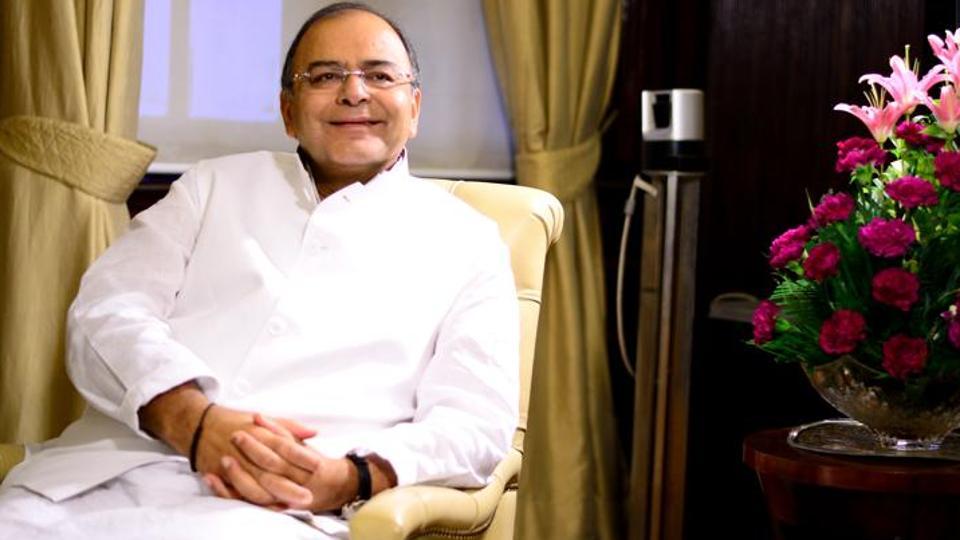
In the first term of the Narendra Modi government, Jaitley was in-charge of defence ministry from May 26 to November 9 of 2014, before Manohar Parrikar was brought in from Goa to helm it.
Jaitley, the then finance minister, was again given charge of the defence ministry on Mar 14, 2017 after Parrikar quit the Union Cabinet to become Goa chief minister.
He was succeeded as defence minister by Nirmala Sitharaman on September 7, 2017.
The BJP stalwart died at the AIIMS on Saturday after battling multiple health issues for the last several months.
Watch| RIP Arun Jaitley: Former finance minister and BJP stalwart dies at 66
Jaitley’s tenure as defence minister saw clearance of a number of big ticket reform measures and simplification of military acquisition process.
The most important initiative by Jaitley was to make India a hub of defence manufacturing when he unveiled the long-pending strategic partnership model in May 2017.
Under the policy, select private Indian firms were allowed to rope in foreign entities to build military platforms like submarines, fighter jets, helicopters and armoured vehicles/main battle tanks in India.
The policy envisaged establishment of long-term strategic partnerships with Indian defence majors through a transparent and competitive process wherein Indian companies would tie up with foreign military firms to set up domestic manufacturing infrastructure.
The first project under the policy was finalised last year, under which the Indian Navy will procure 111 utility helicopters at a cost of over Rs 21,000 crore.
As defence minister, Jaitley, in August 2017, also approved 65 reform measures for the Indian Army, which included redeployment of nearly 57,000 officers and personnel of other ranks.
Arun Jaitley dies at 66 Updates- Arun Jaitley’s mortal remains brought to his Delhi home from AIIMS
When asked for his comments after unveiling of the reform measures, Jaitley had said: “Perhaps for the first time after Independence, such a big and far-reaching reform process is being initiated in the Army.” The reform measures included optimisation of signal establishments, closure of military farms and army postal wing in peace locations, as well as restructuring of repair echelons, including base workshops.
As defence minister, Jaitley’s focus was to strengthen combat capabilities of the Army, Navy and the Air Force considering the changing regional security matrix and geo-political dynamics.
In his budget for 2018-19, Jaitley as finance minister proposed setting up of two defence industrial corridors to promote domestic production.
He also approved a number of key decisions to bring in reforms in the Navy and the Air Force.
(The story has been published from a wire feed without any modifications to the text, only the headline has been changed.)


