E-Paper



India asks Pakistan to cut strength of high commission by 50%
The move came weeks after two junior officials of the Pakistan high commission were expelled on charges of spying on May 31.


India on Tuesday asked Pakistan to reduce the strength of its high commission in New Delhi by 50%, saying the actions of Pakistani officials were part of a “larger policy of supporting cross-border violence and terrorism”.
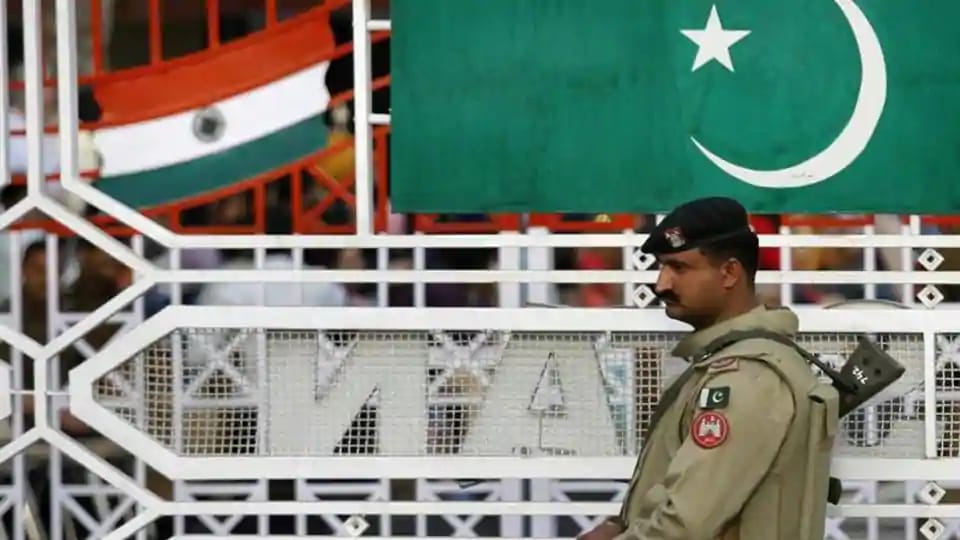
Pakistan’s chargé d’affaires Syed Haider Shah was summoned to the external affairs ministry and informed the high commission’s strength should be halved within a week. Shah was told India will reciprocally reduce its diplomatic presence in Islamabad by the same proportion, the ministry said.
In Islamabad, Pakistan’s foreign ministry summoned India’s chargé d’affaires and rejected and condemned what it said were the “baseless Indian allegations”. The Indian diplomat was informed of Pakistan’s decision to reduce the Indian mission’s strength by 50% as a reciprocal measure within seven days.
India’s move came weeks after two junior officials of the Pakistan high commission were expelled on charges of spying on May 31. In a tit-for-ta action, Pakistani security agencies detained two staff members of the Indian mission in Islamabad last week for allegedly causing a road accident and possessing fake currency.
India denied these charges and the two staff members returned via the Wagah land border crossing on Monday. The external affairs ministry has accused Pakistan of detaining them on false charges and torturing them.
People familiar with developments said India’s move followed security agencies uncovering several instances of Pakistani officials based in New Delhi being allegedly linked to terror activities.
While investigating the case of Jammu and Kashmir Police’s deputy superintendent Davinder Singh, who was caught with two Hizbul Mujahideen commanders on January 10, the National Investigation Agency (NIA) had found that all three were in “constant touch” with an assistant in the Pakistani mission named Shafqat, the people cited above said on condition of anonymity.
Shafqat, the people said, was allegedly a conduit for hawala transactions and terror financing.
In another instance, the NIA had found that Mudassar Iqbal Cheema, posted at the Pakistani mission as first secretary (press) from September 2015 to November 2016, was allegedly involved in providing funds to several Hurriyat leaders through one Zahoor Ahmad Shah Watali. Cheema and five other Pakistani officials in New Delhi were withdrawn by Islamabad on November 2, 2016, the people said.
They said Watali was in contact with Inter-Services Intelligence officials, who allegedly provided funding to the Hurriyat leaders. A document found during a search of Watali’s premises by NIA had details of a total of Rs 70 lakh provided on two occasions by the Pakistani officials and payments made to several leaders. This document had mentioned Cheema, the people said.
According to a reciprocal arrangement, the current strength of the Indian and Pakistani high commissions is 110. However, both missions are not functioning at full strength and some 40-odd officials will have to be sent back by each side, the people cited above said.
Pakistan had unilaterally downgraded diplomatic relations after India scrapped Jammu and Kashmir’s special status last August and expelled the Indian high commissioner from Islamabad. It had also decided against sending a new envoy to New Delhi. The post was vacant at the time. The missions in New Delhi and Islamabad have been headed by the deputy high commissioners since then.
The last time India had asked Pakistan to make a similar reduction in the strength of its high commission in New Delhi was in December 2001, after the terror attack on Parliament blamed on Pakistan-based terror groups.
A statement issued by the external affairs ministry said charge d’affaires Shah was summoned to the ministry and informed that India had repeatedly expressed concern about the activities of officials of his mission.
“They have been engaged in acts of espionage and maintained dealings with terrorist organisations. The activities of the two officials caught red-handed and expelled on 31 May 2020 was one example in that regard,” it said.
Pakistan has simultaneously “engaged in a sustained campaign to intimidate the officials of the Indian high commission in Islamabad from carrying on their legitimate diplomatic functions. The recent abduction at gunpoint of two Indian officials and their severe ill treatment underlines the extent to which Pakistan has gone in that direction,” the statement said.
The two officials, after returning to India on Monday, provided “graphic details of the barbaric treatment” they experienced at the hands of Pakistani security agencies.
“The behaviour of Pakistan and its officials is not in conformity with the Vienna Convention and bilateral agreements on the treatment of diplomatic and consular officials. On the contrary, it is an intrinsic element of a larger policy of supporting cross-border violence and terrorism,” the statement said.
The treatment of diplomats of the two countries in the national capitals is closely linked to the state of bilateral ties. Indian diplomats are aggressively tailed in Islamabad whenever bilateral ties take a downturn. Indian diplomats have also complained of harassment and of being prevented from discharging their basic duties in recent months.
A statement from Pakistan’s Foreign Office rejected and condemned what it said were “baseless allegations” by the Indian side as a “pretext to seek 50% reduction in the staff strength” of the Pakistani mission in New Delhi.
Pakistan also dismissed allegations of any violation of the Vienna Convention on Diplomatic Relations by Pakistani officials in New Delhi and the “insinuations of intimidation” of Indian officials in Islamabad. The statement said the Indian action was part of “desperate attempts to divert attention” from the situation in Jammu and Kashmir.