
 E-Paper



India's FY26 growth seen at 7.6% in revamped GDP series
On Friday, the National Statistics Office (NSO) released numbers after shifting the base year from 2011-12 to 2022-23.


New Delhi: The Indian economy will grow by 7.6% in 2025-26, the second advanced estimates (SAE) , and the first data with a revised base year, showed, and it will also grow between 7 and 7.4% in 2026-27 (according to the chief economic advisor), faster than previously expected.
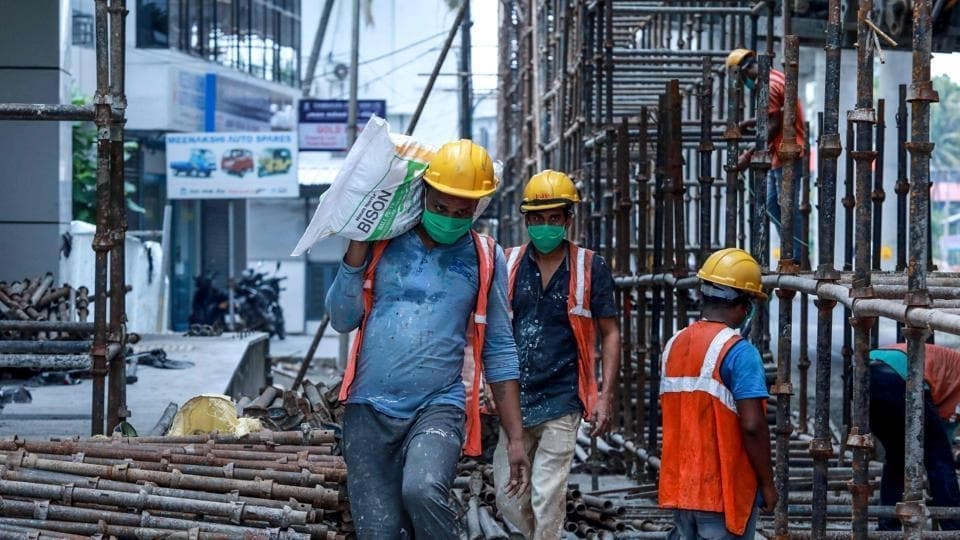
Both numbers highlight the resilience of the Indian economy amid significant global headwinds, with domestic consumption driving the growth engine.
ALSO READ | India clocks GDP growth rate of 7.8% in Q3 FY26 under new series

The data released on Friday comes after a long-pending facelift. On Friday, the National Statistics Office (NSO) released numbers after shifting the base year from 2011-12 to 2022-23. The statistical exercise, following extensive statistical and economic brainstorming will make India’s GDP numbers more in-sync with international standards and also more representative of the statistical resources available in the Indian economy to calculate these numbers.
What changes?
Despite the much-needed and extensive nature of this exercise, there is not much difference from the growth seen in the earlier data. India’s GDP growth for 2025-26, according to SAE, at 7.6%, is only 20 basis points – one basis point is one-hundredth of a percentage point – more than the first advanced estimate (FAE) under the old series which was released on January 7. Nominal GDP for 2025-26 is now projected at ₹345.5 lakh crore compared to ₹357.5 lakh crore in FAE. The real GDP number for the new series in 2025-26 is significantly higher, of course, due to the base shifting ahead 11 years.
A lower nominal GDP also means the revised estimate of fiscal deficit for 2025-26 will see a minor upward revision (4.53% of GDP instead of 4.4%). However, the government now also expects real growth higher than anticipated in the fiscal year beginning April 1. CEA V Anantha Nageswaran said that he now expects real GDP growth to be between 7 and 7.4% in 2026-27. The Economic Survey released on January 29 projected 2026027 growth at 6.8%-7.2%. RBI, in its Monetary Policy Committee (MPC) resolution issued on February 6 said it would wait for the new GDP series data to be released before issuing a full-year GDP growth projection.
ALSO READ | India GDP growth rate may outpace current estimates after data overhaul
The 2025-26 growth story
Real GDP growth in 2025-26 is expected to be 7.6%. Quarterly growth numbers for the first three quarters of the fiscal year (ending June, September and December 2025) are 6.7%, 8.4% and 7.8% respectively). Real Gross Value Added (GVA) – GDP is GVA plus net indirect taxes – is expected to grow at 7.7% in 2025-26 with the first three quarters showing growth of 7%, 8.6% and 7.8%. Among major sectors, manufacturing is the best performing in 2025-26 with a growth of 11.5%. Agriculture and allied activities are expected to grow at 2.4% while construction will grow at 7.1%. Services as a whole will grow at 9% in 2025-26.
The nominal numbers tell a very different sector-wise story. Agriculture growth is expected to be 0.3% in nominal terms, which is significantly lower than what it is for manufacturing (11.4%) and services (11.7%). The almost zero nominal growth in agriculture, while a reflection of low food inflation, is bound to have inflicted a terms of trade worsening for the agrarian economy -- essentially penalising producers. Seen on a quarterly basis, agriculture saw an annual contraction in nominal terms -- a result of contractions in the September and December quarters -- while manufacturing and services grew in double digits.
From the expenditure side, Private Final Consumption Expenditure (PFCE) is expected to grow at 7.7% in 2025-26, while Gross Fixed Capital Formation (GFCF) – it measures investment spending – will grow at 7.1%. PFCE and GFCF have a share of 55.7% and 32% in the overall GDP. The PFCE growth number is significantly better than what it was in 2023-24 and 2024-25 (5.8% in both years).
A sector-wise break-up of the base-revision
Revising a GDP series for an economy as big and diverse as India is an exercise which is extremely academic and voluminous. It took five sub-committees to get the job done. However, one of the tables in the press release issued by NSO give a useful metric to throw some light on what the base year revision actually entailed in crude tangible terms. Annexure I of the press release compares the changes in current price values of sector-wise GVA numbers for 2022-23, 2023-24 and 2024-25 between the old and new GDP series. Agriculture saw the highest upward revision in the new series (6.9%) while trade, repair, Hotels & Restaurants, Transport, Storage, Communication & Services related to broadcasting saw a 26% fall in their sector-specific GVA between the old and new series. Overall, the 2022-23 GVA saw a 2.9% downward revision between the old and new series. Annexure V of the press release gives brief explanations of these changes which are largely technical in nature.
What are experts saying?
The headline growth numbers were broadly in line with expectations, but the details held surprises, said Rahul Bajoria, India and ASEAN economist at Bank of America Securities (BofAS). Growth for 2024-25 came in at 7.1%, above BofAS forecast of 6.5%, while the 2023-24 figure was revised “meaningfully lower” to 7.2% from the previously reported 9.2%. “The bigger surprise to us was the downward revision in the nominal GDP base for 2025-26, from the earlier estimate of ₹357 lakh crore to ₹345 lakh crore,” Bajoria said. The revision — which went against market expectations of an upward adjustment — would push fiscal deficit and debt estimates “modestly higher,” he added. On monetary policy, Bajoria said the strong growth print gave the RBI little reason to cut rates. He expected the central bank to “maintain a long pause on rates while supporting liquidity conditions to ensure adequate credit intermediation.”


