
Sign in

Indian military personnel to train in US on cybersecurity, command in the offing

The proposed cyber command will marry the individual capabilities of all the three services to protect the military from being vulnerable to cyber-attacks from India’s adversaries.

Published on: Jun 30, 2021, 09:24:14 IST
By , Hindustan Times, New Delhi
Share
Share via
  • facebook
  • twitter
  • linkedin
  • whatsapp
Copy link
  • copy link

With the threat of cyber attacks mounting against the Indian armed forces, the Department of Military Affairs (DMA) is planning to send up to 100 personnel to US to train in latest cybersecurity technology and artificial intelligence (AI) for future warfare.
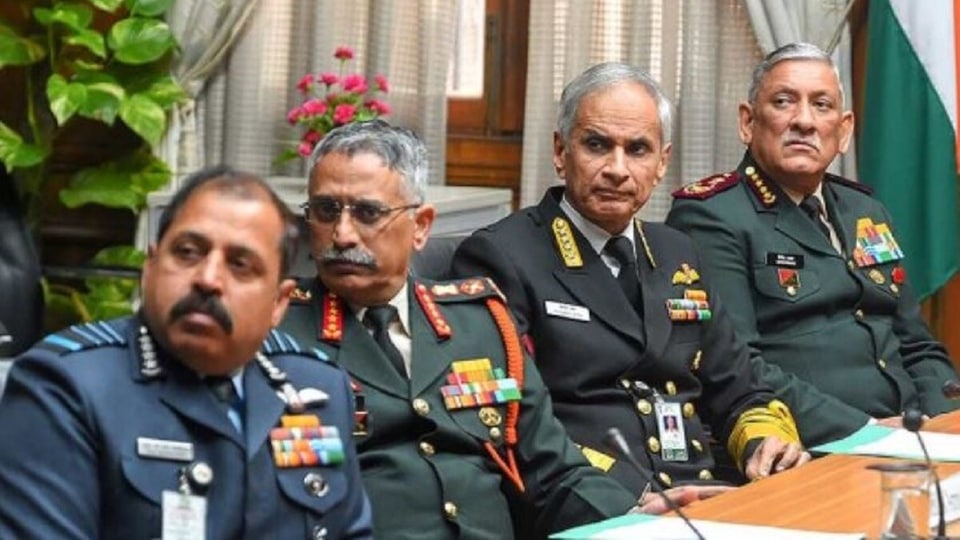
CDS General Bipin Rawat with three armed forces chiefs.

According to South Block officials, the US, under the 2016 Cyber Framework and defence cooperation agreement, has offered to train up to 100 military personnel in Silicon Valley to give them first-hand experience on how to counter cyber warfare and AI role in future defence and warfare.

While India military has a tri-service defence cyber agency under the integrated headquarters, the government is in favour of setting up of a proper cyber command in the hinterlands of Madhya Pradesh to give the fighting edge to the proposed theatre commands. The proposed cyber command will marry the individual capabilities of all the three services to protect the military from being vulnerable to cyber-attacks from India’s adversaries.

The charter of the command will be also to ensure that Indian military communications are secure and systems are not contaminated with any malware by adversaries in the forward formations like the sensitive Siliguri Corps, Tezpur Corps and the Northern Command including the Ladakh Corps facing Tibet. The Siliguri Corps facing Chumbi Valley has in the past decade seen cyber attacks through malware for not only corrupting the software but also leakage of sensitive documentation to the adversary.

With AI, cyber warfare, armed drones and standalone weapon systems now being part of warfare, the cyber military command will have to dump the World War II concepts of strike and defending corps and prepare for a future where war shifts seamlessly from missile to cyberattacks. The cybersecurity is being taken seriously by national security planners as Chinese PLA and the Ministry of State Security have high end capability to target the adversary through new age weapons.

  • Shishir Gupta
    ABOUT THE AUTHOR
    Shishir Gupta

    Shishir Gupta is Executive Editor at Hindustan Times and one of India's top journalists covering national security, strategic affairs, foreign policy and geopolitics. Over the past three decades, he has extensively reported on India's military, diplomatic and security landscape, covering every major conflict and national security challenge, from the 1999 Kargil War and the 2020 East Ladakh standoff to Operation Sindoor in 2025. He has also covered major terror attacks, including the IC-814 hijacking, the 26/11 Mumbai attacks and the 2025 Pahalgam terror strike, along with numerous Pakistan-backed terrorist incidents in the Kashmir Valley and across India. He has reported on national and state elections for more than three decades. A recognised authority on strategic affairs, Gupta has covered India's nuclear programme since the Pokhran-II (Shakti series) tests in May 1998 and has written extensively on global nuclear issues, Indian diplomacy and the country's expanding global outreach. He has also reported widely on international conflicts and terrorism, with a special focus on the Indian subcontinent. Gupta has interviewed Prime Minister Narendra Modi more than four times, including Modi's first interview with the print media after becoming Prime Minister in May 2014. His other interviews include three with the Dalai Lama, as well as conversations with Benjamin Netanyahu, Amit Shah, Yogi Adityanath, S. Jaishankar, Nirmala Sitharaman and Piyush Goyal. He is the author of Indian Mujahideen: The Enemy Within (Hachette, 2011) and Himalayan Face-off: Chinese Assertion and Indian Riposte (Hachette, 2014). He was awarded the Chevening-Wolfson Joint Scholarship at Wolfson College, University of Cambridge, UK, in 1998 and participated in the International Visitor Leadership Program (IVLP) of the US State Department in 2006. He received the Ben Gurion Prize from Israel in 2011 and the K. Subrahmanyam Prize for Strategic Studies in 2015 from the Manohar Parrikar Institute for Defence Studies and Analyses (MP-IDSA). Since 2024, he has hosted Point Blank, Hindustan Times' weekly YouTube show on global geopolitics.Read More