
 E-Paper



India, Nepal to discuss projects amid tensions
The joint oversight mechanism, which was launched in 2016 and reviews progress in bilateral projects, is scheduled to hold a meeting on August 17, people familiar with developments said on condition of anonymity.


An India-Nepal body overseeing the implementation of development projects funded by New Delhi is set to meet in Kathmandu next week, the first high-level contact between the two sides since ties were hit by a border row that erupted last year.
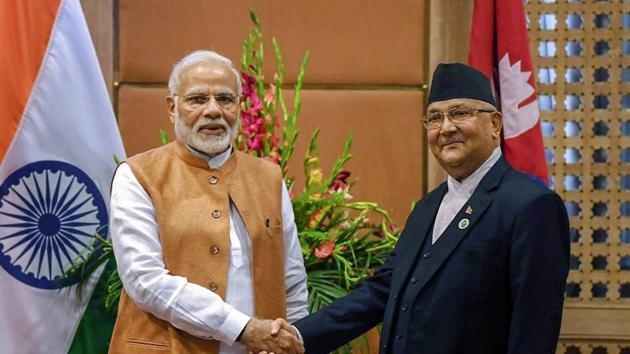
The joint oversight mechanism, which was launched in 2016 and reviews progress in bilateral projects, is scheduled to hold a meeting on August 17, people familiar with developments said on condition of anonymity.
The meeting between Indian envoy Vinay Mohan Kwatra and Nepal’s foreign secretary, Shanker Das Bairagi, who jointly chair the mechanism, is being seen by some quarters in Kathmandu as a positive development after the border row took relations to a new low.
“The mechanism will only focus on the implementation of India-funded projects in Nepal. However, it could help break the logjam in relations,” said a person.
A second person described the scheduled meeting of the mechanism as “part of regular interaction between India and Nepal”. He added, “This oversight mechanism was set up in 2016 to review ongoing bilateral economic and development projects and meets on a periodic basis.”
During its seventh meeting in July last year, the mechanism reviewed the implementation of projects such as cross-border rail links, petroleum pipelines, roads, bridges, integrated border check posts, energy, irrigation, and post-earthquake reconstruction.
The border row erupted late last year after Nepal objected to the inclusion of the Kalapani region, which is claimed by Kathmandu, in a new map showing the union territory of Ladakh that was issued by India. The row was exacerbated in May, when India opened a new road to the Lipulekh region on the border with Tibet, as this area, too, is claimed by Nepal.
Nepal responded by issuing a new map that showed Kalapani, Lipulekh, and Limpiyadhura, which are all controlled by India, as part of Nepalese territory. Kathmandu also said New Delhi has not responded to several requests for talks on the border issue, though India said a meeting couldn’t be arranged because of the Covid-19 pandemic.
Nepal’s foreign minister Pradeep Gyawali told The Kathmandu Post on Tuesday: “We don’t have alternatives to talks...We can’t hold our entire ties hostage to the differences over the boundary issue.”
Gyawali said Nepal is confident its partnership with India will move in a positive direction. “For the time being, the boundary issues can be isolated...Differences over one issue should not overshadow our entire bilateral relations...We believe in constructive engagement, and the upcoming meeting is just one positive step towards that end,” he added.
In recent weeks, the two countries have also engaged in a war of words over the origins of historic figures such as Lord Ram and Gautam Buddha.
Nepal on Sunday responded to external affairs minister S Jaishankar’s remarks that Gautam Buddha was one of the two greatest Indians for people around the world by saying historical and archaeological evidence shows the founder of Buddhism was born in Nepalese territory. India clarified that Jaishankar had referred to the shared heritage of the two countries.
Last month, Prime Minister KP Sharma Oli sparked a controversy with his remarks that the “real” Ayodhya is in Nepal and that Lord Ram was Nepalese. He also said Nepal had “become a victim of cultural encroachment” and its history was manipulated.
Following protests in India, the Nepal government clarified Oli’s remarks were “not linked to any political subject” and there was “no intention...to hurt the feeling and sentiment of anyone”.
Nischal Pandey, director of the Kathmandu-based Centre for South Asian Studies, was quoted by the Nepalese media as saying: “A weekly war of words between Indian and Nepali officials and subsequent issuance of clarifications does not bode well for bilateral ties.”


