
 E-Paper





Follow the latest breaking news, major developments and agenda-setting stories from India and around the world with the newsdesk at Hindustan Times. Operating round the clock, the desk brings together experienced editors, reporters and correspondents to deliver fast, accurate and contextual reporting across subjects that influence public policy, governance, business, society and international affairs. The HT News Desk covers politics, elections, government policies, the economy, business and markets, science and technology, the environment, law and order, infrastructure, education, climate issues and geopolitics, while closely tracking developments across states, institutions and global capitals. The team also leads coverage of major breaking news events, policy announcements, court proceedings, natural disasters, public emergencies and significant international developments. Reports published by the newsdesk are based on information gathered from reporters on the ground, official statements, government agencies, court records, regulatory filings, recognised institutions and other authoritative sources. Stories undergo editorial scrutiny and verification processes to ensure accuracy, fairness and relevance, and are updated as events evolve and additional information becomes available. Whether covering a key political decision in New Delhi, an economic policy shift affecting millions, a landmark court ruling or a major global event, the HT News Desk aims to provide readers with reliable, fact-based journalism that delivers not only the latest developments but also the context and analysis needed to understand their wider implications.
India’s forest cover loss in 17 years is four times the size of Goa
The data analysis shows that “forestry” or large-scale plantations, are paradoxically, the main drivers for tree cover loss in India.


India has lost over 1.6 million hectare of tree cover between 2001 and 2018, about four times the geographical area of Goa, according to a new study released by the World Resources Institute (WRI), a global research non-profit, on Thursday.
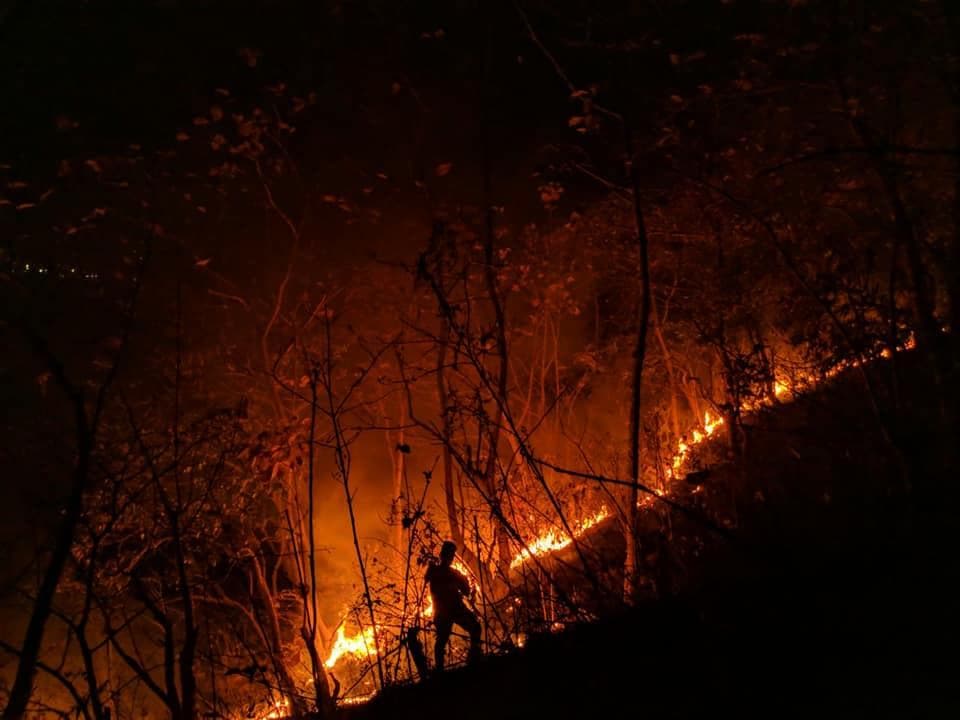
In India, five north-eastern states — Nagaland, Tripura, Meghalaya, Mizoram and Manipur — were responsible for over 50% of all tree cover loss in the same period, data analysed by WRI’s Global Forest Watch shows. The loss of tree cover contributed to 172 MT of carbon emissions in India during this period, according to the study.
The analysis reveals the total tree cover which used to be 12% of the country’s geographical area in 2000 reduced to 8.9% in 2010. The Global Forest Watch uses a dataset collated by the University of Maryland, Google, US Geological Survey, and the National Aeronautics and Space Administration (NASA), besides satellite images, to map tree cover (at 30 metre resolution) globally for the years 2000 and 2010. The dataset defines all vegetation taller than 5 metres in height to be tree cover.
“The data used by Global Forest Watch for this analysis is very coarse for India. The dataset also doesn’t cover open forest and scrub forest which is a big composition of forests in India. The main reason for loss of tree cover in the north-eastern states is diversion of forest land; climate change is also impacting the quality of forests,” said Ruchika Singh, director, sustainable landscapes and restoration at WRI India. The data analysis shows that “forestry” or large-scale plantations, are paradoxically, the main drivers for tree cover loss in India.
But Global Forest Watch’s findings are vastly different from that of the Forest Survey of India which has been recording a gradual increase in tree and forest cover during the same period. According to FSI’s 2005 and 2017 “State of the Forest Reports”, the tree cover increased to 93,815 sq km from 91,663 sq km in this 12-year period. “Global Forest Watch has a very coarse resolution. It was started for monitoring deforestation in Brazil. But there is a recent report by NASA which says China and India responsible for greening of the globe. It is far more scientific than the Global Forest Watch. Our data shows gradual rise in forest and tree cover and forest carbon storage,” said Subhash Asutosh, director general, FSI.
Explaining the Indian method of collecting data, Saibal Dasgupta, a former director general of FSI, said, “In the last two years forest and tree cover has increased by 1% in India. We do wall-to-wall mapping. One reason why there could be a discrepancy with Global Forest Watch’s findings is that we cover any tree with even 2 metres height in our tree and forest cover analysis. We cover pretty much all vegetation visible through satellite data.” Professor NH Ravindranath, forestry expert at the Indian Institute of Science, also pointed out how Indian definition of tree cover is different from others.


