E-Paper



India to become a $7 trillion economy by 2030: Finance ministry report
The report , however, pointed at some challenges, mostly external. “Only the elevated risk of geopolitical conflicts is an area of concern,” it said

 Prefer HTon Google


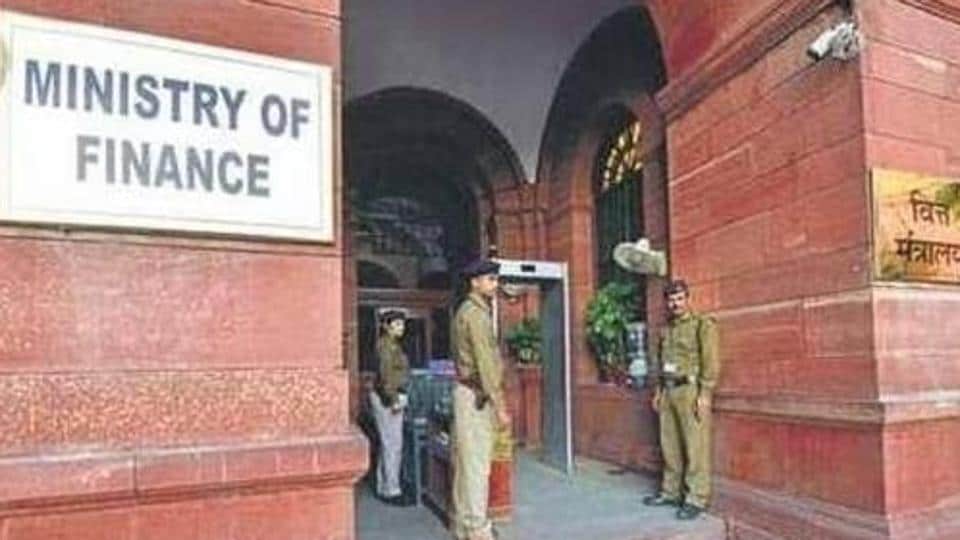
New Delhi: The Indian economy is expected to grow at a rate above 7% in coming years on the strength of its financial sector and other recent and future structural reforms and can aspire to become a $7 trillion economy by 2030, Union finance ministry said in a report ‘Indian Economy -- A Review’ on Monday, days ahead of presenting the interim Budget for 2024-25 in the Parliament on Thursday.
“In the next three years, India is expected to become the third-largest economy in the world, with a GDP [gross domestic product] of $5 trillion. The government has, however, set a higher goal of becoming a ‘developed country’ by 2047,” said the report, which was released ahead of the February 1 budget.
The report does not, however, replace the Economic Survey, V Anantha Nageswaran, the chief economic adviser (CEA) in the finance ministry said. “That will come before the full budget after the general elections,” he said. The full Budget for FY25 is expected to be presented after the 2024 general elections in July as an interim Budget is only a Vote on Account, presented in an election year to cover expenditure for a brief period to keep the government functioning.
The report indicates continuity in economic reforms if the Modi government comes to the power for a third-term. Accounting for the two terms of the Modi government, it said: “This 10-year journey is marked by several reforms, both substantive and incremental… These reforms have also delivered an economic resilience that the country will need to deal with unanticipated global shocks in the future.” India, which was the 10th largest economy in the world with a GDP of $1.9 trillion at current market prices, is now the 5th largest with a GDP of $3.7 trillion (est. FY24), despite the Covid pandemic and “despite inheriting an economy with macro imbalances and a broken financial sector”, it said.
Also Read: Record 8.18 crore ITRs filed so far in AY 2023-24: Finance Ministry
“The strength of the domestic demand has driven the economy to a 7% plus growth rate in the last three years… the robustness seen in domestic demand, namely, private consumption and investment, traces its origin to the reforms and measures implemented by the government over the last 10 years,” it said.
The report said the government’s policies also strengthened the supply side with investment in physical and digital infrastructure to boost output. “Accordingly, in FY25, real GDP growth will likely be closer to 7%,” it said. Despite global headwinds such as conflicts in Ukraine and Gaza and the Red Sea trade disruption, India’s first advance estimates of growth released on January 5 projected a higher-than-expected GDP growth of 7.3% in FY24.
“There is, however, considerable scope for the growth rate to rise well above 7 per cent by 2030,” the report said citing positive impacts of the 10-year reforms on attracting private investments such as Goods and Services Tax (GST) along with digitisation of the economy, technological advancements and human capital formation. “Finally, the overall investment climate is increasingly becoming more favourable with sustained enhancement in the ease of doing business,” it said.
Citing data from international agencies such as the International Monetary Fund (IMF), it said the average global growth fell significantly due to the Covid-19 pandemic and other geopolitical turbulence, but India remained the fastest growing major economy in the world.
“Between 2023 and 2028, the Fund’s projected growth for the world economy is around 3.1 per cent. Further, data from the World Trade Organisation (WTO) show that, in value terms, world trade barely grew in either period (2012-19 or 2014-19). In volume terms, the growth rate averaged 2.4 per cent. Despite this insipid backdrop for global economic growth and trade growth, between 2014 and 2019, the compounded annual growth rate of the Indian economy at constant price was 7.4%,” the report said.
“In other words, these data demonstrate the internal strengths of the Indian economy, which bestow on it the ability to grow notwithstanding unfavourable global economic conditions,” it added.
The report said collaboration between the Centre and states would help in accelerating India’s growth and making it more equitable. “The reforms will be more purposeful and fruitful with the full participation of the state governments. The participation of the states will be fuller when reforms encompass changes in governance at the district, block, and village levels, making them citizen-friendly and small business-friendly and in areas such as health, education, land and labour in which states have a big role to play,” it said.
The report , however, pointed at some challenges, mostly external. “Only the elevated risk of geopolitical conflicts is an area of concern,” it said.
In order to accelerate growth, the government must focus on future reforms in areas such as skilling, learning outcomes, health, energy security, reduction in compliance burden for micro, small and medium enterprises (MSMEs), and gender balancing in the labour force, it said. “Furthermore, under a reasonable set of assumptions with respect to the inflation differentials and the exchange rate, India can aspire to become a $7 trillion economy in the next six to seven years (by 2030). This will be a significant milestone in the journey to delivering a quality of life and standard of living that match and exceed the aspirations of the Indian people,” the report added.