
Sign in

Faster immigration clearance for ‘trusted travellers’ in the works

The programme for quick immigration clearance to pre-verified travellers will start on a pilot basis at Delhi and Mumbai airports this year

Updated on: May 12, 2023, 09:45:45 IST
Share
Share via
  • facebook
  • twitter
  • linkedin
  • whatsapp
Copy link
  • copy link

The government is set to launch a “Trusted Traveller Programme” for travellers with Indian passports across international airports in the country, in a move aimed at decongesting airports by speeding up immigration checks while departing and arriving.
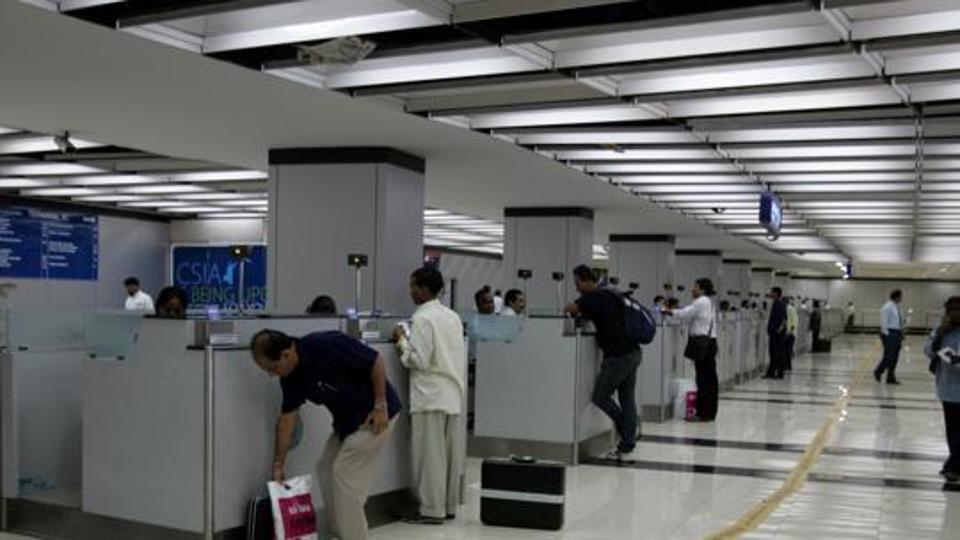
The government is set to launch a “Trusted Traveller Programme” for travellers with Indian passports across international airports (Agencies)

The programme, which allows quick immigration clearance for pre-verified travellers, will be started on pilot basis at Delhi and Mumbai airports this year and will eventually be implemented at 15 airports by 2027 and all airports by 2032, officials familiar with the development said, asking not to be named.

Three electronic gates – two for arrival and one for the departure passengers - have already been established at Delhi’s Indira Gandhi International airport. “Trials are yet to commence,” said one of the officers.

Also read | Indian passport gives visa free access to 60 countries. List here

The initiative, a second officer said, will allow Indian passport holders to use e-gates, thus avoiding the hassle of standing in a queue.

“The idea is to make the immigration clearance process simpler and quicker with the help of technology. The United States’ department of homeland security has a similar Global Entry Program, which allows for expedited security and immigration clearance of pre-approved, low-risk travellers,” said a third officer, who works in the home ministry.

The American system, to be sure, applies only to arrivals and the pre-verification process involves what the Global Entry Program’s website described as “rigorous background checks and in-person interviews”.

In India’s case, the third official quoted above, said the modalities of the verification system are yet to be worked out, as well as how passports will be stamped, as they are done when someone enters or exits India via any of the immigration checkpoints.

India is not considering opening the scheme to those with other passports for now, this person added.

Read | Australia's big changes to its immigration system, visa processing. Details

The ministry of home affairs (MHA), in consultation with the civil aviation and Bureau of Immigration, has already prepared a roadmap for the “trusted traveler programme”, this officer added.

Amit Singh, an aviation expert, said the key will be for “the policy to define pre-verified travellers”.

“E-Gates are only to reduce the workload or automate the process but someone at the backend must verify and approve the passenger’s identity based on the immigration database. If the person is of interest, then the e-gate will reject the entry and the person will have to proceed to the manual counter,” he added.

As air traffic increases, Indian airports are coming under strain. Last year, several passengers flying into and out of Delhi complained about congestion at the airport. In response, the aviation ministry asked airlines to reduce flights during peak hours (between 5 am to 9 am), and the airport to have more X-ray machines, with minister Jyotiraditya Scindia carrying out multiple reviews on this intervention.

The Bureau for Civil Aviation Security has mandated that airports dealing with 10 million passengers per annum or more introduce full body scanners (FBS) by December 31. All greenfield non-regional connectivity airports will have them before the start of the operation itself.

According to aviation consultancy CAPA India, in 2023-24, air passenger traffic, including domestic and international, is expected to reach 395 million passengers.

  • Neha LM Tripathi
    ABOUT THE AUTHOR
    Neha LM Tripathi

    Neha LM Tripathi is a Special Correspondent with the National Political Bureau of Hindustan Times. She covers the aviation and railways ministries, and also writes on travel trends. Her work spans national developments, with a focus on policy, people, and the evolving travel landscape. She has 13 years of experience. Before moving to Delhi, she was based in Mumbai, where she began her journey as a journalist. Outside the newsroom, Neha enjoys trekking and travelling.Read More

  • Neeraj Chauhan
    ABOUT THE AUTHOR
    Neeraj Chauhan

    Neeraj Chauhan is a senior journalist with Hindustan Times and an investigative reporter specialising in national security, terrorism, organised crime, narcotics, corruption, financial crime and complex investigations. With over 21 years of experience across Hindustan Times, The Times of India, The Indian Express and The Pioneer, he has built deep expertise in India’s internal security and law-enforcement landscape. Neeraj has extensively covered India’s principal investigative, intelligence and security agencies, including the NIA, CBI, ED, IB, R&AW, MHA and other central security forces. His work has included deeply reported investigations into terrorism, terror financing, cross-border crime, narcotics trafficking, cybercrime, financial fraud and political and corporate corruption. He has reported on some of the most significant terror attacks and security developments in India over the past two decades, including the Delhi serial blasts, the 26/11 Mumbai attacks, the 2019 Pulwama terror attack and the recent Pahalgam attack. His reporting has also chronicled the rise and decline of the Indian Mujahideen, the activities and subsequent crackdown on the Popular Front of India (PFI), Islamist extremist networks, the conflict in Jammu and Kashmir, insurgencies in the Northeast and Maoist violence. Some of Neeraj’s major breaking stories are in Aryan Khan drug case, Sushant Singh Rajput suicide, interception of a 3,000-kg Afghan heroin consignment worth about ₹21,000 crore at Mundra port, Sri Lanka easter bombings, Aarushi-Hemraj murders in Noida, 2G scam, coal block allocation scam, AgustWestland VVIP chopper deal and major bank frauds and extradition cases involving Mehul Choksi, Nirav Modi and Vijay Mallya. His reporting is marked by an ability to cultivate sources, analyse confidential and complex documents, and follow investigations over several years—from the initial breakthrough to chargesheets, trials and international legal proceedings. He specialises in making complicated security and investigative developments accessible while examining their wider implications for governance and public policy. A Chevening South Asia Journalism Programme Fellow at the University of Westminster, Neeraj also spent time at the Financial Times as part of the fellowship. He was also a Robert Bosch Media Ambassadors India-Germany Fellow, studying at the University of Tübingen and working with Der Tagesspiegel in Berlin. He has previously taught investigative journalism and crime reporting as a guest faculty member at the Times School of Journalism. Over more than two decades, Neeraj has established himself as an authoritative voice on India’s national security and investigative landscape, with his reporting closely followed by officials, investigators, lawyers, policymakers and readers seeking insight into some of the country’s most complex and consequential developments.Read More