
 E-Paper



India's image was ‘stuck with Gandhi ji’: Tourism minister says PM Modi is now ‘biggest brand ambassador’
“Till 10-15 years ago, Gandhiji was the brand ambassador of India for decades. And now Modiji is the brand ambassador of India," says Gajendra Shekhawat.

 Prefer HTon Google


Prime Minister Narendra Modi is now the country's “biggest brand ambassador”, according to Union Union culture and tourism minister Gajendra Singh Shekhawat, who said India's identity abroad was only linked with Mahatma Gandhi earlier.
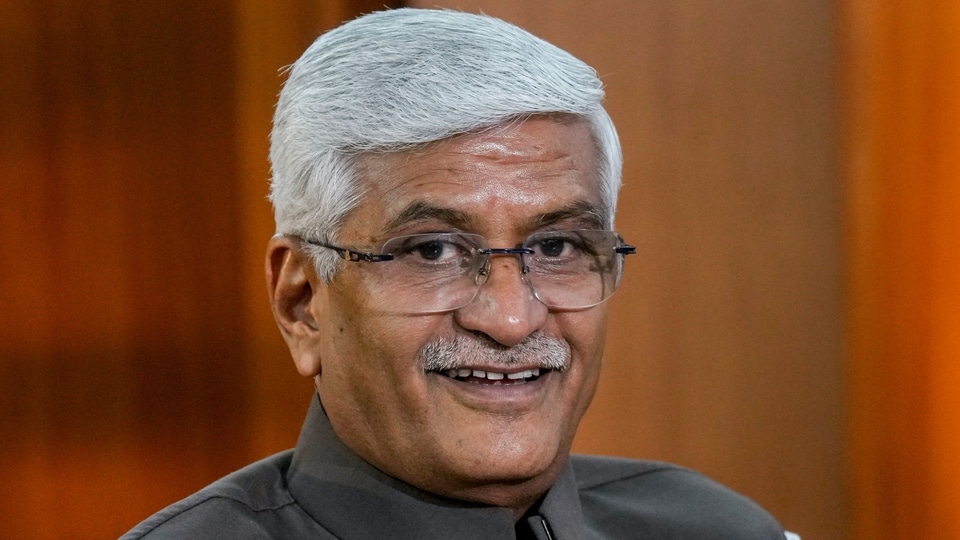
Till 10-15 years ago, he said, “If a visitor would tell anyone abroad that he or she was an Indian, the answer would be, ‘India! Oh, Mr Gandhi’.” The image and identity of India remained "stuck with Gandhi-ji", said the minister in an interaction reported by news agency PTI on Saturday.
"But today, and I say it with confidence, you can go to any country in the world... from the smallest Caribbean island to America, and from South Asia to West Asia, you can go anywhere, and if you tell someone that 'I am from India', you will see a bright smile on his face, and an exclamation, 'India! Oh, Mr Modi'," Shekhawat said.
The minister was asked what was India's bigger brand ambassador: culture and tourism or Bollywood.
"Nowadays, the biggest brand ambassador we have is our Prime Minister," he replied.
‘Not a political reply’
Shekhawat, who is MP from Jodhpur in Rajasthan, asserted that his was “not a political reply”. “I am saying this as a layman,” he insisted. “Till 10-15 years ago, Gandhiji was the brand ambassador of India for decades. And now Modiji is the brand ambassador of India. But the culture of India is the brand ambassador of India. And the culture of India is the identity of India in itself,” Shekhawat then said, as per PTI.
He claimed that earlier Indians abroad would “hesitate in calling themselves Indians”, and would instead introduce themselves as Asian. "Then if you asked him where in Asia he was from, he would say that ‘I am an Indian’," the minister said. He further claimed that the way India was perceived in the world was “somewhat lacking”.
Target 2047 for tourism
He argued that while culture and heritage remain the essence of a country and its identity, the image of a leader changes the image of a country abroad. And when the image of a country changes, it inevitably impacts the country's tourism, and the attraction towards that country gets augmented, the minister further said, PTI reported.
He also expressed confidence that foreign tourist arrivals in India will grow from 10 crore at present to 100 crore by 2047. PM Modi has set 2047 as a target year for India to become a developed country.
He said the Indian embassies and missions abroad have been told that one of the parameters for assessing their performance would be the number of tourists coming to India from that country. So, now the missions are also on the job, and everyone is on their toes, he said.
Asked about India's global tourism identity, he said “It is ‘Incredible India’. And now we are taking it to ‘Inevitable India’.”
He also spoke about India's cultural plurality, saying that the Indian civilisation is an "amalgamation" of different faiths; and that pages of history, "no matter what their colour", cannot be removed.


