
 E-Paper



Ensuring continued LPG supply to homes, exploring ways to curb shortage: Govt official
India meets around 60% of its LPG demand through imports, primarily from Gulf nations including the United Arab Emirates, Qatar, and Saudi Arabia.

 Prefer HTon Google


Amid continued concerns over the supply of liquefied petroleum gas (LPG) in India in the backdrop of the ongoing Iran-US war, a government official has reportedly shared an insight into how long could the restoration of supply chains take. A senior government official told Moneycontrol that that efforts were being made to ensure that the supply of LPG to homes continues, while trying to mitigate shortages.
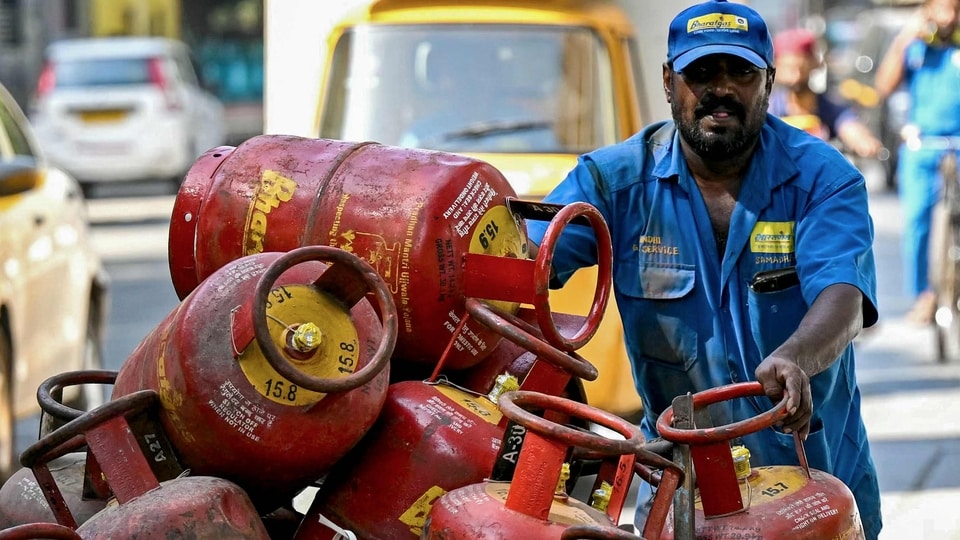
The official also told the publication that the supply chain could take up to four years to fully recover. However, there hasn't been any official confirmation or announcement by the government to this end.
The prolonged disruption is linked to the unprovoked US-Israeli war on Iran that began at the end of February. Although a fragile, temporary ceasefire is currently in effect, the instability continues to threaten the Strait of Hormuz, a key route handling nearly 90% of India’s LPG imports.
“Based on inputs from affected suppliers, restoration could take at least three years, and possibly longer,” the official told Moneycontrol. “Your LPG supply might take that long because some very critical supplies are shut down,” they said.
“What ‘shut’ exactly means is not fully clear, whether entire wells have been exhausted or production has stopped, but suppliers themselves are saying it will take at least three years,” the official added.
India’s dependence on imports
India meets around 60% of its LPG demand through imports, primarily from Gulf nations including the United Arab Emirates, Qatar, and Saudi Arabia.
The current disruptions have led to a decline in supplies from these countries, with their share in India’s LPG imports dropping to about 55%.
LPG price rise
The supply crunch affected retail prices. Domestic LPG cylinders saw an increase of ₹60 recently, while commercial cylinders have become costlier by ₹115.
The rise is impacting households as well as sectors such as hospitality and small businesses, while also likely increasing the government’s subsidy burden.
Move towards PNG
The government is pushing households to switch to Piped Natural Gas (PNG) in areas with pipeline access to reduce dependence on imported LPG.
In March, it directed eligible households to make the shift within 90 days.
PNG offers a steady supply and can be cheaper in the long run, but expansion remains slow. As of early 2026, only about 1.6 crore households, around 12-13%, use PNG, far below targets.
The government now plans to speed up network expansion through a ₹5,000-6,000 crore investment, which may cover up to 50% of pipeline costs.
Alternative cooking solutions such as electric appliances, biogas, and emerging green hydrogen technologies have also been explored.


