E-Paper



India’s manufacturing activity slips for the first time in 22 months
India’s industrial activity, as measured by the Index of Industrial Production (IIP), contracted for the first time in 22 months in August.

 Prefer HTon Google


India’s industrial activity, as measured by the Index of Industrial Production (IIP), contracted for the first time in 22 months in August, according to data released by the National Statistics Office (NSO) on Friday.
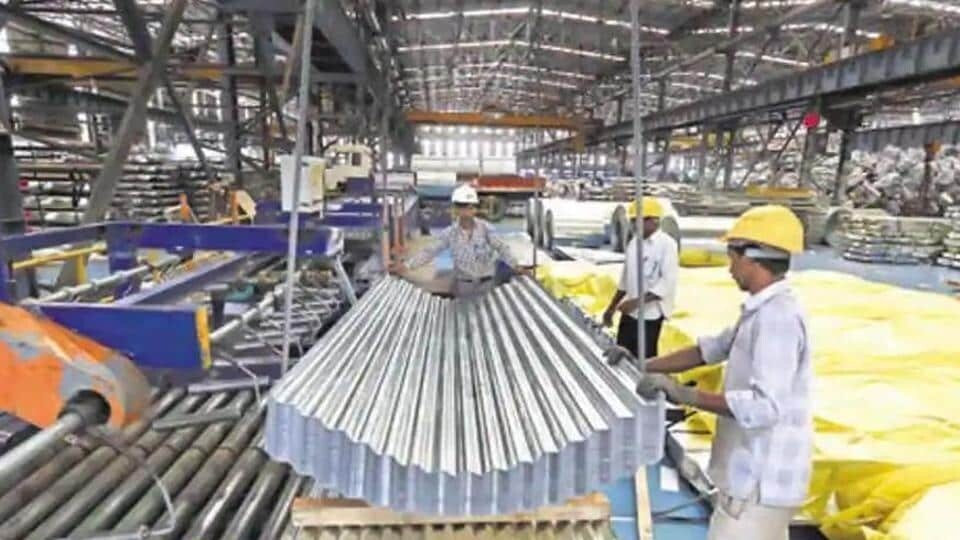
The contraction in IIP was largely a result of a contraction in mining and electricity although even manufacturing growth was the slowest in 22 months. To be sure, some of the contraction in August could also be the result of a high base effect.
According to the quick estimates of IIP released Friday – it will undergo revision in subsequent months – the index contracted by 0.1% in August. The last time the index contracted was in October 2022, when it shrunk by 4.1%.
The latest contraction was driven by mining and electricity, which have weights of 14% and 8% in the index. Mining and quarrying contracted by 4.3% in August. The sector had contracted last in August 2022, when it had contracted by 3.9%. Electricity contracted by 3.7%, the first time it has done so since April 2023, when it had contracted by 1.1%.
Also Read | India may soon manufacture all the mobile phones it needs: Report
While manufacturing activity – it has the highest weight of 78% in the index – did not suffer a contraction in August, it did slow down. Manufacturing activity expanded by 1% in August, the slowest since October 2022, when it had suffered a contraction of 5.8%.
A use-based breakup of the index shows that primary goods suffered the most contraction in August. Primary goods suffered a contraction of 2.6%, the first since February 2021, when they had contracted by 4.6%. Primary goods have the highest 34% weight in the index.
Consumer goods – with the second-highest weight of 28% -- also suffered a contraction in the month (of 0.6%), but only in the consumer non-durables sub-category. Consumer non-durables contracted by 4.5%, the highest contraction since October 2022, when they had contracted by 13%. This also makes August the third consecutive month and the sixth month in the 10 months from November to August when consumer non-durables have contracted.
Also Read | Apple begins manufacturing iPhone 16 Pro in India; firms up retail plans
Other categories in the use-based classification of IIP expanded in August, but lost momentum compared to July. Capital goods expanded by 0.7% compared to 11.8% in July. Intermediate goods expanded by 3% compared to a 6.4% growth in July. Infrastructure goods expanded by 1.9% compared to a 4.6% growth in July. Capital, intermediate, and infrastructure goods have weights of 8%, 17%, and 12% in IIP.
While IIP has contracted after a long time, at least some of the contraction could be the result of a high base effect. IIP had expanded by 10.9% in August last year. This is only one of the four months when IIP expanded by double digits since January 2022, when the last and mildest of lockdowns were in effect due to the Covid-19 pandemic.