E-Paper



Iran’s foreign minister to visit India next week
A planned trip to India by Abdollahian last November was put off for various reasons and this will be his first visit to India since he assumed office last year.

 Prefer HTon Google


Iranian foreign minister Hossein Amir Abdollahian is set to visit India next week for discussions that are expected to focus on the situation in West Asia and Afghanistan and regional connectivity, people familiar with the matter said on Wednesday.
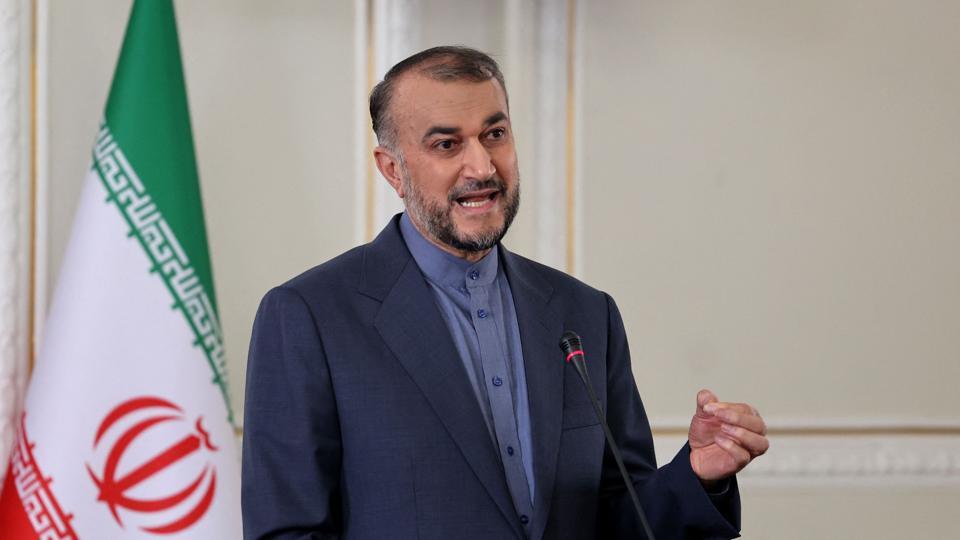
A planned trip to India by Abdollahian last November was put off for various reasons and this will be his first visit to India since he assumed office last year. He is expected to hold talks with external affairs minister S Jaishankar on January 31 before travelling to Sri Lanka.
Ahead of the visit, Abdollahian greeted Jaishankar and the people of India on India’s Republic Day and said in a tweet that Iran will “continue to work towards further expansion of all-out relations, bilaterally, regionally and at international fora”. Jaishankar responded by tweeting that he was looking forward to his Iranian counterpart’s visit.
Two key issues that are expected to figure in Abdollahian’s interactions in New Delhi are the situation in Afghanistan, especially the urgent need for humanitarian assistance, and measures to boost the development and use of Iran’s Chabahar port, the people cited above said.
The Indian side has been considering the option of using Chabahar to ship wheat and other essential items to Afghanistan in light of Pakistan’s reluctance to allow the use of land routes passing through its territory for transporting humanitarian aid. Though India proposed using the Wagah land border crossing to send 50,000 tonnes of wheat to Afghanistan in October last year, shipments via this route are yet to start.
During a phone conversation with Jaishankar on January 8, Abdollahian said Iran will cooperate with India in shipping humanitarian aid, including wheat and medicines, to Afghanistan, and also stressed the need for an inclusive government in Kabul. Jaishankar also said in a tweet that he and Abdollahian had discussed the difficulties the challenges in Afghanistan and “prospects of Chabahar”.
Iran’s top national security official participated in the Delhi Regional Security Dialogue on Afghanistan hosted by India last November, reflecting the growing convergence between the two countries on the situation in Afghanistan.
Abdollahian is also expected to discuss the Iranian nuclear issue while in New Delhi. Iran and the US have held indirect talks on the issue for almost two months amid hopes of a breakthrough despite persisting differences. The US and European allies said last week there were just weeks to salvage the 2015 Iran nuclear deal or the Joint Comprehensive Plan of Action (JCPOA).
Iran is also engaged in direct talks on the nuclear issue with the “P4+1”, or Germany and permanent UN Security Council members France, China, the UK and Russia. India has consistently backed a negotiated settlement of the issue.
India has been pressed to strike a balance between Iran and other key players in West Asia such as the United Arab Emirates and Saudi Arabia, especially in the wake of drone and missile attacks by Yemen’s Houthi rebels on Abu Dhabi. Two Indians were killed in a recent attack, which Jaishankar condemned as a terrorist incident. Seven Indian crew members of a merchant vessel seized by the rebels are currently in the custody of the Houthis.
Several reports have suggested that the drones and missiles used by the Houthis were supplied by Iran.