
 E-Paper



Justice Varma and the winding road to an impeachment
The motion to impeach judge Yashwant Varma raises questions on judicial accountability, following allegations of unaccounted cash found at his residence.

 Prefer HTon Google


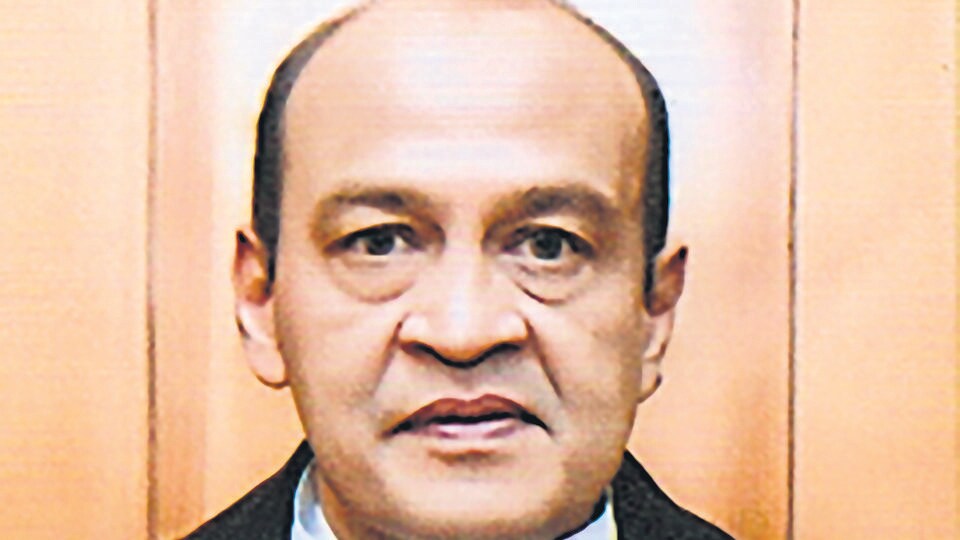
The impending motion to impeach high court judge Yashwant Varma has placed the judiciary at the centre of a storm, reviving an old but complex debate about accountability, propriety and procedure when it comes to constitutional court judges. On Tuesday, parliamentary affairs minister Kiren Rijiju said that the government has reached out to the Opposition to seek support for the motion during the Monsoon session of Parliament. The motion will be introduced by Union law minister Arjun Ram Meghwal and follows the alleged discovery of unaccounted cash from the Delhi residence of justice Varma earlier this year.
While the government seems to have now taken a decisive step, questions continue to swirl around the process followed so far. On May 19, vice-president and Rajya Sabha chairman Jagdeep Dhankhar questioned the legitimacy of the in-house inquiry conducted by a panel of three judges set up by the then Chief Justice of India (CJI), Sanjiv Khanna. Speaking at a book launch event, Dhankhar said the panel’s findings “do not have any constitutional premise or legal sanctity but most importantly it will be inconsequential,” and strongly underscored the need for a formal criminal probe.
These twin developments -- Rijiju’s statement of political outreach and Dhankhar’s critique of the judicial inquiry -- have added urgency to public understanding of what exactly happened, what the constitutional process of impeachment entails, how the judiciary’s internal mechanisms work, and what lies ahead.
The justice Varma controversy and in-house inquiry:
The chain of events began on March 14, when a fire broke out in the outhouse of justice Varma’s official residence in Delhi. When firefighters arrived, they reportedly discovered charred currency notes stuffed in sacks. In response, the chief justice of the Delhi high court undertook a preliminary assessment and flagged the matter to then CJI Sanjiv Khanna while noting that the allegations serious enough to warrant further investigation. An in-house inquiry committee was set up on March 22, comprising high court judges Sheel Nagu (Punjab & Haryana chief justice), GS Sandhawalia (Himachal Pradesh chief justice), and Justice Anu Sivaraman (Karnataka judge).
According to people aware of the matter, the committee, in its May 3 report, found the presence of unexplained cash at the premises and concluded that justice Varma’s version of events lacked credibility. Justice Khanna subsequently advised Varma to resign or opt for voluntary retirement -- advice that was rebuffed.
In a May 8 letter to President Droupadi Murmu and Prime Minister Narendra Modi, justice Khanna emphasised the gravity of the allegations and enclosed the findings of an in-house committee. Justice Varma, who was in the meantime moved back to his parent high court at Allahabad, remained divested of all judicial work on the CJI’s instructions. A press release issued by the Supreme Court on May 8 further confirmed that justice Varma filed his response on May 6, reiterating his earlier stand and denying the cash recovery and terming the incident a “conspiracy”.
Impeachment process:
Judges of the Supreme Court and high courts in India enjoy constitutional safeguards that make their removal extremely difficult, thus protecting judicial independence. Article 124(4) of the Constitution provides that a Supreme Court judge shall not be removed from office except by an order of the President passed after an address by each House of Parliament supported by a majority of the total membership of that House and by a majority of not less than two-thirds of the members present and voting. Article 217(1)(b), read with Article 124(4), applies the same procedure to high court judges.
The detailed process for removal of judges is set out under the Judges (Inquiry) Act, 1968 and the Judges (Inquiry) Rules, 1969. The process can be initiated in either House of Parliament by giving a notice of motion to the speaker of the Lok Sabha or the chairman of the Rajya Sabha. Such a motion must be signed by at least 100 Lok Sabha members or 50 Rajya Sabha members and submitted to the speaker or chairman.
If the motion is admitted, an inquiry committee comprising a Supreme Court judge, a high court chief justice and a distinguished jurist is constituted. This committee conducts a formal investigation allowing the judge a full opportunity to respond, including legal representation and cross-examination of witnesses. This formal inquiry is mandatory and acts as a threshold filter before Parliament can proceed to debate and vote on the removal motion. The inquiry committee’s report determines whether the charges are proven and if they amount to “proven misbehaviour” or “incapacity” as required under the Constitution.
If the committee finds the judge guilty, the motion for removal can be taken up in the respective Houses. Only after both Houses adopt the motion with the requisite special majority can the President issue an order for removal.
Distinction between an in-house inquiry and a probe under the 1968 Act:
The in-house mechanism, adopted by the full court of the Supreme Court in December 1999, is a creation of judicial precedent and internal guidelines, not statute. It originated from the Supreme Court’s ruling in C Ravichandran Iyer Vs Justice AM Bhattacharjee (1995), where the top court highlighted the need for an internal mechanism to address judicial conduct not rising to the level of “proved misbehaviour”.
Additionally, in K Veeraswami Vs Union of India (1991), a Constitution bench held that a judge of the Supreme Court or a high court is a “public servant” under the Prevention of Corruption Act, 1988. However, the ruling laid down a crucial safeguard -- no investigation against a judge can proceed without prior sanction from the CJI.
These two judgments led to a system where complaints against sitting judges of constitutional courts are addressed through an in-house mechanism, under which such complaints are first examined by the CJI, in consultation with the chief justice of the concerned high court.
The in-house inquiry mechanism adopted by the Supreme Court is thus an internal, non-statutory process developed as a means to uphold judicial discipline and maintain institutional integrity without immediately invoking parliamentary mechanisms. While it plays a role in assessing allegations of judicial misconduct, it does not have the force of law.
Unlike the Judges (Inquiry) Act, 1968, which is a statutory framework expressly laid down under Article 124(5) of the Constitution, the in-house procedure has no legal mandate and does not trigger any constitutional consequence. The 1968 Act, by contrast, is the only legally prescribed route to initiate the process of removal of a judge. It provides a detailed and binding mechanism with procedural safeguards and statutory backing.
On the other hand, the in-house process is a fact-finding exercise conducted under the administrative authority of the CJI. Its conclusions are intended to inform internal decisions such as asking a judge to voluntarily resign, take leave, or stop judicial work. However, the findings of such a panel have no legal consequence and cannot, by themselves, lead to removal.
At best, an in-house committee’s findings may have persuasive value, serving as a precursor or prompting Parliament or the executive to consider initiating formal proceedings under the 1968 Act. But they are not a substitute for the statutory process. Therefore, while the in-house committee’s report in justice Varma’s case may have informed the government’s decision to initiate the impeachment motion, it cannot replace the mandatory inquiry envisioned under the 1968 Act, which is the sole gateway to the judge’s removal.



