
 E-Paper



Karnataka’s Social, Educational Survey ends; online entries open till Nov 10
According to Tangadagi, the survey achieved an overall progress of 101.47%, covering 1.46 crore households and about 5.52 crore people

 Prefer HTon Google


Karnataka’s second Social and Educational Survey, conducted by the State Commission for Backward Classes, concluded on Friday after more than a month of enumeration across the state. However, residents who missed the door-to-door survey will still be able to submit their details online until November 10.
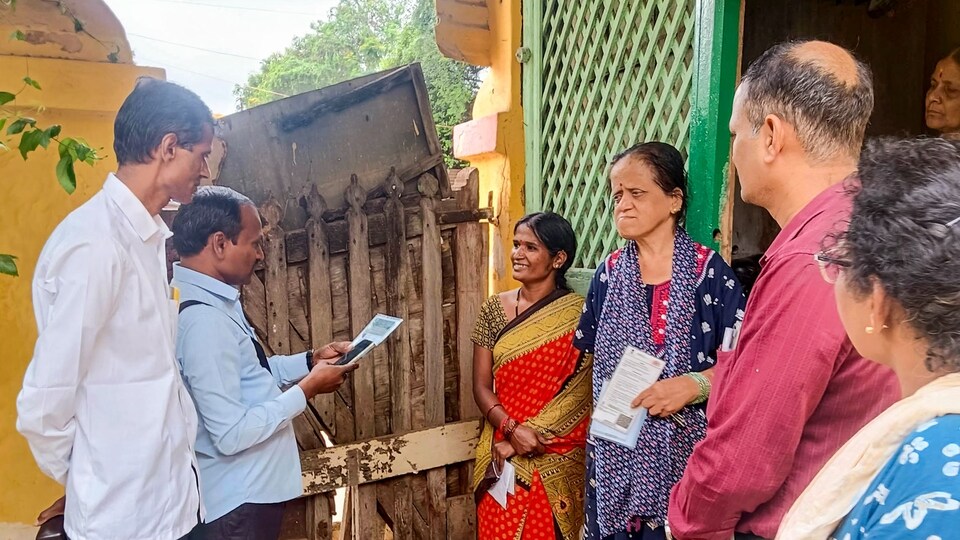
Backward Classes Minister Shivaraj Tangadagi confirmed that the fieldwork had officially ended. “No decision to extend the survey has been taken. Those who wish to participate can do so online till November 10,” he told reporters.
The statewide exercise began on September 22, while the enumeration in the Greater Bengaluru Authority (GBA) region started on October 4. This is the second such survey after the 2015 caste-based enumeration carried out under the H. Kantharaj Commission, the report of which was submitted to K. Jayaprakash Hegde earlier this year.
According to Tangadagi, the survey achieved an overall progress of 101.47%, covering 1.46 crore households and about 5.52 crore people. In the GBA area, however, progress was significantly slower at 48.32%. Officials attributed the shortfall to technical challenges and the city’s large migrant population, with many residents refusing to provide details, saying their data had already been recorded in their native districts.
“Several technical factors contributed to the slow progress. We are assessing the reasons in detail,” Tangadagi said.
Officials said more than six lakh families in the GBA region declined to participate in the socio-educational survey. Since their unique household identification numbers (UHIDs) were left blank, those households were excluded from the official count, even though enumerators visited them.
Political analyst A. Narayana said the survey, though designed as a socio-educational exercise, exposed deeper social attitudes in the state. “What was done in Karnataka appears to be more of a caste-based ego survey,” he said, adding that some families refused to share data not out of privacy concerns but from a sense of social superiority. “What was seen more than fear was indifference—a belief that what concerns society’s welfare does not concern them.”
The groundwork for Karnataka’s caste census was first laid during Chief Minister Siddaramaiah’s initial tenure, when an extensive survey was conducted in 2015 at a cost of ₹162 crore. Although Siddaramaiah announced his acceptance of the report in June this year, its findings and release date remain undisclosed.
Leaked data from the 2015 survey suggested that Scheduled Castes (SCs) made up 19.5% of the state’s population, followed by Muslims at 16%. Lingayats and Vokkaligas accounted for 14% and 11%, respectively, while the Kuruba community alone represented 7% of the total population, contributing to the 20% share held by Other Backward Classes (OBCs). Collectively, these groups—SCs, STs, Muslims, and Kurubas—constituted nearly 47.5% of Karnataka’s population.


