
 E-Paper



Kerala on alert after Kochi shipwreck: How harmful is the calcium carbide, major oil spillage?
Leaked fuel drifting at about 3 km per hour off Kerala coast sparks concern; state issues alert, urging fishermen to stay ashore amid spill threat.

 Prefer HTon Google


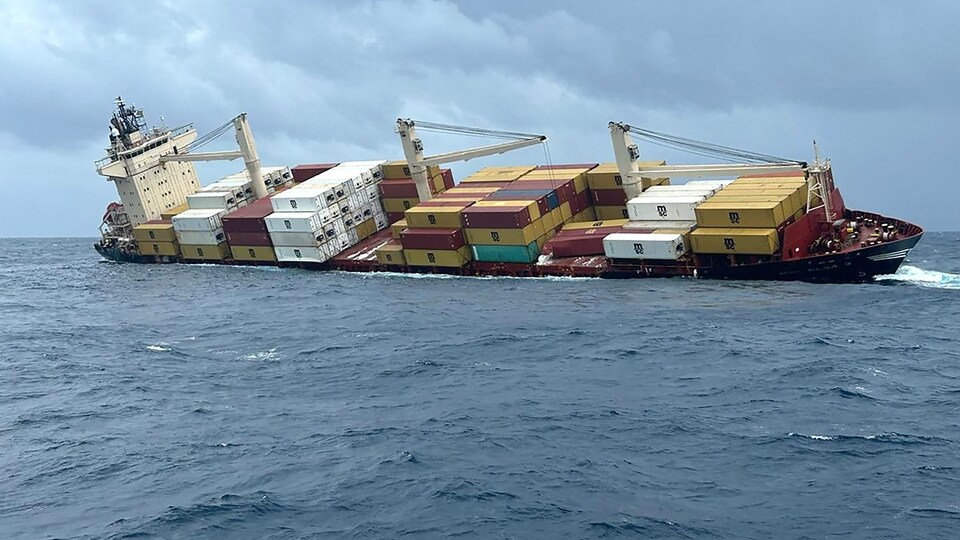
A Liberian vessel carrying 640 containers — including 13 with hazardous materials — sank off the Kochi coast on Sunday, triggering a major oil spill. All 24 crew members were safely rescued after the ship developed a severe tilt on Saturday, officials said.
The Kerala State Disaster Management Authority (KSDMA) has issued a warning to the public, advising against touching any containers or oil that may wash up on shore.
The leaked fuel is drifting at approximately three km/h, raising concerns about its potential impact along the Kerala coastline. In response, the state government has issued a statewide alert and advised fishermen to avoid venturing into the sea.
The Indian Coast Guard (ICG) is actively working to contain the spill and has intensified its pollution response efforts. Highlighting the ecological and economic significance of Kerala’s biodiverse and tourist-heavy coast, the ICG said it is coordinating closely with state authorities to address all possible outcomes.
What does the ship contain?
The ICG, leading the pollution response efforts, reported that the sunken vessel was carrying 84.44 metric tonnes of diesel and 367.1 metric tonnes of furnace oil, along with containers holding hazardous substances such as calcium carbide — a chemical that reacts dangerously with seawater to release highly flammable acetylene gas.
“Liberian container vessel MSC ELSA 3 (IMO NO. 9123221) sank off the Kochi coast at around 0750 hrs today on May 25, 2025, due to flooding... The vessel went down with 640 containers, including 13 with hazardous cargo and 12 containing calcium carbide. It was also loaded with 84.44 MT of diesel and 367.1 MT of furnace oil,” the Ministry of Defence said in a statement.
The Coast Guard confirmed that the vessel was also carrying Marine Gas Oil (MGO) and Very Low Sulphur Fuel Oil (VLSFO).
Following a distress call on Saturday, when the ship developed a critical 26-degree tilt nearly 38 nautical miles southwest of Kochi, the ICG deployed ships and aircraft to carry out rescue operations.
The KSDMA has also warned of the possibility of oil films appearing on coastal waters and urged the public to alert the police if they see any containers or signs of oil on the beaches.
How dangerous is calcium carbide spilling in the sea?
Calcium carbide, or calcium acetylide (CaC₂), is a colourless solid formed by heating lime and coke together at temperatures around 2000°C in an electric furnace. It's mainly used to generate acetylene gas, a key ingredient in producing various industrial organic chemicals. Additionally, it's often used to artificially ripen fruits, especially in regions where modern ripening technologies are less accessible, according to TWYH.
When calcium carbide comes into contact with water, it triggers a rapid and intense chemical reaction. This reaction produces acetylene gas and calcium hydroxide and releases a significant amount of heat. Because acetylene is a highly flammable gas, this reaction can be dangerous, particularly in settings where large volumes of calcium carbide are stored or handled.
How dangerous is it for the aquatic ecosystem?
The reaction between calcium carbide and water releases calcium hydroxide, which increases the water’s alkalinity. This rise in pH can disturb aquatic ecosystems by affecting the health, reproduction, and survival of aquatic species. Moreover, the production of acetylene gas during this reaction can degrade water quality and pose environmental hazards—especially concerning if it contaminates water sources used for drinking or farming.
How the Kochi coast emergency unfolded
The situation escalated on May 24 when MSC ELSA 3, travelling from Vizhinjam to Kochi, began to tilt—developing a 26-degree “starboard list” around 38 nautical miles southwest of Kochi, according to officials.
As the ship lost stability, a distress signal was issued, prompting an immediate response by the Indian Coast Guard’s Maritime Rescue Sub-Centre (MRSC) in Kochi.
“An ICG Dornier aircraft was deployed for aerial surveillance, spotting two life rafts with survivors. ICG patrol ships and merchant vessels MV Han Yi and MSC Silver 2 were also diverted to assist, in line with global search and rescue protocols,” the defence ministry said.
By Saturday evening, 21 out of the 24 crew members—comprising nationals from Russia, Ukraine, Georgia, and the Philippines—were rescued. The remaining three senior crew stayed onboard to help with salvage efforts, the statement added.
“However, the vessel's condition deteriorated overnight and it capsized on May 25. The three crew members were forced to abandon the ship and were rescued by INS Sujata,” the ministry said.
(With PTI inputs)


