E-Paper



Less than 500 daily deaths in India for 8 straight days: Covid data
With 393 new deaths having been reported on Saturday, the total number of patients having succumbed to the viral infection in the country so far has reached 143,073.

 Prefer HTon Google


Fewer patients are dying of the coronavirus disease (Covid-19) in India and less than 500 daily deaths have been reported from across the country now for eight consecutive days.
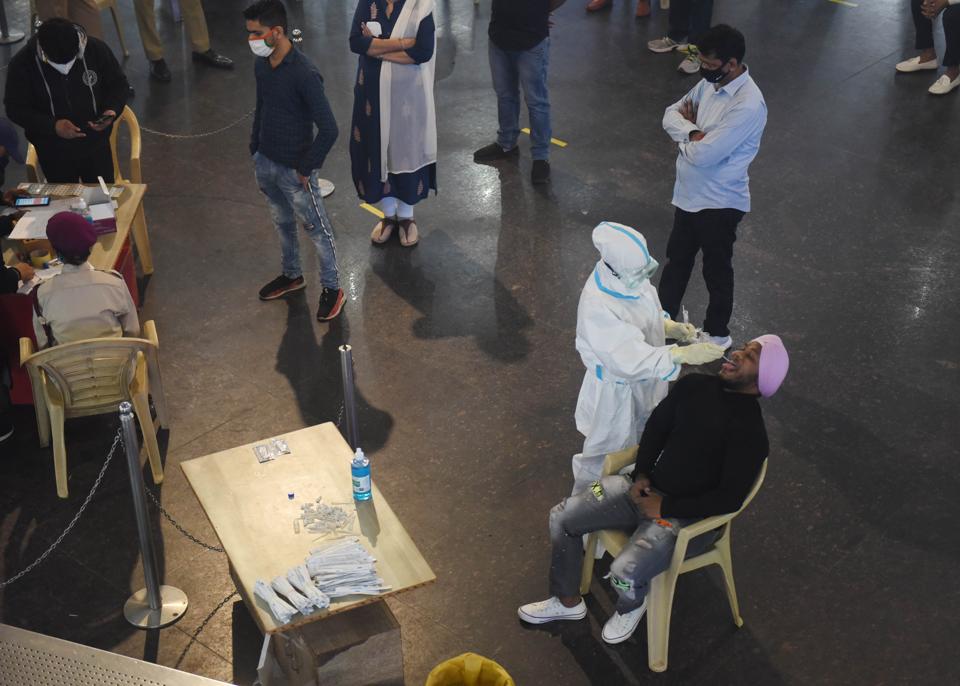
With 393 new deaths having been reported on Saturday, the total number of patients having succumbed to the viral infection in the country so far has reached 143,073.
“India’s trajectory of active cases continues to follow a steadily dipping path. The total active caseload has dropped below 3.6 lakh (359,819) on Sunday. This has been made possible by the trend of recoveries exceeding new cases and low number of fatalities per day which have ensured a total net reduction of the active caseload,” said the Union health ministry in a statement.
Ten states and Union Territories account for 78.05% of new deaths. Maharashtra has seen the maximum casualties (80). Delhi and West Bengal follow with 47 and 44 daily deaths, respectively. The other seven states are Kerala (29), Punjab (29), Haryana (23), Himachal Pradesh (20), Tamil Nadu (17), Karnataka (17), and Uttar Pradesh (14).
“India’s Covid-19 death rate has been among the lowest in the world. Even though there was a rise in the number of Covid-19 cases in between, we managed to the keep the death rate low all throughout. The maximum it went up to about 3%, which was around June, and now it has dropped to about 1.4%,” said a senior health ministry official who did not wish to be identified.
India has set a target of achieving 1% or below case fatality rate (CFR) due to Covid-19.
Two key interventions that have lead to the low death rate have been increased in Covid-19 testing, and standardizing clinical management of patients.
India’s tests per million population recently crossed the 100,000 mark, with the country performing at least one million tests daily in more than 2,000 Indian Council of Medical Research (ICMR) approved laboratories across the country.
“We now know a lot more about the disease than we knew at the beginning of the outbreak. Government guidelines have been updated keeping in view the changing treatment trends. This has helped significantly in managing patients, and which is why we are losing fewer patients to the disease now,” said Dr Srikant Sharma, senior consultant, department of medicine, Moolchand Hospital.
Also, India’s present active caseload consists of just 3.66% of total positive cases, according to the government data. The new recoveries of 33,494 reported on Sunday have led to a net decline of 3,930 in the total active cases.
About 75% of the new recovered cases are observed to be concentrated in 10 States and Union Territories.
Kerala has reported the maximum number of single day recoveries with 4,748 newly recovered cases. And 2,873 people recovered in West Bengal followed by 2,774 in Maharashtra.
Apart from these three other states with high case recoveries are Rajasthan (2,768), Chhattisgarh (2,477), Delhi (2,402), Uttar Pradesh (1,875), Haryana (1,812), Karnataka (1,807), and Gujarat (1,403).