
 E-Paper



‘Loan waivers fine, but only with fiscal space’, says Arun Jaitley
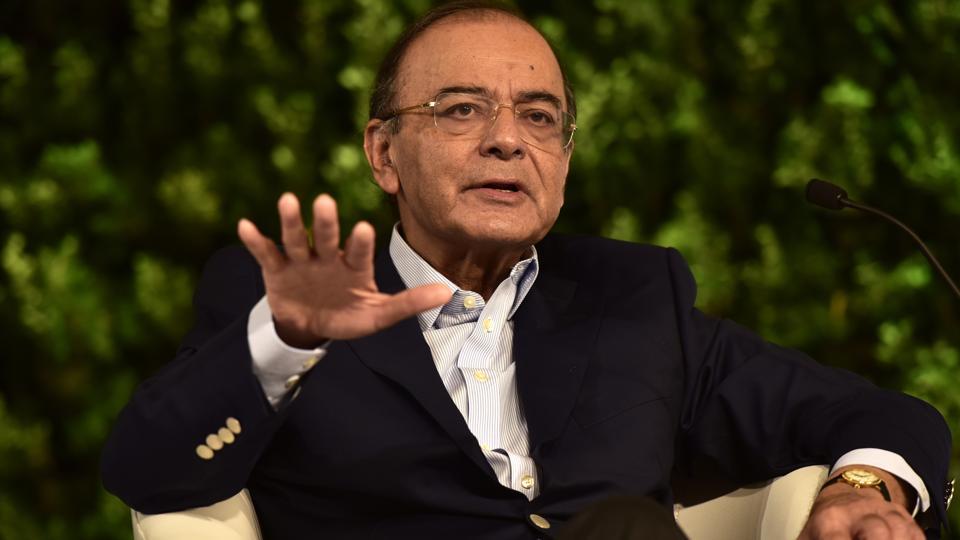
As India enters a crucial general election year, Union finance minister Arun Jaitley spoke to Hindustan Times about the state of the economy, the Reserve Bank of India, the Mahagathbandhan attempting to challenge the Bharatiya Janata Party (BJP) in the Lok Sabha polls, and the recent assembly election results.

 Prefer HTon Google


As India enters a crucial general election year, Union finance minister Arun Jaitley spoke to Hindustan Times about the state of the economy, the Reserve Bank of India, the Mahagathbandhan attempting to challenge the Bharatiya Janata Party (BJP) in the Lok Sabha polls, and the recent assembly election results. Edited excerpts:
Q. Several states have announced farm loan waivers that will impact their overall fiscal deficits. Are you concerned?
A. If you pick up the five years of any government since Independence, probably these five years will go down as the best period of fiscal prudence. We almost struck to our targets. We have been on a glide path. We have increased revenues, increased spending, but spent within our means, and not with the intention that future generations will be left in debt. I’m reasonably confident of meeting the fiscal deficit target that we have set for this year, which is 3.3% [of the GDP]. We are going a little behind the schedule on the GST [Goods and Services Tax] and the primary reason is that in the last 18 months we given more than Rs 80,000 crore per year rebate in terms of rates itself. We are a little ahead of our target on direct taxes. On almost on daily basis, I monitor the disinvestment programme...
Q. To come back to the fiscal deficit….
A. Now to come back to the question of farm loans, let me give you details.
The nature of agrarian problem has changed. Take Madhya Pradesh as an example. After 15 years of BJP rule, if there is one state, which can be singled out in India for having had the best performance in agriculture in the last 15 years, it is Madhya Pradesh. There were years when you had 15-20% growth in agriculture. So the volume increased. So what was the problem of scarcity in 2003, and inability of water and electricity and connectivity, became a problem of surplus.
So now the basic problem of surplus was addressed by the Madhya Pradesh government by the ‘bhawantar’ scheme. That is between the MSP [minimum support price] and the actual sale price, whatever is the amount lost, the state compensates. The Centre enhanced the MSP itself. And the farmers are not getting the price, so there is a large consensus that the agricultural sector has to be helped. But you have to find the right solutions for the problem.
If the state government has the fiscal space, and they want to give money, and if they want to waive the loan within the fiscal space, nobody really should have any objection... In Punjab and Karnataka, the announcement has remained an announcement because the states have no fiscal space. And, therefore, what will happen? One, the farmers stop paying the banks, the NPAs [non-performing assets] go up. So the ability of the banks to lend for the next crop goes down. India’s banking system, current year, is lending Rs 12 lakh crore-plus to the farmers. So if this year’s charges are not paid, this year’s loan amount is not repaid, how do the banks lend for the next year? So that credit cycle is broken. The only way the credit cycle can be maintained is, the state pays the bank.
The only states, which have either wholly or partly, kept up the promise by paying the banks, I understand, are Telangana, which has paid Rs 17,000 crore to the banks and Uttar Pradesh, which has paid Rs 31,000 crore to the banks. Maharastra has also has paid around Rs 17,000 crore to the banks.
Q. Are you happy with the progress of NCLT this year?
A. Overall, I’m quite happy with the way IBC has gone. And I’m happy for the reason that the Debt Recovery Tribunals were clogged... After the asset quality review in 2015 by RBI, NPAs were Rs 8.5 lakh crore, you had no option but to come up with something. So the speed at which we then prepared the draft and within a matter of three months it was introduced in Parliament, cleared by the joint committee, and approved by the House and it become a law, and now it has been functioning for two years.
In the last two years, there are three levels at which recoveries have taken place – one, through resolution /liquidation; two, Rs 1.2 lakh crores has been recovered where petitions have been filed and the debtor appeared on day one and say that I will pay the money back -- so the threat of his being thrown out of the management has worked; and third, which we have seen particularly in the last 8-10 months, after Section 29A has been amended, is the debtors have started paying in the anticipation of crossing the red line.
I think more than Rs 3 lakh crore has gone back into the system, which was earlier stuck. It has changed the business culture of India. Where the creditor chasing the debtor is now over, once you invoke IBC, the debtor chases the creditor, because he knows if the petition is admitted he goes out of management.
Q. Broadly speaking, at this point in time, are you satisfied with where the economy is? Or to put it another way, in the run up to 2019, are you happy with where you are?
A. Given the global situation and challenges, we have done well but a finance minister should never be satisfied because you have to aim for higher targets. In terms of actual performance, I can say Prime Minister Modi’s five years will be the only occasion in history where we have been the fastest-growing economy in the world among the large economies. Where we have actually undertaken reforms, we have improved revenues, we delivered reasonably good growth rate, we kept fiscal prudence, we built infrastructure, and we actually delivered resources, the benefit of high growth to the poor and the rural sectors. And that is the course, I think, we have set in for the country, which will eventually become the Indian model.
Q. If you look at the assembly results, you see Nota prevalent in both Rajasthan and Madhya Pradesh. People say that these are the traders who are actually with the BJP, but decided to not vote for it because of GST and demonetisation.
A. Every election can’t be a referendum on GST. I think, GST implementation could not have been better after the initial few weeks, when IT systems etc were able to take the load... A more efficient system increases collections. This has brought in more people in the tax system. The whole idea of good taxation policy is increasing the base, bring the evaders into the net, and reduce the rate. This is what GST has achieved. This is the only term a government, where not one direct or indirect tax has been increased.
Q. There is a perception that the Modi government has not done anything for the salaried class?
A. Actually, no government has done this much for the salaried class as the Modi government has.
Q. Can you elaborate?
A. Governments took up to three years to implement the pay commission; we did it in three months. Today, government salaries are higher than private sector. Two, for 40 years OROP [one rank, one pension] was pending; we implemented it. Three, the salaried class is hit by inflation. UPA-II, whose legacy we inherited, had 10.4% average inflation. Modi’s five years will see less than 3.5% average inflation. Four, the lowest tax slab has been increased from Rs 2 lakhs to Rs 2.5 lakh and then we allowed people up to Rs 3 lakh total tax exemption. We then reduced the tax for income up to Rs 5 lakhs to 5%, which is again the lowest direct tax slab in the world.
All your 80C deductions, the house interest payments, on residential housing, Rs 1.5 lakh to Rs 2 lakh, the 80C deductions from Rs 1 lakh to Rs 1.5 lakhs, have been increased. If you take the sum total of this, the total amount of relief given to this category is almost close to Rs 97,000 crore annually. Under the new pension scheme, the 10% plus 10% contributions from employer and employees, we have increased the government contribution to 14%. Which means that if he does not have any thing compounded and withdrawn in one go, post-retirement he will get 53% pension.
Q. What are your thoughts on the reserves RBI needs to maintain?
A. The government only flagged issues relating to liquidity and credit with RBI. We were using various instruments to persuade RBI to take a decision. We are a sovereign government, which is accountable to the people. RBI is autonomous; it is not isolationist that if you speak to it, its autonomy gets breached. And, therefore, the whole debate was hijacked into an autonomy debate, which is not an issue.
Two, the whole debate that you want to rate the surplus, how much reserves the RBI requires. The economic capital framework has been determined by RBI. In the past, when they had reserves there have been at least three committees at different point of time that have gone into it.
Even some of the most conservative central banks have 13-14% of their assets as reserves. If RBI wants something like 27-28%, almost double the amount, then there has to be somebody to apply his mind of how much it requires. Because this is ultimately peoples’ money. And I have repeatedly said, I don’t want to use this money for any fiscal deficit problem
Who were the first people to ask for such a discussion in the committee? The UPA government. There are repeated letters on record from the UPA government to RBI. But then you see that UPA government and its members have very short memories in this regard. They were not on speaking terms with the governor and then now they lecture us on what the governor-ministry relationship should be.
Q. A lot of people have been extrapolating these assembly results in various ways.
A. The assembly results have been clear in two of the states. I interpret the results as follows. In Chhattisgarh, besides the fatigue factor, other factors mattered, the gap was too significant. In Madhya Pradesh, Rajasthan, it’s totally equal. There is no anti-incumbency which brings you down to 20-30 seats. There are some additional factors which have played out in 10 -20 seats, which made all the difference.
There is yet another factor, which is Telangana. People don’t accept a coalition -- the only state with which a ‘Mahagathbandhan’ was presented, was not Rajasthan, Madhya Pradesh and Chhattisgarh; it was Telangana. You had a pro-Telangana party and anti-Telengana party, saying we are together now to oust the TRS. And people didn’t believe them.
I think the ‘Mahagathbandhan’ is an idea that scares India. It’s a tried, tested and rejected idea. It’s a failed idea. You can already see a larger coalition idea cracking up into two different ideas of coalition. So, who is the driver and who is the pillion rider? If this is already happening before the elections, what will happen post-election? I see the next election as a referendum on one issue only, and that is, do we want Modi back. So there will be two slogans, the country needs Modi for one more term, and the referendum on Modi and then against it will be a vague blurred idea of anybody else. People want definite answers they don’t want uncertainty.
Q. Rahul Gandhi has said that if the numbers fall his way he doesn’t mind being PM.
A. Well, we would love it if 2019 becomes a presidential fight between Modi and Rahul.
Q. A lot of people believe that the BJP will try to make 2019 national election on national issues, and the Opposition will try to fight it at the level of states.
A. It normally doesn’t happen that way. It happens only if there is a huge state-level issue leading to anti-incumbency. There still seems to be a pro-incumbency feeling on Modi. His government has done reasonably well.
Q. Does that explain the decibel levels on Rafale, CBI vs CBI ....
A. Rafale was an honest deal. We saved thousands of crores for India. It improved the combat ability of the Indian forces. The critics chose their forum – the court. They lost. They wanted to debate in Parliament, I’m ready.
CBI and ED needed a cleansing exercise. In your [HT Leadership] Summit, even before this thing happened, I had indicated. Investigative adventurism can’t be accepted. Since its pending in court, I won’t not say anything more. The court, by delaying the hearing of this Ram Janambhoomi issue, has essentially created a situation where everyone has jumped in... I would have been happier if the case would have been disposed of earlier. But having been a lawyer all these years, I know what the court calendars are like.
Q. Is the government looking at some sort of ordinance if the court can’t decide?
If the government takes a decision, it will announce it. How can I announce it in the course of an interview.
The Mahagathbandhan becomes an issue, particularly in UP because of the two --- Samajwadi Party and Bahujan Samaj Party having the capacity to translate the vote.
First of all, determine what is the eventual character of the Mahagathbandhan. At the moment, there are two kinds of gathbandhans. And to call one maha….
Q. There is fluidity about this... In 2014, it was fairly clear.
A. No, in 2014 the fluidity was much more. The media, six months before the election, was saying that there is a 150-group in the BJP which wants the BJP to be stuck at 150, so that someone other than Modi can be PM. Then the media increased this to 180, and finally settled at 180 to 200. Outliers gave it 220. Nobody went beyond that. Where will you get the rest from? That was the question in 2014.


